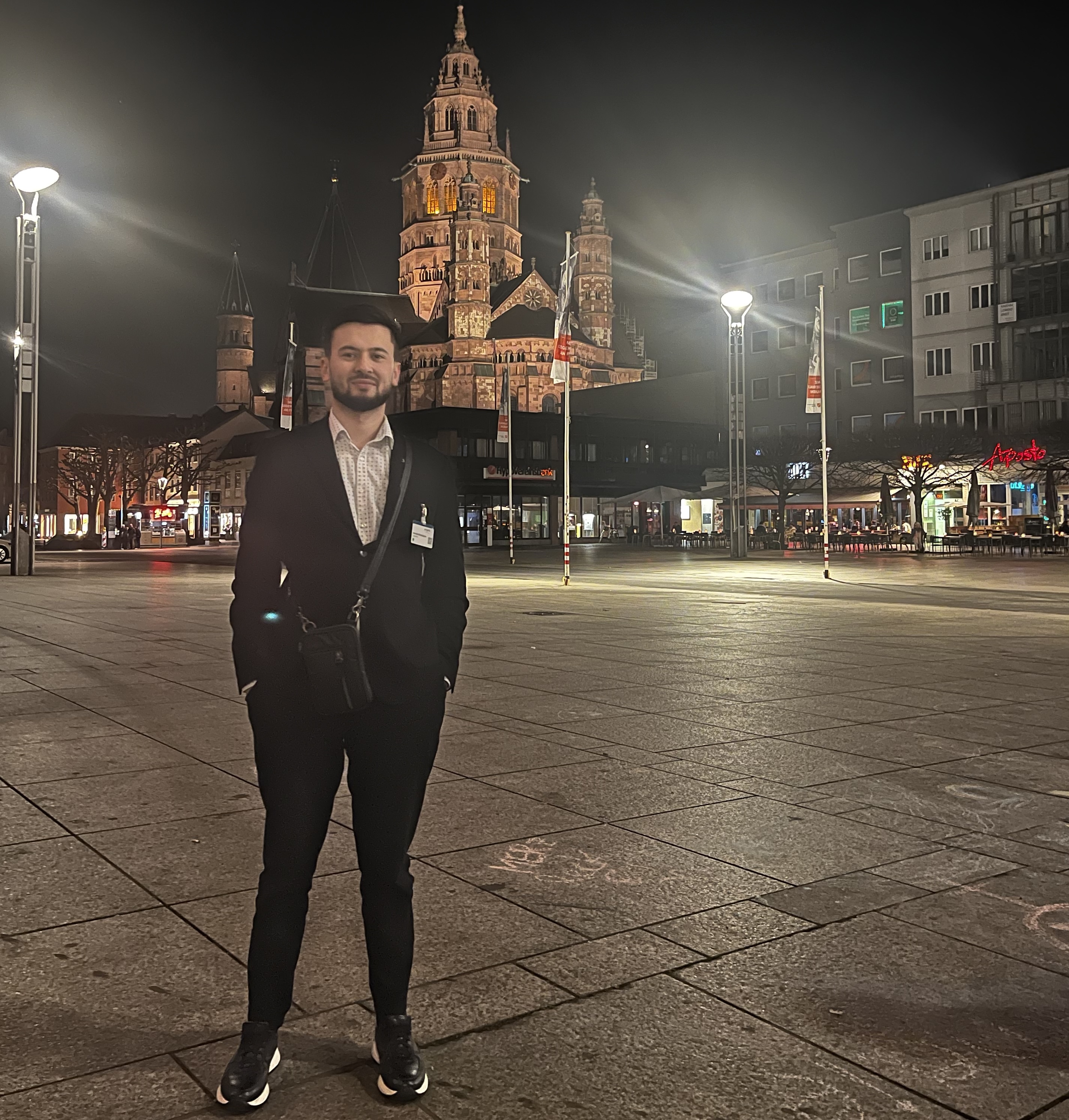
In 2022, Abror Abdullajonov, then a 26-year-old resident in the emergency department of an academic hospital in St Petersburg, wasn’t getting much sleep. Money was tight, so the future endovascular surgeon survived by working as a nurse in the ICU, which meant spending close to 24 hours a day in the hospital.
He was there on account of his mother.
When he was growing up, Mrs Abdullajonova, a caregiver, knew in her heart that Abror was destined to become a doctor. He, on the other hand, was more interested in mathematics and physics, and in earning the money their family needed.
But his mom could only afford biology and chemistry classes.
“It was something she felt in her soul,” Abror says, and out of respect for his mother he bowed to her wishes.
One day when Abror was on duty in the hospital’s emergency department, a grueling shift in the ICU behind him, a suspected stroke patient was brought in with symptoms that included aphasia and paralysis. During treatment with thrombolysis, this patient began to show signs of recovery. He was referred for mechanical thrombectomy, which resulted in him regaining his speech and mobility.
Though exhausted, the young doctor understood that he had witnessed a miracle.
And he had a question: “Why, in my country of almost 40 million people, did we not have such treatment? Why were we not giving life a second chance?”
It was the birth of an idea, Abror says. “When I come back from my residency, I would bring the miracle home.”
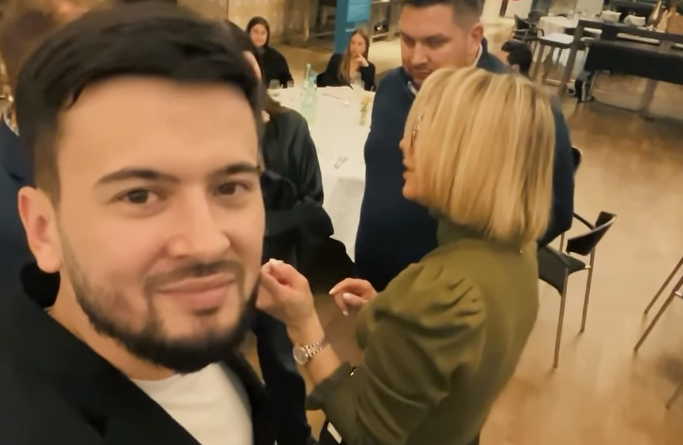
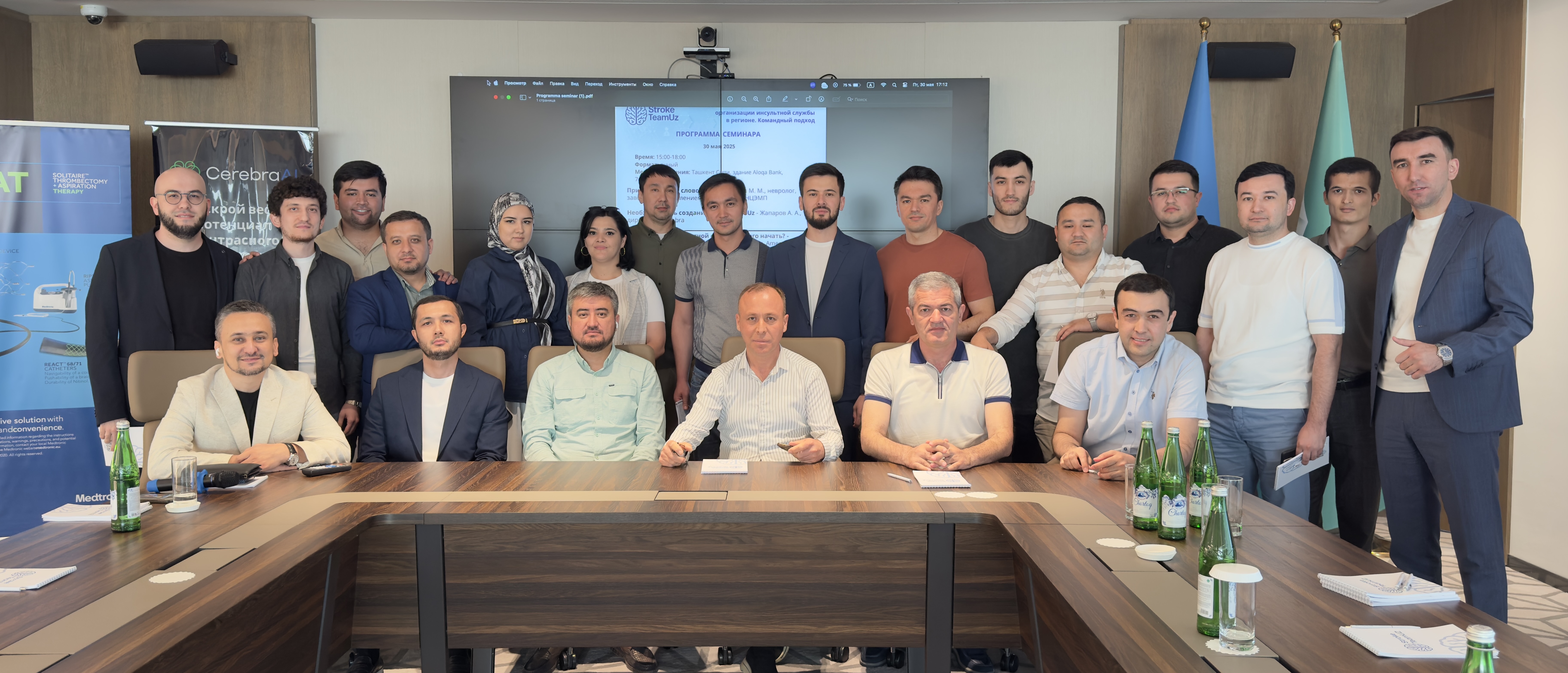
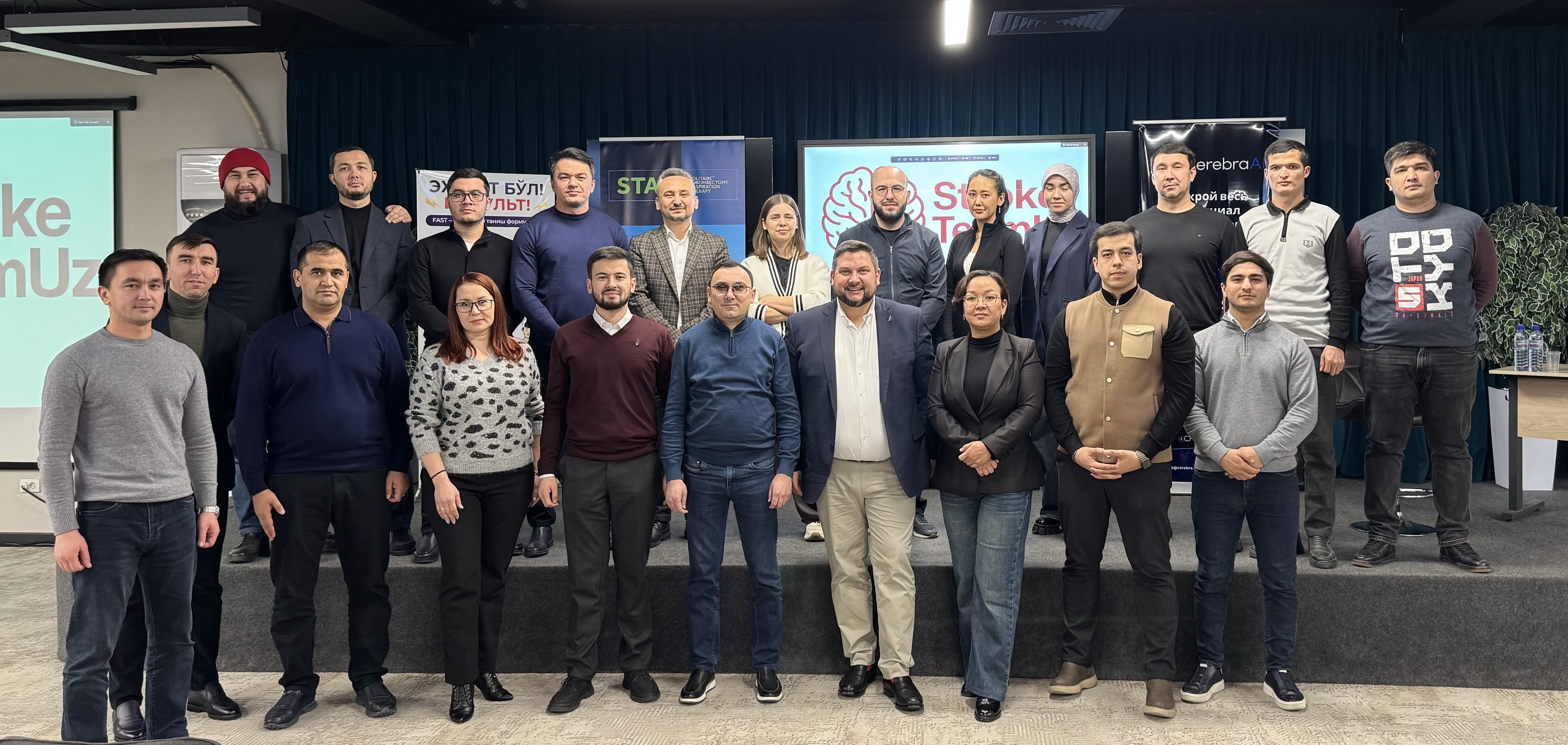
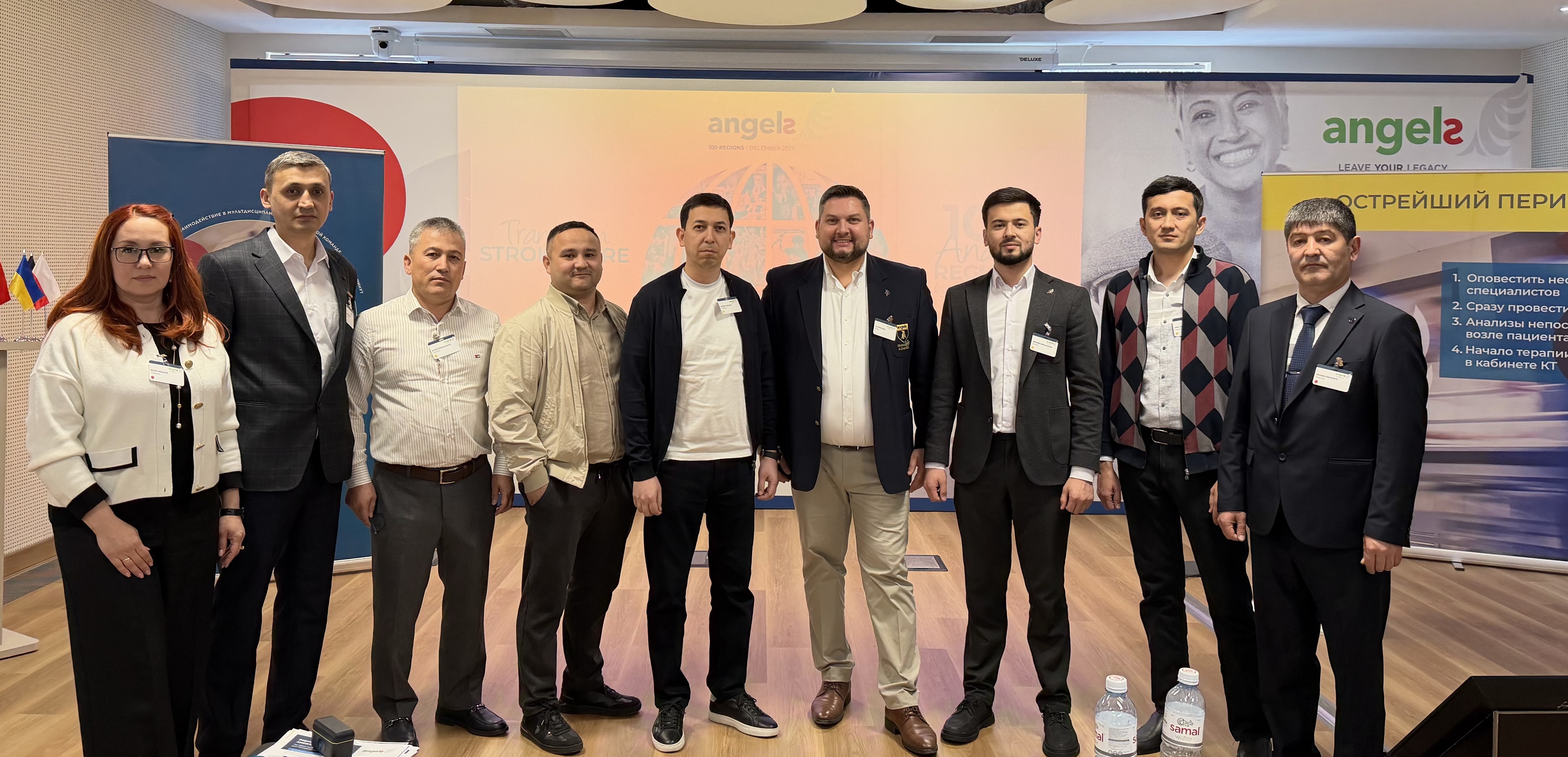
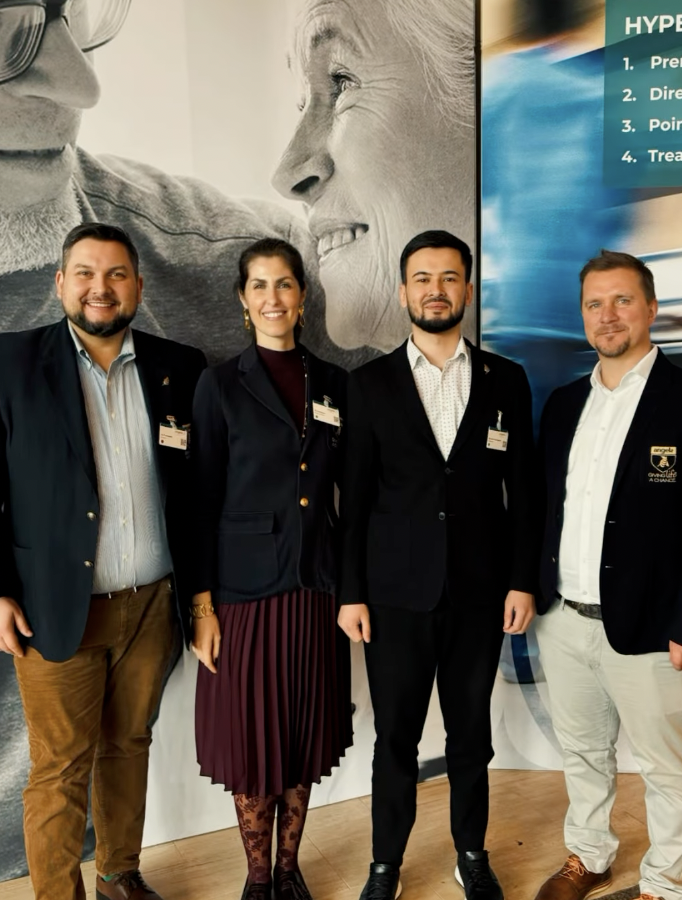
Three years later, on 1 May 2025, he arrived home with the goal to establish a stroke service in Uzbekistan. To this end, he had to create a community of likeminded people, and become a thorn in the flesh of the local neurology fraternity. He launched the Instagram-based stroke transformation collective StrokeTeamUz on 16 May. The first StrokeTeamUz seminar took place in Tashkent two weeks later. In photographs from the second seminar on 31 July, Abror is flanked by Angels consultant Lev Prystupiuk, who is grinning from ear to ear. Abror’s mission to bring a miracle home had found a formidable friend.
Making waves
In August of 2025, something important happened. To understand just how significant it was, one needs to be reminded that under Soviet rule there had been no bad news. Fearing that admitting failures would expose weakness, officials simply refused to admit anything was less than perfect.
But in 2025, after analysing data on death and disability in Uzbekistan, the office of President Shavkat Mirziyoyev recognized the impact of stroke, and the failure of the healthcare system to deliver an adequate stroke service. Further investigation showed that there was no unified practice guidance for treating stroke, and a lack of compliance with international guidelines.
Stroke care needed a reformer, and who better that someone who had already shown the courage to challenge established methods and beliefs, and who was already building a community of young physicians who likewise desired change?
StrokeTeamUz was making waves and after those waves reached the president’s office, Abror realized his mission now carried the expectations of his country. His idea was about to become state policy.
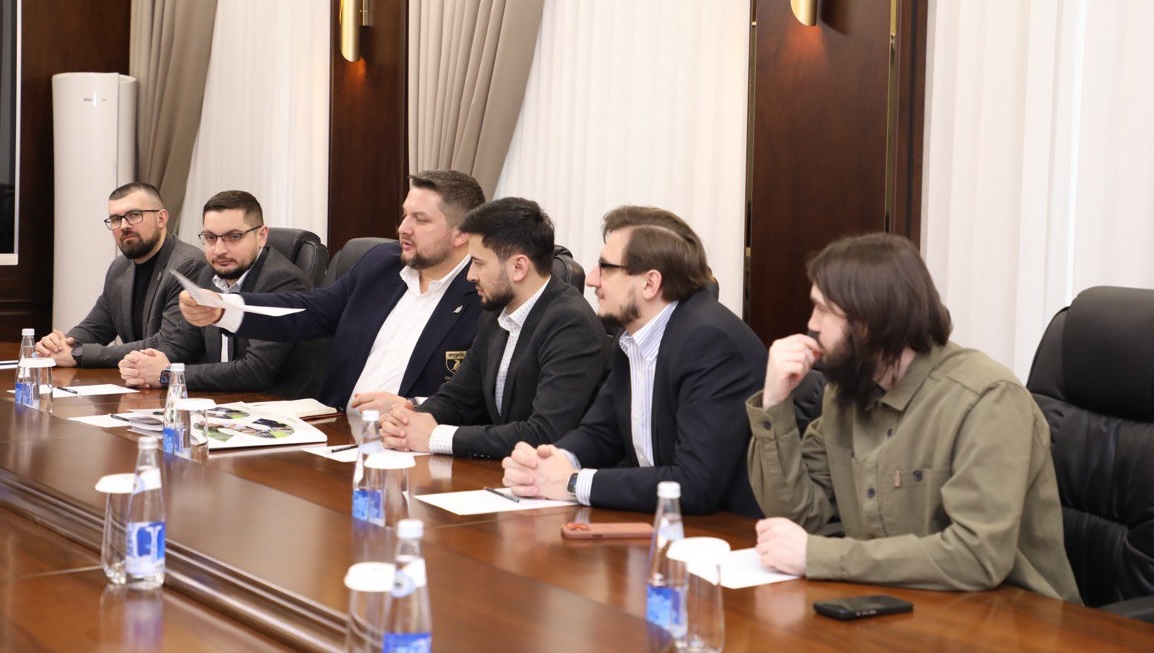
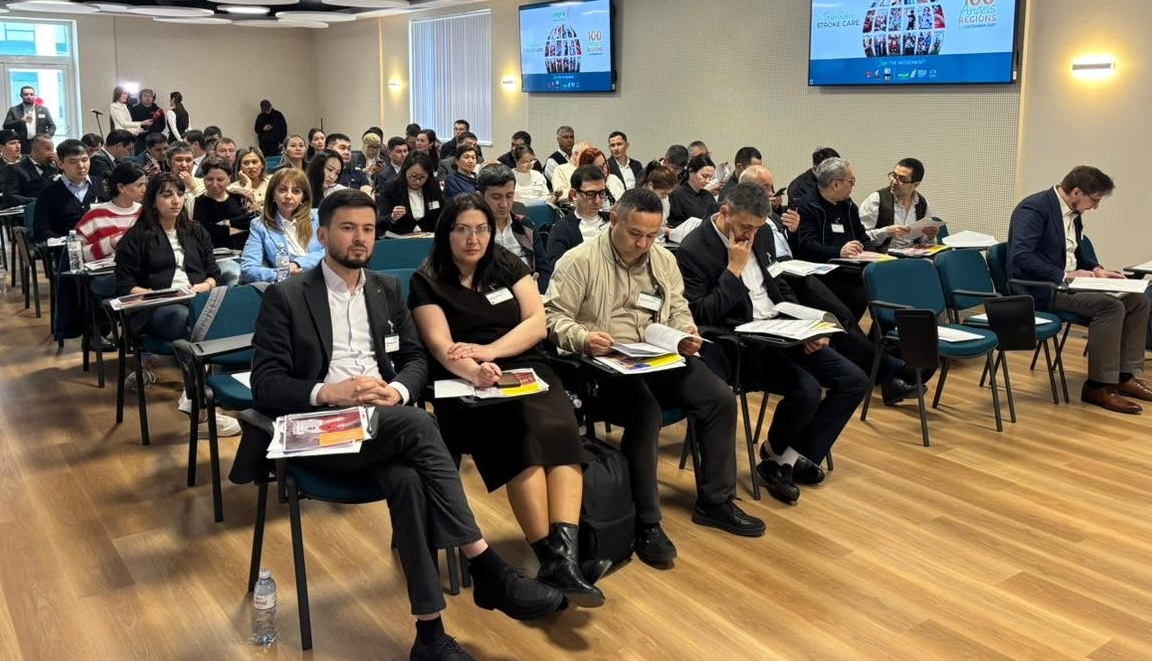
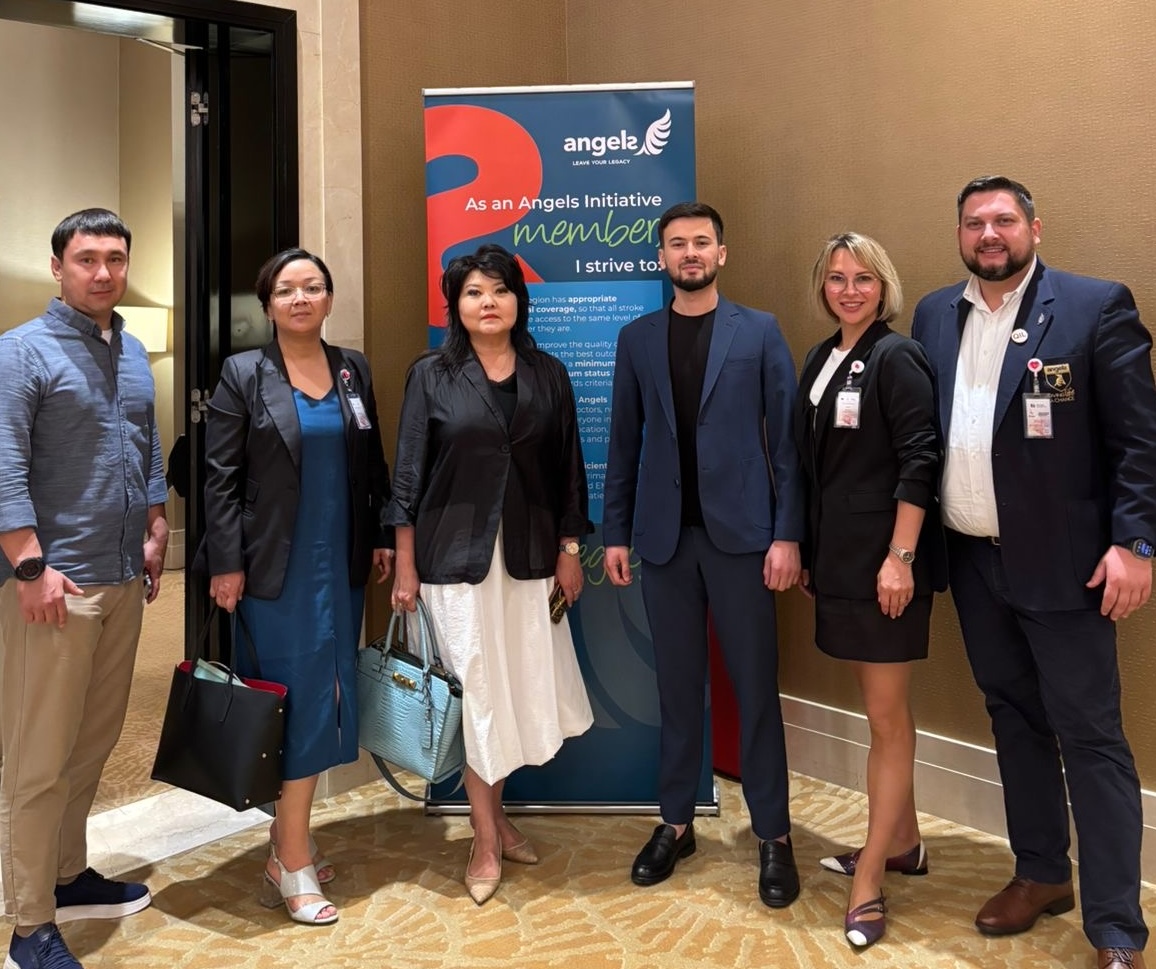
On 16 February 2026, a plane touched down at Tashkent International Airport carrying five Ukrainians who’d come participate in two acute stroke treatment and decision-making workshops aimed at creating future stroke centers in the Tashkent and Samarkand regions. On board were three neurologists – Dmytro Lebedynets, his younger brother Pavlo, and Ruslan Salnikov. Towering over the rest were Dmytro Hrynykha, an interventional neurologist, and Angels consultant, Lev.
Dr Abror met them at the airport. Then they headed to a working meeting with representatives of the Project Office and the Ministry of Health of Uzbekistan, to talk about developing a modern and effective stroke care system in Uzbekistan.
One month earlier, President Mirziyoyev had formally endorsed the nationwide implementation of the Angels Initiative. Presidential Decree No. 20, issued on 20 January 2026, also made provision for, among other things, a national program to combat heart attack and stroke, 100 percent provision of thrombolytics and endovascular consumables, implementation of structured clinical pathways, and large-scale professional training. In addition, the FAST Heroes stroke awareness program would be formally adopted in schools across Uzbekistan.
Faith, not fear
Just over a year after returning from his residency, 30-year-old Abror became head of the stroke services for all of Uzbekistan at the Project Office of the Ministry of Health of the Republic of Uzbekistan. The mission to bring a miracle home through an analytics-first approach of continuous education, expansion, and improvement, now seemed to have the wind at its back, but change never arrives on time.
If Abror’s two-year plan isn’t progressing as quickly as he had hoped, it is largely because teaching the fundamentals of modern stroke care can be difficult when some doctors believe they already know everything. Resistance to change is a challenge young physicians driving healthcare reform in many countries would recognize.
Abror’s insistence on discipline and on Angels Academy training and NIHSS certification for stroke doctors isn’t making him many friends, but at the risk of stating the obvious, fear isn’t part of his character.
Faith is. Abror is sustained by the belief that all men must strive all their lives to leave a legacy with no thought of an earthly reward. A quote on his Instagram account (from November 2020) sums it up rather neatly: “The one who understands that he only lives once, does not take everything from life; on the contrary, he gives himself away without anything left.”
Abror is holding back nothing.


