
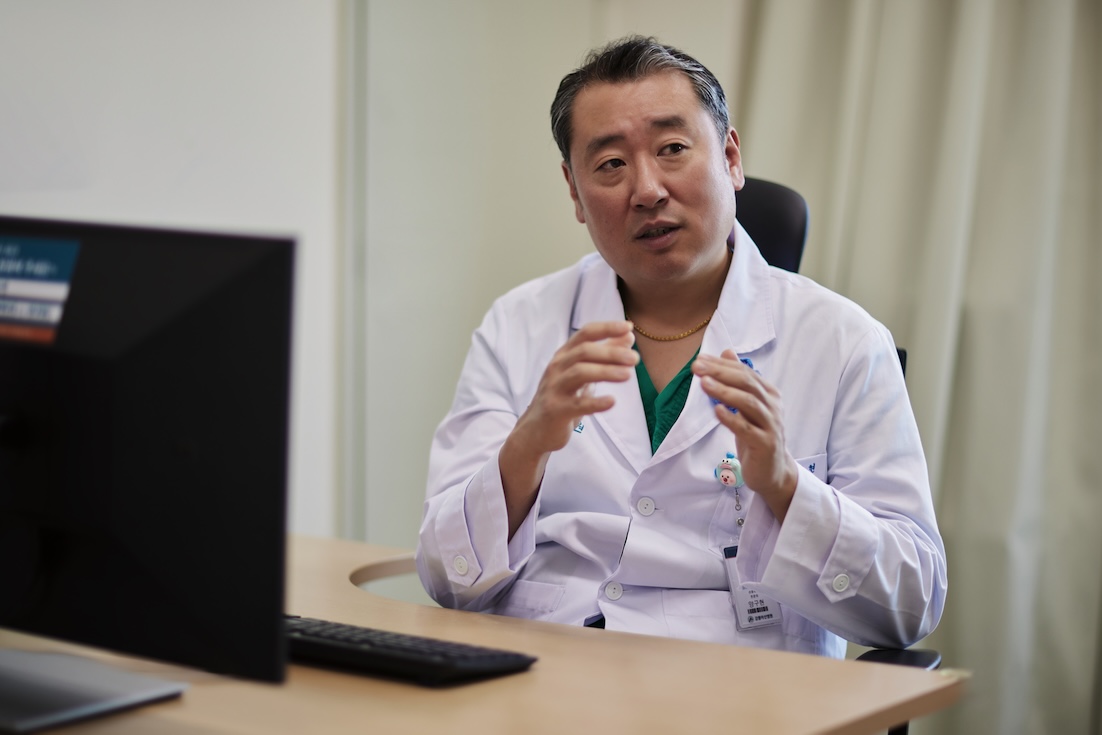
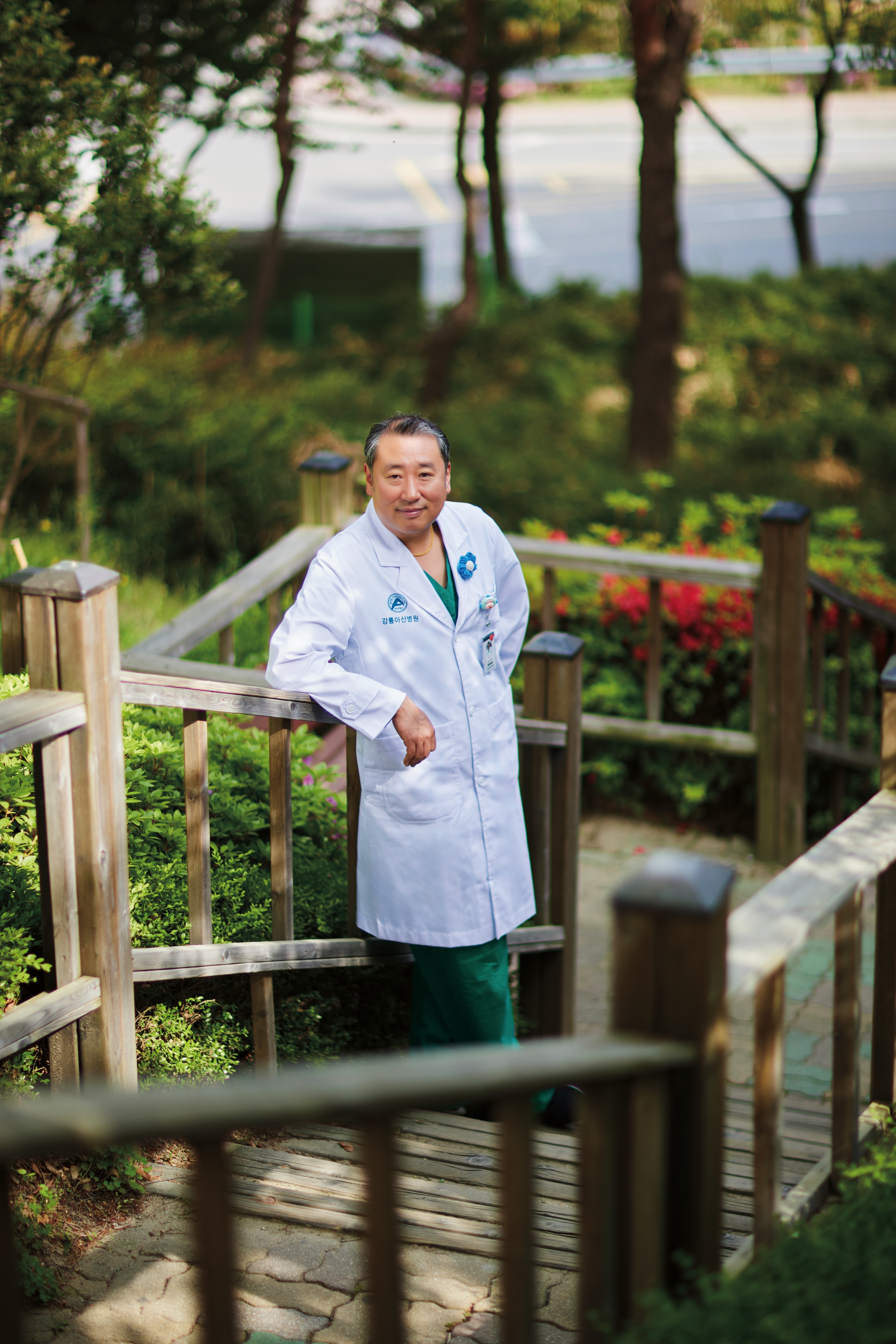
Prof. Kuhyun Yang is a neurosurgeon and Director of the Stroke Center at Gangneung Asan Hospital, one of only two diamond hospitals in Korea. Located in Gangneung, a coastal city located in the Yeongdong area of Gangwon Province, the hospital is at the centre of a large geographical area with relatively limited healthcare resources.
Yet Prof. Yang rejects the notion that geography is destiny. The hospital’s nine consecutive diamond awards reflect his conviction that people living in Gangneung deserve the same access to life-saving stroke care as those in major cities.
Since joining Gangneung Asan Hospital in 2016, he has led the development of a regional network designed to deliver high-quality emergency care when every minute matters.
In the interview below, Prof. Yang discusses the importance of building trust in regional healthcare – and making sure that trust is supported by real quality and results.
“The important issue is access,” he says. “Yeongdong has challenges in recruiting specialists and in maintaining the medical infrastructure that people need close to home. There can also be a strong belief that complex or advanced treatment should be received in Seoul. In stroke, that perception matters because time is critical. So improving awareness is not only about recognizing stroke; it is also about helping people trust that high-quality emergency care can be provided locally.”
Please describe the stroke service at Gangneung Asan Hospital at the time you joined the hospital in 2016. Did the Stroke Center already exist?
The Stroke Center already existed and there was an established foundation for cerebrovascular care. However, I felt there was still room to make the system more integrated and coordinated. Over the years, we worked to strengthen the entire stroke pathway, with a focus on rapid decision-making, treatment and multidisciplinary teamwork. For me, the important point was not simply having a Stroke Center in name, but creating a system that patients in this region could truly trust. That has been a gradual process over the past decade.
Had you already formed the intention to develop a cerebrovascular care system in the region, or did this vision develop over time?
The vision developed after I came to Gangneung. At first, I thought I might stay only for a short period. Then I saw the reality of regional healthcare. One patient came to our emergency department, but the family was concerned about receiving treatment at a regional hospital and chose to transfer the patient to Seoul. During the transfer, the patient suffered rebleeding and unfortunately reached a point where recovery was no longer possible. That experience stayed with me. I thought very strongly that living in Gangneung should never mean losing a chance at life-saving treatment. From then on, building a trustworthy regional cerebrovascular system became a personal mission. I respect a patient’s right to choose where they receive treatment when time permits. But in an emergency such as stroke, losing precious time can change the outcome. That is why building trust in regional healthcare – and making sure that trust is supported by real quality and results – has become so central to my work.
When did you become Director of the Stroke Center and what opportunities did this unlock for strengthening the stroke service in the region?
I was appointed Director of the Stroke Center in 2022. Taking on that role gave me the opportunity to think beyond individual procedures and focus on the whole stroke system. Stroke care is never the work of one doctor. It depends on many people working together and on a system that allows each person to do his or her job well. It also gave me a stronger platform to build cooperation with hospitals across Yeongdong. My goal has been to make our center stronger while also helping the whole region raise its level of cerebrovascular care.
Your hospital received a Diamond Award in Q2 of 2024, beginning a run of consecutive Diamond Awards. Can you point to any specific intervention that brought this milestone within reach?
I do not think there was one dramatic intervention that suddenly brought us the Diamond Award. It was really the result of many small improvements accumulating over time. We kept working to make every part of the stroke pathway faster, more reliable and more consistent. Above all, I think the most important factor was the commitment of the entire team. I do not believe that good results come from one person giving orders. Everyone involved in stroke care has an important role, and I wanted each member of the team to understand why quality matters and to take ownership of their part of the system. So I see the Diamond Award as recognition of the whole team. For me, however, the most meaningful achievement is that patients in Gangneung can receive timely, high-quality stroke care here without feeling that they must go to Seoul.
Nine consecutive Diamond Awards point to a deep commitment to maintaining the quality of care. What measures ensure an outstanding performance quarter after quarter?
I think maintaining quality is actually more difficult than achieving a good result once. The key is to make quality part of everyday practice, rather than something we focus on only when we are being evaluated. We continuously look at the entire stroke pathway and ask where delays occur, where communication can be improved, and how we can make the system more reliable. When something does not go as well as we hoped, I try not to begin by asking who made the mistake. I think it is more useful to ask what we can change in the system so the same problem is less likely to happen again. At the same time, I believe it is very important to recognize people when they do something well. Every member of the team should have an opportunity to grow professionally and feel proud of their contribution. When people feel that the quality of care is their own responsibility, high standards become part of the culture. I think that culture of shared responsibility is the main reason we have been able to maintain our performance quarter after quarter.
In 2024, Gangneung Asan Hospital was selected to play a leading role in cerebrovascular care across the Gangwon Yeongdong region. How has this strengthened your efforts to reduce regional disparities? And how would the designation of Gangneung Asan Hospital as a Regional Cardio-Cerebrovascular Center for the Yeongdong region help advance this vision further?
It has helped give a more formal structure to something we had already been trying to do: reduce the gap in cerebrovascular care across Yeongdong. For us, that does not mean every patient has to come to Gangneung Asan Hospital. What is more important is building a system in which local hospitals can confidently care for patients they are able to treat, while patients who need advanced treatment can be identified and transferred quickly. We have therefore focused on strengthening communication and cooperation with hospitals and specialists across the region. If Gangneung Asan Hospital is designated as a Regional Cardio-Cerebrovascular Center for the Yeongdong region, I believe it would allow us to develop this network further and create a more systematic regional care pathway for emergency and severe cerebrovascular conditions. Ultimately, our goal is not simply to make one hospital excellent. It is to create a region where patients can receive the right treatment, at the right place and at the right time, regardless of where they live.
By what means do stroke patients typically reach your hospital, and what percentage arrive within the time window for treatment?
Stroke patients reach our hospital through several pathways. Some are brought directly by Korea’s 119 emergency medical service, while others are transferred from local clinics or regional hospitals to our emergency department. We also operate a pre-notification network for stroke patients in the Yeongdong region using a KakaoTalk-based communication platform, together with a dedicated 119 hotline. These systems allow us to receive information in advance, prepare the appropriate team, and coordinate transfer more efficiently before the patient arrives. Stroke care really begins before the patient reaches the hospital, so close cooperation among local hospitals, specialists and emergency medical services is essential to providing timely treatment. Rather than using a single percentage for arrival within the treatment window, we closely monitor how rapidly patients are connected to definitive treatment once they enter this coordinated pathway. Among these patients, more than 98 percent are rapidly connected to definitive treatment.
Your leadership style is described as focused on empowering colleagues, fostering professional growth, and celebrating collective achievements. How did this approach to leadership evolve?
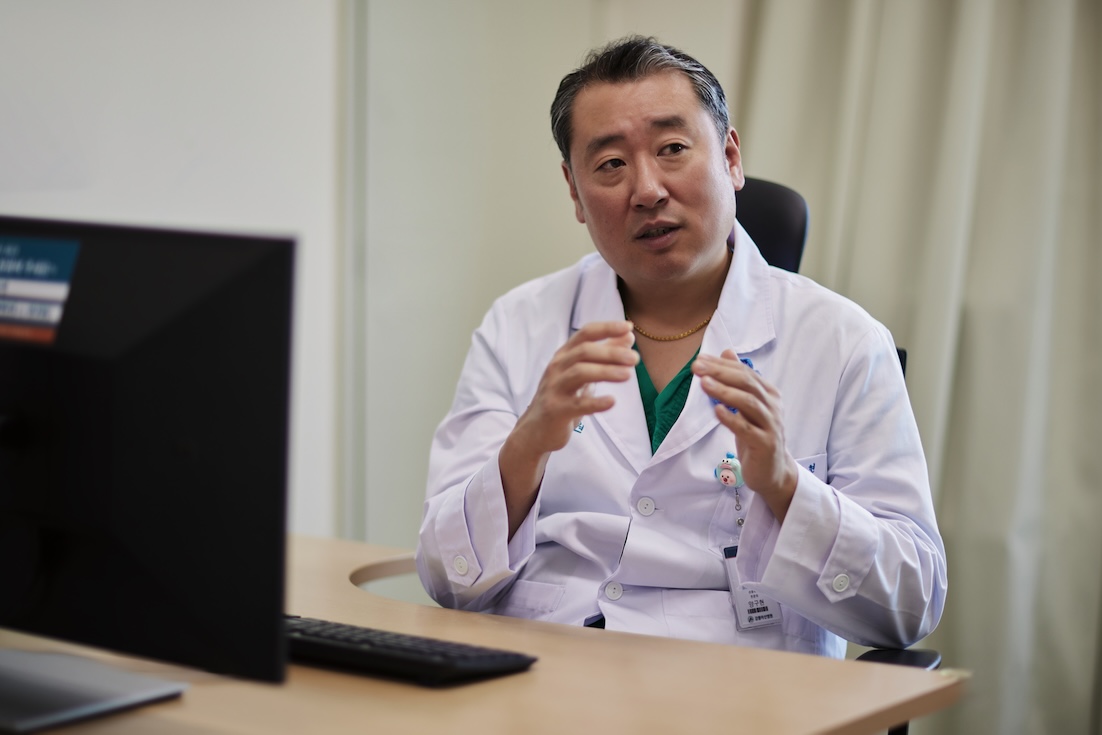
I have always believed that leadership should be based more on cooperation than command. Every member of the team has their own expertise, and I want each person to have the opportunity to grow and ‘bloom’ in their own role. When people do well, I make sure their efforts are recognized. Of course, I have learned a great deal from many senior colleagues over the years, but this leadership style has also developed through my own experience. I have seen that people do their best work when they feel respected and trusted, and when they are proud of the team they belong to.
Not everyone is prepared to embrace change at the same pace. What strategies do you find most effective in countering resistance to change?
I try not to treat resistance as a personal problem. In medicine, people often resist change because they are concerned about workload, patient safety, or whether a new system will really help. My approach is to explain clearly why the change is needed and to involve the people who will actually use the system. If people can see that a change improves patient safety or makes their work more efficient, they usually become more willing to participate. I think lasting change comes from shared understanding and a sense of ownership, not from forcing everyone to move at the same pace.
Please tell us where you grew up, how you were educated, and what led to your decision to pursue medicine and neurosurgery.
I was born and raised in Daejeon. I studied medicine at Konyang University and graduated in 2004. I then trained at Asan Medical Center, completed my service as a public health doctor, and later returned for further training in both cerebrovascular surgery and neurointervention. Interestingly, medicine was not my childhood dream. In high school, I wanted to become a judge because I was attracted to the idea of justice. I entered university soon after the Asian financial crisis, and at the time medicine seemed like a practical and secure career path. But as I began meeting and treating patients, I discovered what medicine could really mean. A doctor has the opportunity to directly change the course of a person’s life. That was what made medicine meaningful to me, and I have never regretted choosing this path. As for neurosurgery, particularly cerebrovascular surgery, I wanted to be there when someone truly needed me. In cerebrovascular disease, time is critical. In many cases, there is no option to say, ‘We will deal with this tomorrow.’ When a patient needs treatment immediately, someone has to be there and respond. I felt that if someone had to take on that responsibility, I wanted to be that person.
You moved to Gangneung about a decade ago. What drew you to the east and to the coast?
I did not originally move to Gangneung because I had a special plan to live on the east coast. I was offered an opportunity to work at Gangneung Asan Hospital. Over time, however, Gangneung stopped feeling like a temporary posting and became a place I felt responsible for. In the end, it was not the coast or the environment that kept me here. It was the sense of responsibility I developed toward this region and its patients.
How did you develop an interest in stroke?
What first attracted me to cerebrovascular disease was its urgency. But as I trained further, I also became fascinated by the fact that the same disease can require very different treatment approaches. That is why I trained in both open cerebrovascular surgery and endovascular treatment. I did not want to be limited by one technique or to choose a treatment simply because it was the one I was most familiar with. My principle is simple: I try to ask myself what treatment I would choose if the patient were a member of my own family, and then recommend the option that I believe is best for that individual patient.
We are always interested in what motivates the bright spots in our community – those individuals who are prepared to lead change not only in their hospital but in their cities and regions. We want to know what drives them and how they sustain their motivation. How would you answer that question?
Patients are the strongest source of motivation. I still remember a saxophone player who had a large cavernous malformation in the brainstem and became critically ill after bleeding. After surgery, he did not wake up for several hours, which was terrifying for me. Fortunately, he recovered. About ten months later, he came to a hospital symposium and showed me a video of himself playing the saxophone again. Moments like that stay with you. They remind me that our work is not only about treating a vessel or an image; it is about helping someone return to their own life.
What is your favourite part of the day?
The best part of my day is probably hearing that a seriously ill patient is improving. Cerebrovascular care involves many difficult and stressful moments, so seeing recovery gives those moments meaning. That feeling – knowing that a patient and family can breathe a little easier – is the part of the day I value most.
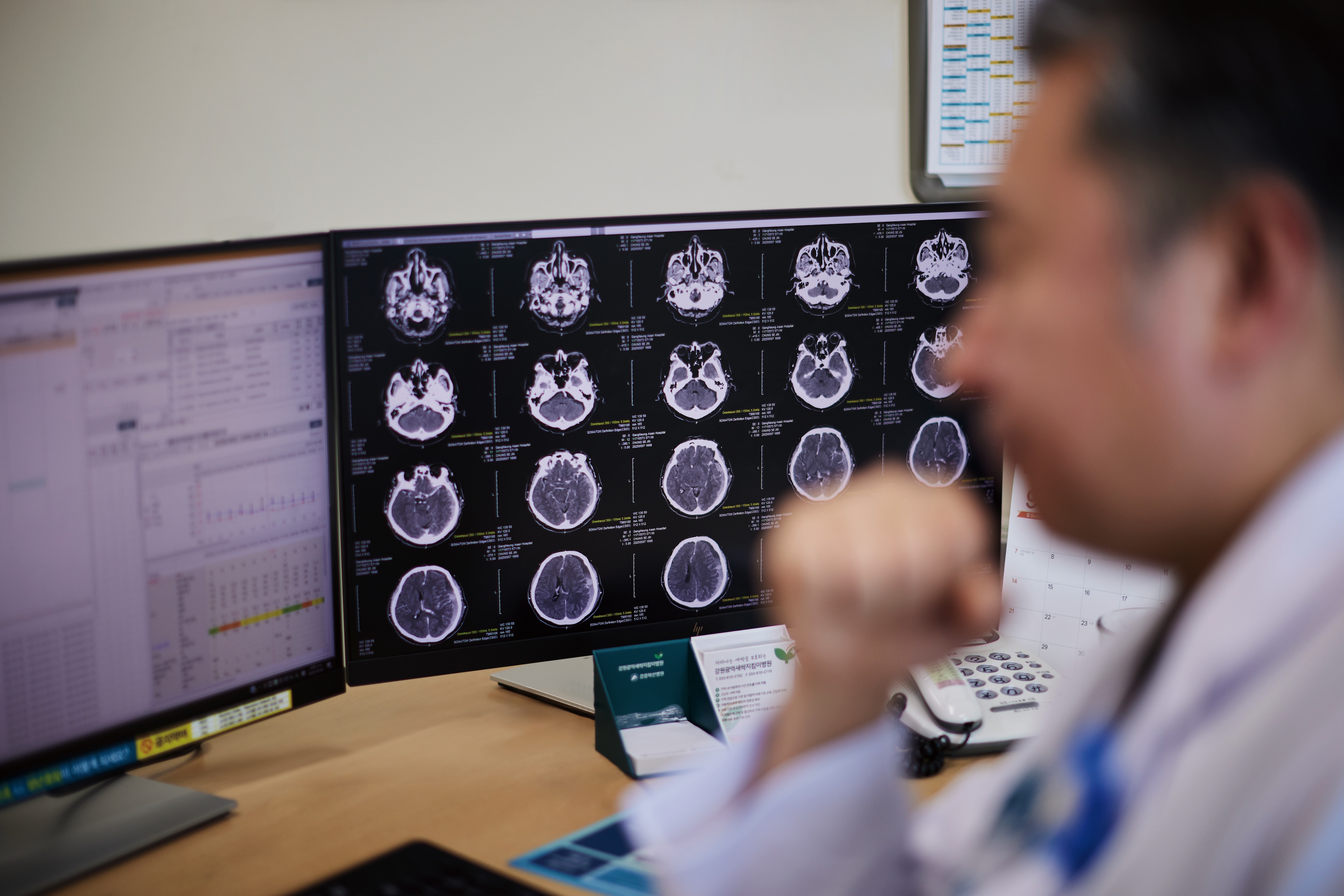
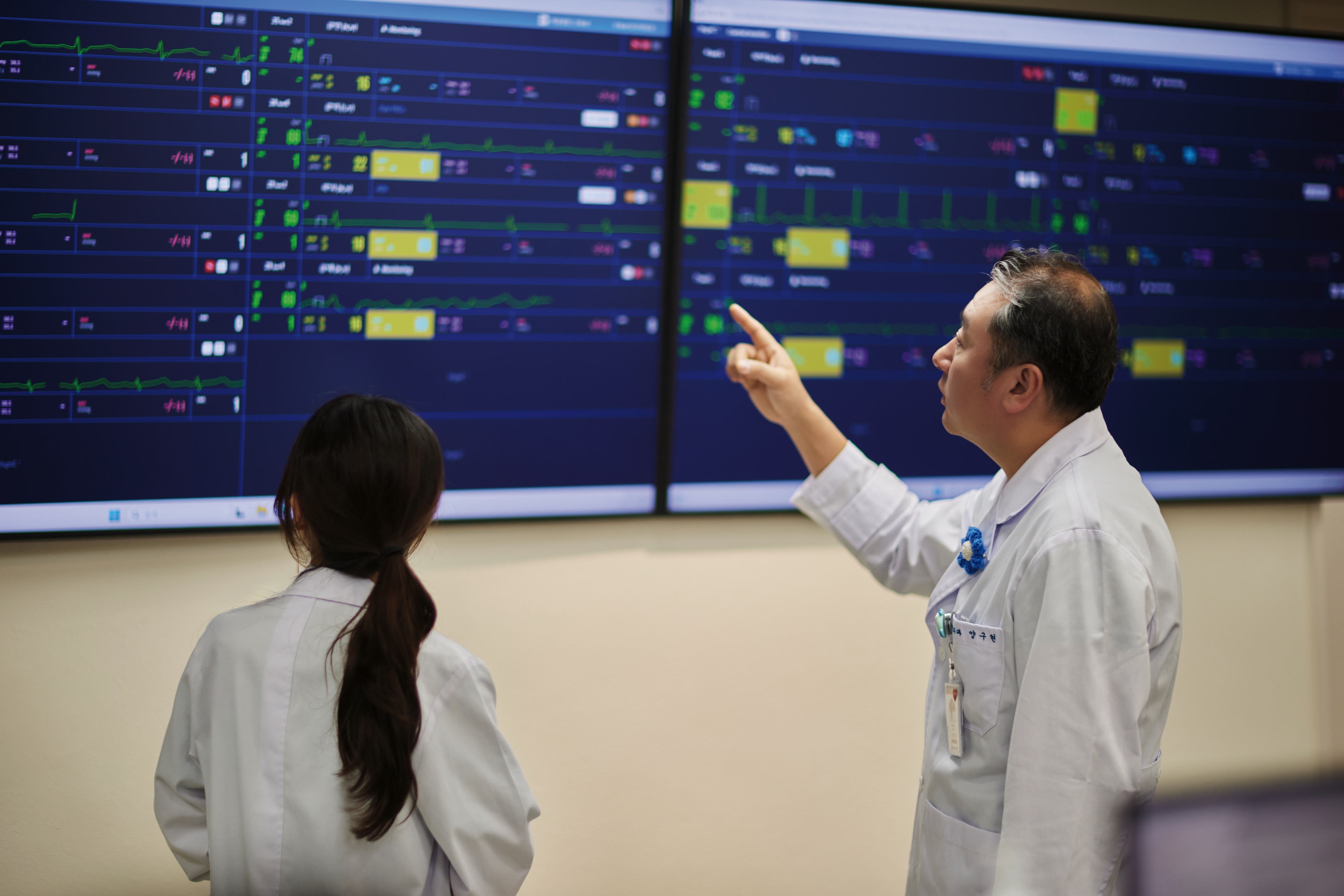
Gangneung Asan Hospital is the first hospital in Korea to implement the vital-sign monitoring system, thynC. What specific advantages does this technology have for patient care in the acute and post-acute phases of stroke?
thynC is a wearable vital-sign monitoring system that allows key vital signs to be observed centrally and in real time, while AI helps identify abnormal changes and generate alerts. This can help the clinical team recognize deterioration earlier and respond more quickly. It also allows nurses to see the condition of multiple patients at a glance and helps doctors identify which patients may require more immediate attention. During rounds, this can make prioritization and communication more efficient. For us, the value of thynC is not that it replaces clinicians, but that it helps limited medical staff focus their attention where it is needed most and supports safer patient care.
In your view, how will AI shape the future of healthcare?
I think AI will be most valuable when it helps clinicians recognize risks that are difficult for humans to monitor continuously. thynC is one example, but the principle is broader. AI can help us detect problems earlier, prioritize patients more effectively and provide clinicians with better information for decision-making. I do not see AI as a replacement for doctors or nurses. Clinical judgment, responsibility and communication with patients will remain essential. Instead, AI should reduce repetitive work and help healthcare professionals use their time and attention more effectively. Ultimately, I think AI has real value only when it solves a real clinical problem and leads to safer, better care for patients.
What can the global stroke community learn from the experience of Gangneung Asan Hospital Stroke Center?
I think our experience shows that geography does not have to determine the quality of stroke care. A regional hospital can build trust through clinical expertise, strong systems and consistent results. It also shows that one strong hospital is not enough. We need a regional network in which surrounding hospitals can confidently care for the patients they are able to treat, while patients with severe or complex conditions can reach advanced treatment quickly. Finally, leadership matters. Quality improves when people feel a sense of ownership rather than simply following orders. My hope is that where a patient lives will never determine whether they can receive excellent care when they need it most.


