
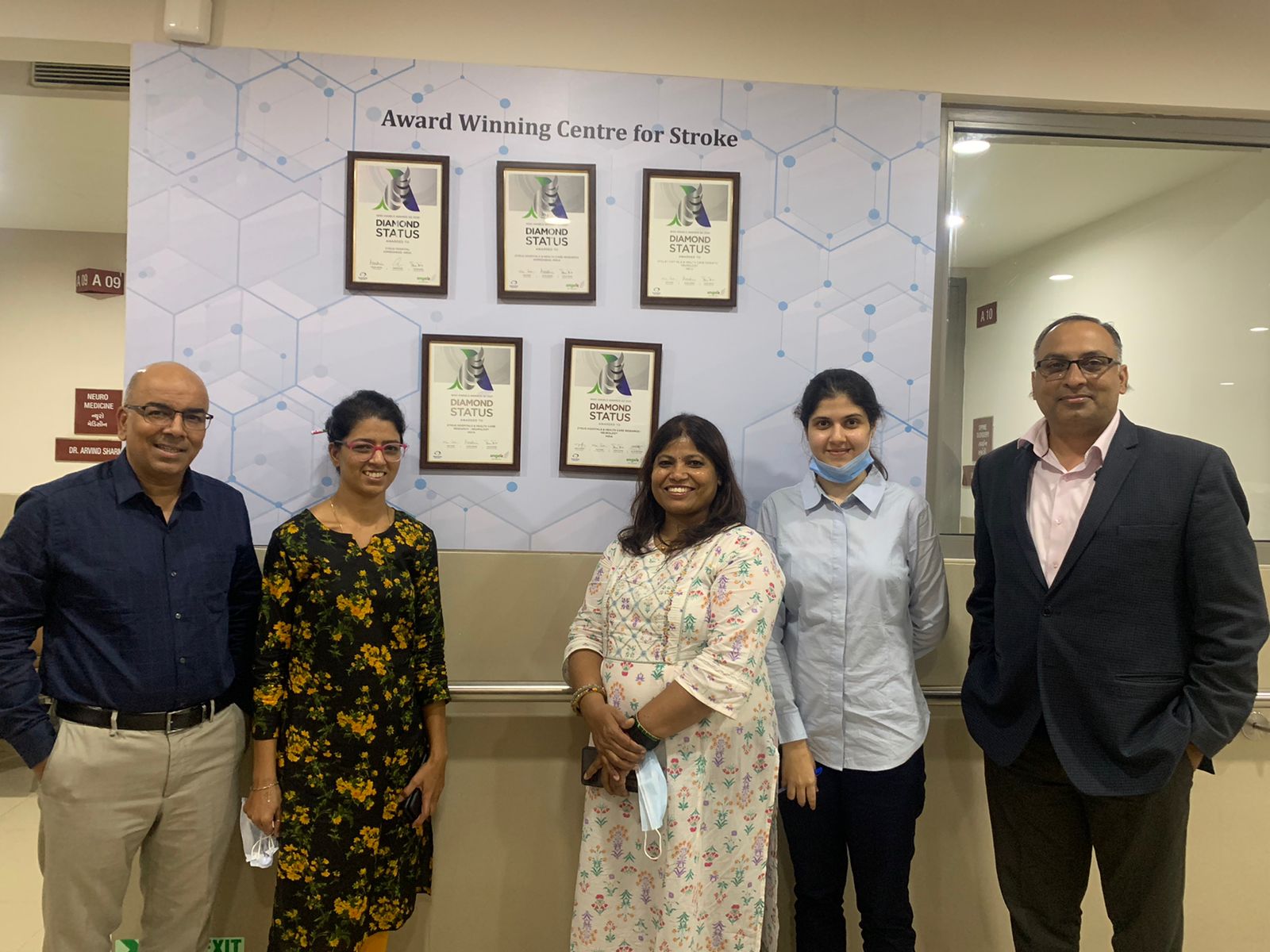
IN 2019, Zydus Hospital became involved in the Angels Initiative and started registering our patient data with RES-Q. Participating in RES-Q not only made it easier to get data on patients with stroke and quality of care in India and the world, but also helped us quickly find our weaknesses so that we could continue to train and improve.
With the assistance of the Angels Initiative, several trainings were conducted for nurses, emergency physicians, and pre-hospital service personnel. As a result, we were able to improve the number of patients receiving reperfusion treatment and reduce in-hospital delays over time. We even received WSO Angels awards, of which we are very proud.
Despite challenges resulting from the Covid-19 pandemic, we reorganised the disrupted circuits we had built to offer care for stroke patients safely and quickly, especially after the redirecting of many resources, particularly human resources, to the care of coronavirus patients. Protocols required changes due to the extraordinary circumstances we were experiencing. Implementation of checklists, the Helsinki model and the Angels stroke bag helped us maintain and even improve stroke care standards.
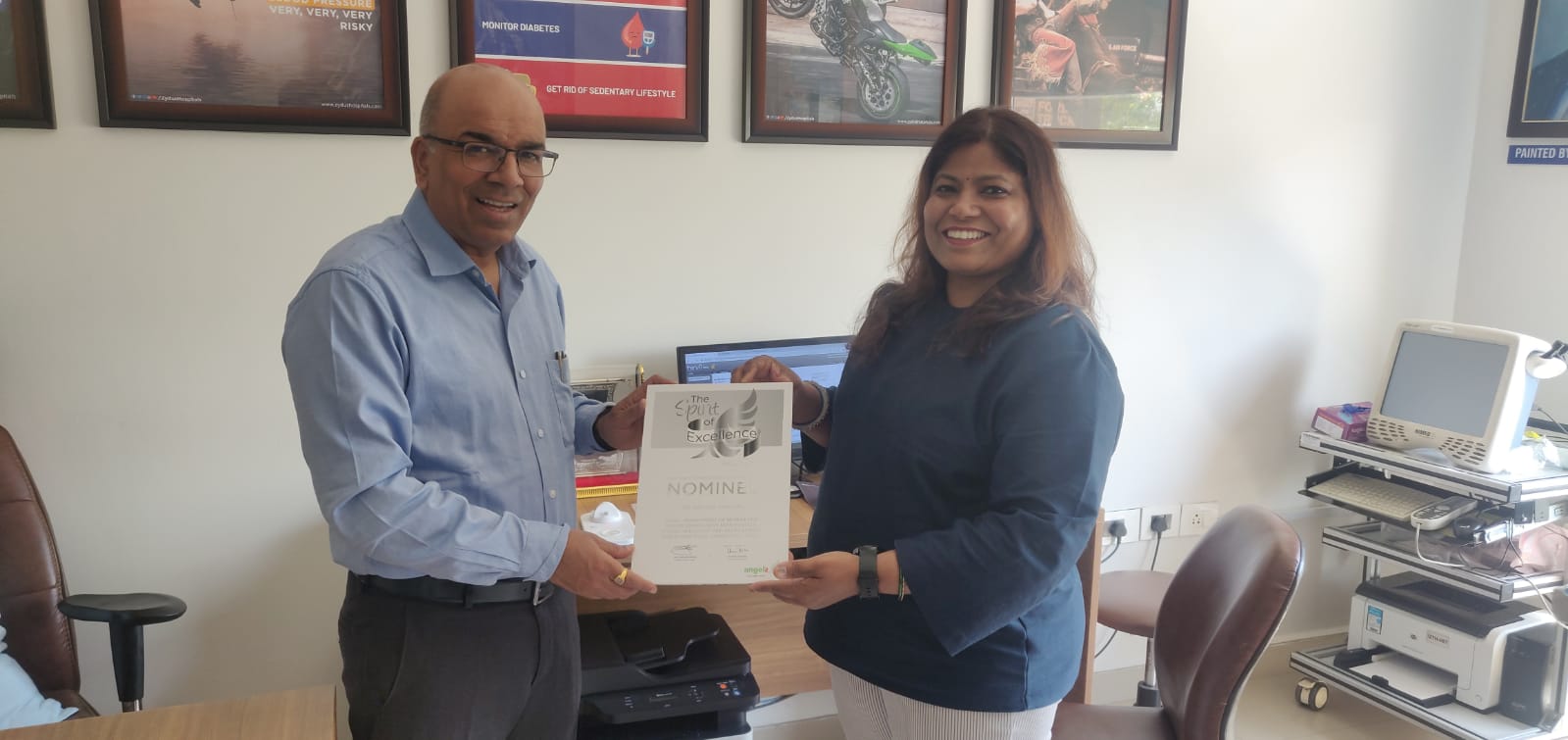
Despite the pandemic, there was a significant reduction of the average door-to-needle time to 32 minutes, with 100% below 60 minutes and 88% below 45 minutes. The percentage of patients treated with reperfusion therapies was 29.5%.
We believe that pre- and intra-hospital organisation has been critical, as reflected in the reduction of the door-to-needle time for acute treatment.
As months went by, quality indicators returned to normal, except for one: dysphagia screening, which we had been unable to conduct in time for all patients.
Once again we turned to the Angels Initiative who, together with Nutricia, on 29 January 2021, provided us with excellent virtual training. The training helped us develop a simple and effective dysphagia assessment protocol, which we quickly put into practice.
Currently, more than 90% of our patients diagnosed with stroke or TIA are screened for dysphagia to reduce potential in-hospital complications such as aspiration pneumonia.
Data recording and analysis is crucial to find your improvement opportunities. I am thankful to my team for their support, dedication and hard work. We are committed to medical excellence and transparency across all departments, with a “patient first” approach.


