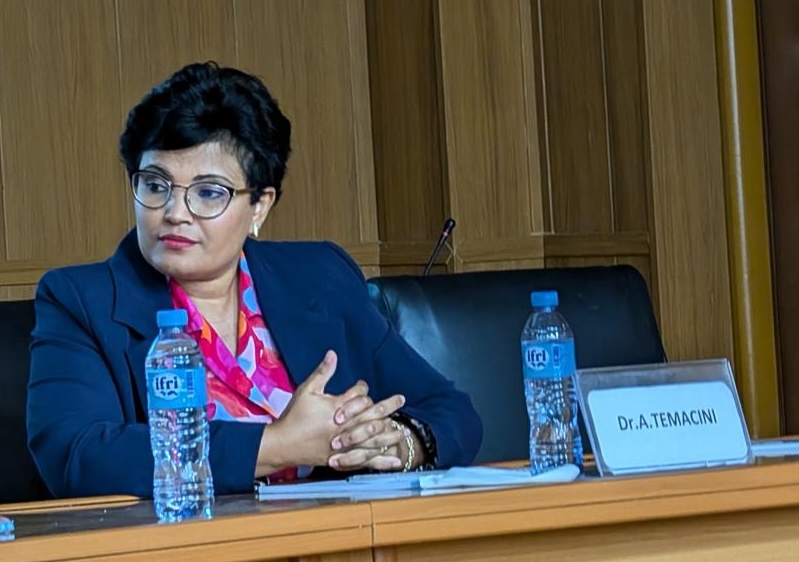
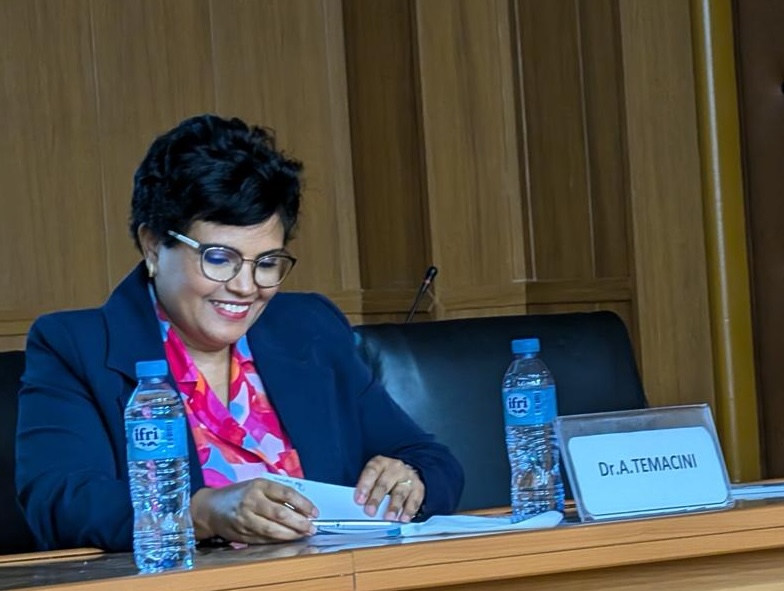
Dr Amina Temacini doesn’t walk: she runs. So fast, her students are left chasing her stride. Her goal is the same as her reward – the feeling of happiness that comes with changing someone’s life.
Speed is in her nature. Her father, a sports teacher, was once the Algerian champion over 400 meters. Her brother, Sief El Islem Temacini, is a former elite track and field athlete who was the African champion in the triple jump.
Her mother gave her a head for heights. “She taught me that dreams have no boundaries, and that no summit is beyond the reach of those who dare to climb it.”
“That’s why I love a challenge,” the intensivist at Béni Messous University Hospital in the Algerian capital says. “I’m not a doctor who waits, or asks questions slowly.”
She believes that “specialisations choose us”, and loves critical care medicine with its make-or-break moments, its crisis decision making, and the demands upon the sharpness, clarity and speed of one’s mind.
Also in her nature is the impulse to help. It’s what drew her to medicine – and why, six years ago, a single night shift dramatically altered the prospects for stroke patients at Béni Messous University Hospital.
At the time, patients with stroke were routed to a neighboring hospital with a dedicated neurology department but, due to the city’s traffic congestion, often got there too late for life-saving treatment. This was also the fate of a young stroke patient, and then another, both arriving during the night shift in question.
“I was frustrated that I could do nothing for them,” Dr Temacini says. “I said to myself, this isn’t right.”
The night marked a turning point and the start of what she describes as her adventures in neurovascular care.
A race against time
Already familiar with thrombolysis from her experience using it in cases of myocardial infarction, Dr Temacini read everything she could about treating patients with acute ischemic stroke. Then, because there were questions her reading couldn’t answer, she went to Paris to learn about stroke at the Sorbonne University, returning to Algiers after a year to train her staff and colleagues.
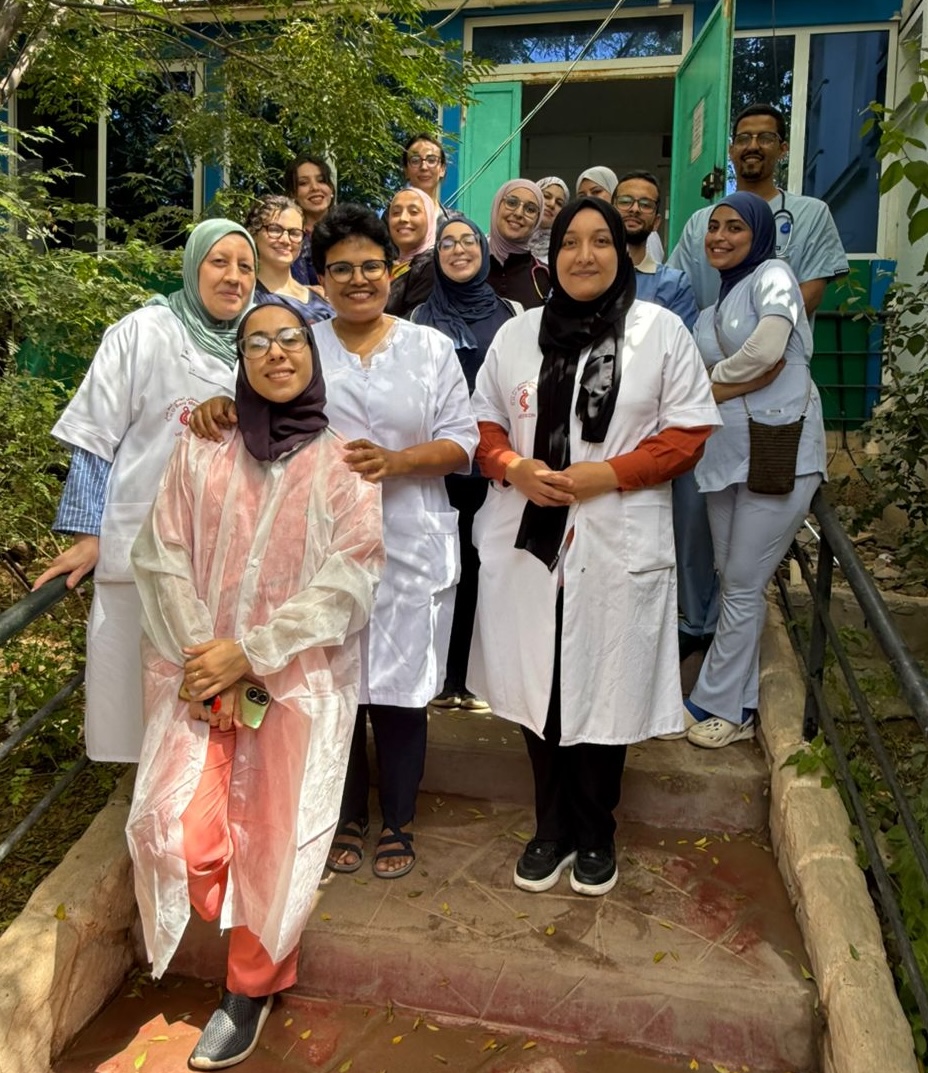
Since 2020, Dr Temacini has trained 1,000 residents, interns, students, nurses and even security guards to ensure that stroke patients arriving at Béni Messous University Hospital take the shortest possible route to the emergency corridor designed to prioritise their care. As a result, 100 patients have been given a second chance at life.
She also trains primary care doctors who practice in Béni Messous commune, so more patients will reach her hospital in time, and her awareness journey extends to television and radio appearances, as well as to urging doctors in other specialties to devote two minutes of each consultation to teaching patients the warning signs of stroke.
Her doctoral thesis, which in 2024 earned her the title of Associate Professor in Anesthesiology and Intensive Care, is further evidence of her deep engagement with stroke: it examined risk factors for mortality among acute ischemic stroke patients at her hospital over the two-year period until December 2022.
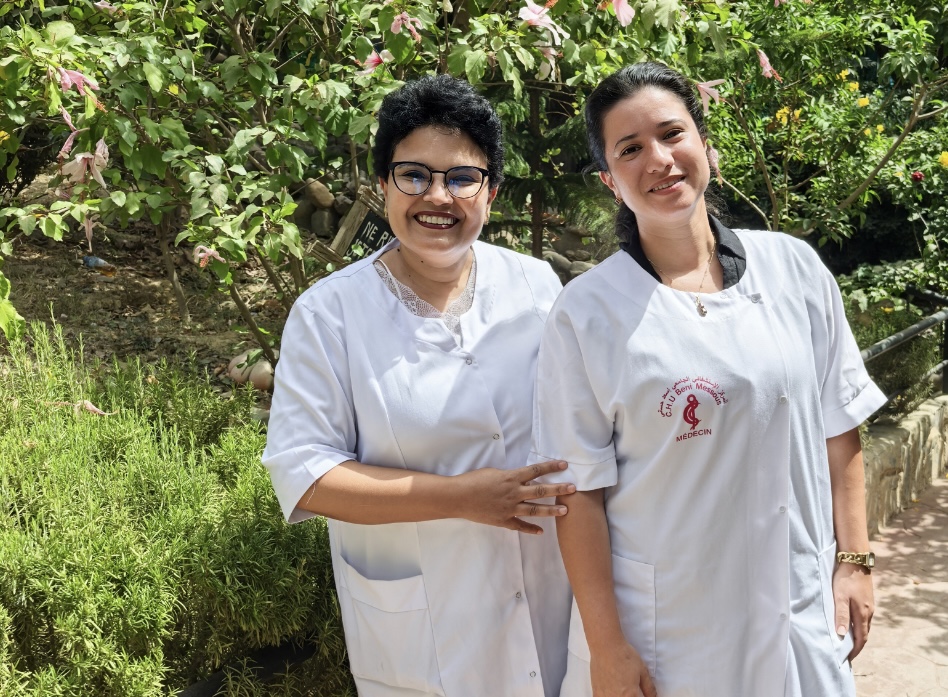
So prepare to be surprised by her clinical role at Béni Messous hospital, where, since 2019, she’s been head of the Anti-Pain and Chinese Medicine Unit, an oasis of soft, soothing music set in a flower-filled garden, dedicated to the care of patients suffering from chronic pain. It seems a world away from the race against time to save lives from stroke.
“We try to create a peaceful and welcoming environment where patients can, for a moment, forget that they are in a hospital,” Dr Temacini says. “We want the environment to feel calm and comforting, helping patients to feel more relaxed and at ease during their care.”
Care is grounded in a multidisciplinary approach that combines pharmacological treatment with non-pharmacological therapies, including acupuncture, she explains.
A fearless mind
Her interest in Traditional Chinese Medicine developed from her scientific curiosity and her open-minded approach to medicine, Dr Temacini says. She came upon it almost by chance, but became increasingly interested in its philosophy and holistic approach to the patient.
She says, “Medicine has always been part of my family environment, as my sister is a nephrologist. This has contributed, in its own way, to my lifelong interest in medicine and in the different ways we can care for and help patients.”
She completed four years of training in Traditional Chinese Medicine at a French school and has a diploma in acupuncture, which can be helpful for alleviating pain and improving overall well-being, she says. They also use it to help manage certain side effects experienced by patients undergoing chemotherapy and radiotherapy.
“My medical background is primarily rooted in conventional, evidence-based medicine,” Dr Temacini says. “I see Chinese Medicine as a complementary approach rather than a replacement for modern medicine. I believe that the most important thing is to keep an open mind while maintaining a critical and scientific perspective.
“For me, the goal is always to find the best possible solutions for each patient, according to their individual needs and circumstances. This is also what led me to become interested in the potential role of acupuncture in pain management and, more broadly, in neurovascular care and stroke rehabilitation.”
An open mind is usually also a fearless mind, and Dr Temacini confirms that fear is no barrier to her desire to “leave a mark on humanity”.
She wants to be remembered for having had “a truly wonderful adventure, a very nice story,” Amina says. “And for humanity. I want them to remember that I was human with my patients, that I did what I could to change their lives.”
And that she ran as fast as she could.


