
What to expect in the Bonus Episode
Bonus Ep: Dr Asel Kerimkulova | This is only the beginning
NOTE: This podcast was recorded in Russian
The name, Asel Kerimkulova, is synonymous with better stroke care in Kyrgyzstan where she has systematically transformed the outlook for stroke patients by leading the creation and update of clinical treatment guidelines, establishing a nationwide stroke network, and enabling the first thrombolysis in 2025.
A nominee in this year’s Spirit of Excellence Awards, neurologist and stroke specialist Dr Kerimkulova is the chief neurologist for the Ministry of Health of the Kyrgyz Republic, as well as Kyrgyzstan’s national coordinator for the European Stroke Organization, and an expert collaborator with the World Health Organization (WHO).
She also works alongside regional health and education experts to deploy public health campaigns like the FAST Heroes campaign, which educate communities on early stroke symptom detection.
In this podcast, recorded in Maastricht in May 2026, Angels consultant Lev Prystupiuk engages Dr Kerimkulova in a wide-ranging conversation that offers insights into a decade of stroke care transformation in Kyrgyzstan.
In this episode:
• The journey towards transformation
• Working with the WHO
• Working within the Ministry of Health
• Passion for FAST Heroes
• Setting the standard for stroke care
• Collaboration with neighboring countries and beyond
• Vision for the next 10 years
LISTEN TO THE FULL EPISODE BELOW
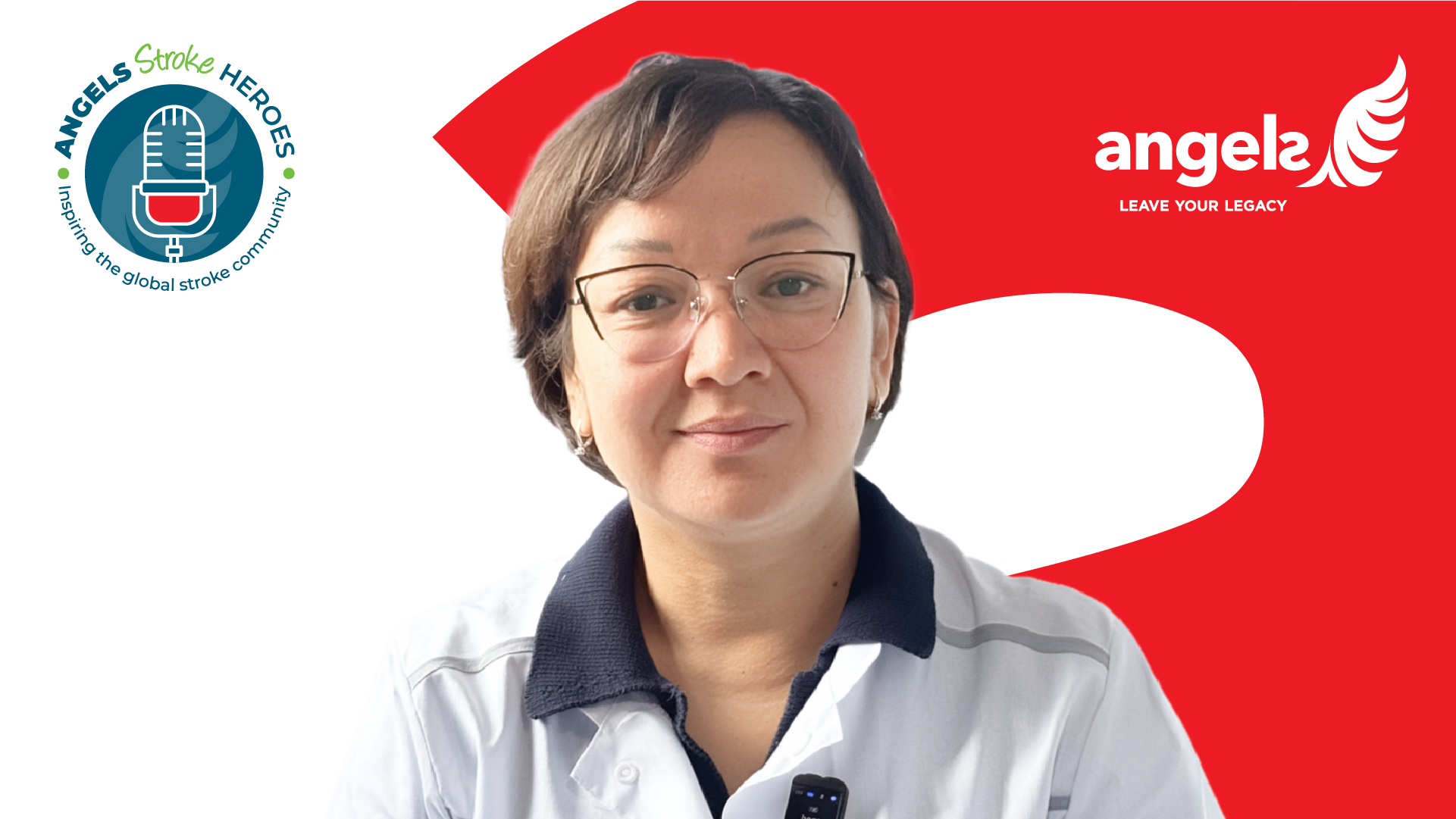
The desire to help people attracted Dr Asel Kerimkulova to medicine. Now the will to reduce stroke incidence and stroke mortality and relieve the burden of disability, make her a tireless advocate for and implementer of world-class stroke care.
Her interest straddle clinical work, policy-making, systemic change, and awareness education. The FAST Heroes project is close to her heart. She says, “The FAST project, which is developing very well in Kyrgyzstan, is simply my passion. I enjoy working on this project, and I see children who have recognized the first symptoms of stroke and are happily involved in it.
And they’re simply delighted.
“There have been cases where children recognized the first symptoms of stroke in their grandparents. And that's very good. By directly teaching children, we teach their families – parents, fathers, mothers, grandmothers, and grandfathers.”