
What to expect in Episode 17
Ep 17: Dr Apostolos Safouris | Lessons from history
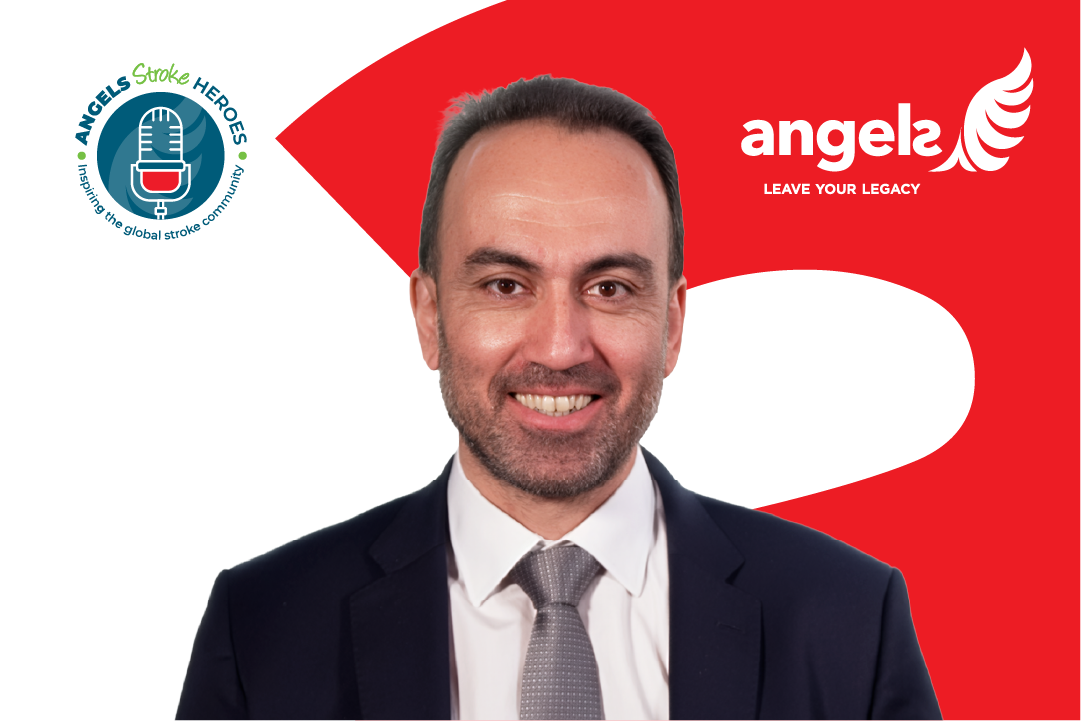
Dr Apostolos Safouris is a distinguished vascular neurologist, chair of the ESO Stroke Unit Certification Committee, and a 2024 recipient of the Spirit of Excellence Award. He’s also an avid reader who told us in the past that the great texts from the history of humanity provided context for his work.
Shortly before this conversation took place in Maastricht, the setting for ESOC 2026, Apostolos announced on LinkedIn that having reached level 30 in Duolingo, he was now able to order food in Dutch. But then we discovered that learning Dutch in fact had nothing to do with eating in Maastricht.
In a wide-ranging conversation, Apostolos talks about trading Athens for Brussels, parenting teenaged daughters, progress towards getting stroke centers certified across Europe, and the end of the AI honeymoon.
In some instances AI is being developed for functions humans can do more cheaply, he contends. He also talks about the potential for AI to tone down noise and counter bias in medicine, and concludes:
"If you say I’m going to use AI to solve all the problems, you’re out of your mind. If you say I’m not using AI, well, you’ve been left behind in 2020."
In this episode:
• Living and working in Belgium
• Raising teenagers
• Progress towards Stroke Unit certification in Europe
• Why the process matters
• AI and the role of doctors
• Reducing noise in medicine
• Building stroke networks
• Some recommended reading
LISTEN TO THE FULL EPISODE BELOW
On Dr Safouris’s reading list
Sapiens: A Brief History of Humankind (2011) by the Israeli military historian Yuval Noah Harari
Darwin’s Dangerous Idea: Evolution and the Meanings of Life (1995) by Daniel Dennett
Peak Human: What We Can Learn from History's Greatest Civilisations (2025) by Johan Norberg
The Maniac (2023), a fictionalised biography of John von Neumann, by Benjamín Labatut