In most of the southern hemisphere, spring arrives in September. Offering a respite from winter, a precursor to summer, it’s a season of renewal and regrowth.
This isn’t the case in Brazil’s tropical northeast where temperatures remain more or less constant through the year. Here people talk about two seasons – one rainy, one dry, both hot – and in September the rain is still a long way off.
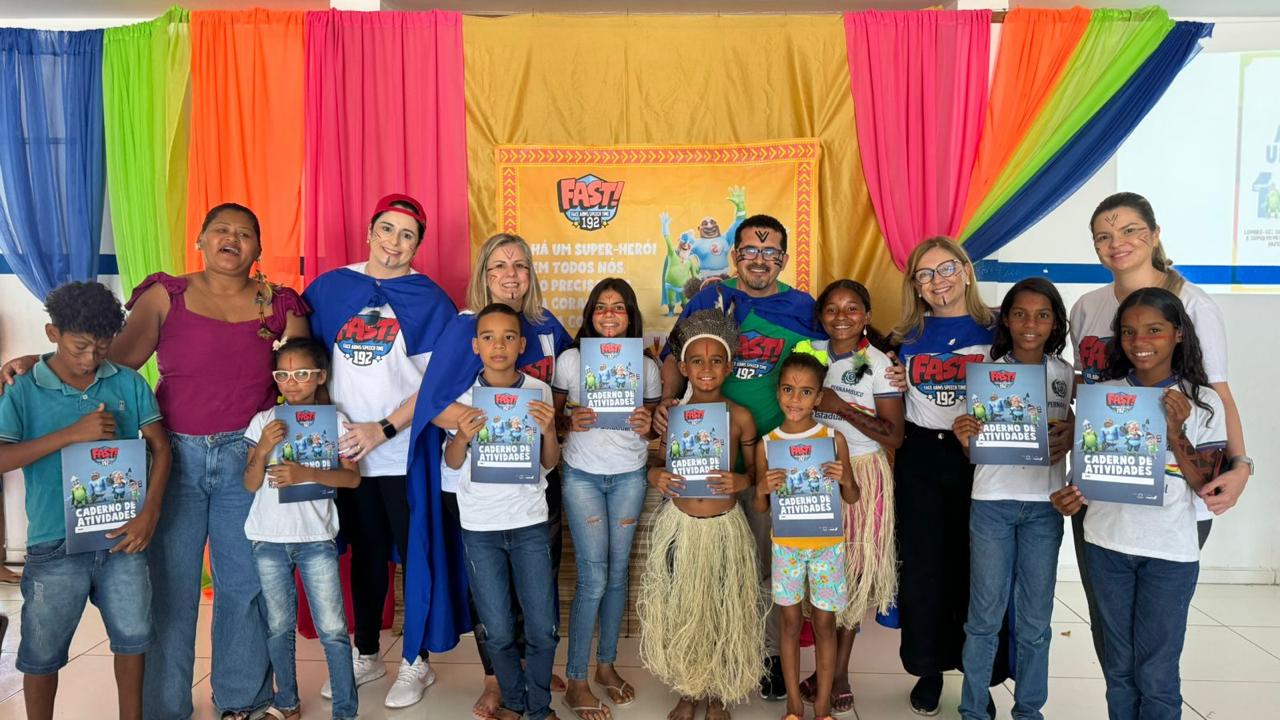
This past September, however, a team of Angels blew into town and hundreds of children greeted them with immense enthusiasm and immersed themselves in lessons that save lives. The setting for these events was Serra Talhada, a city in the interior of the state of Pernambuco, where the Angels team of Brazil had appointments with four schools.
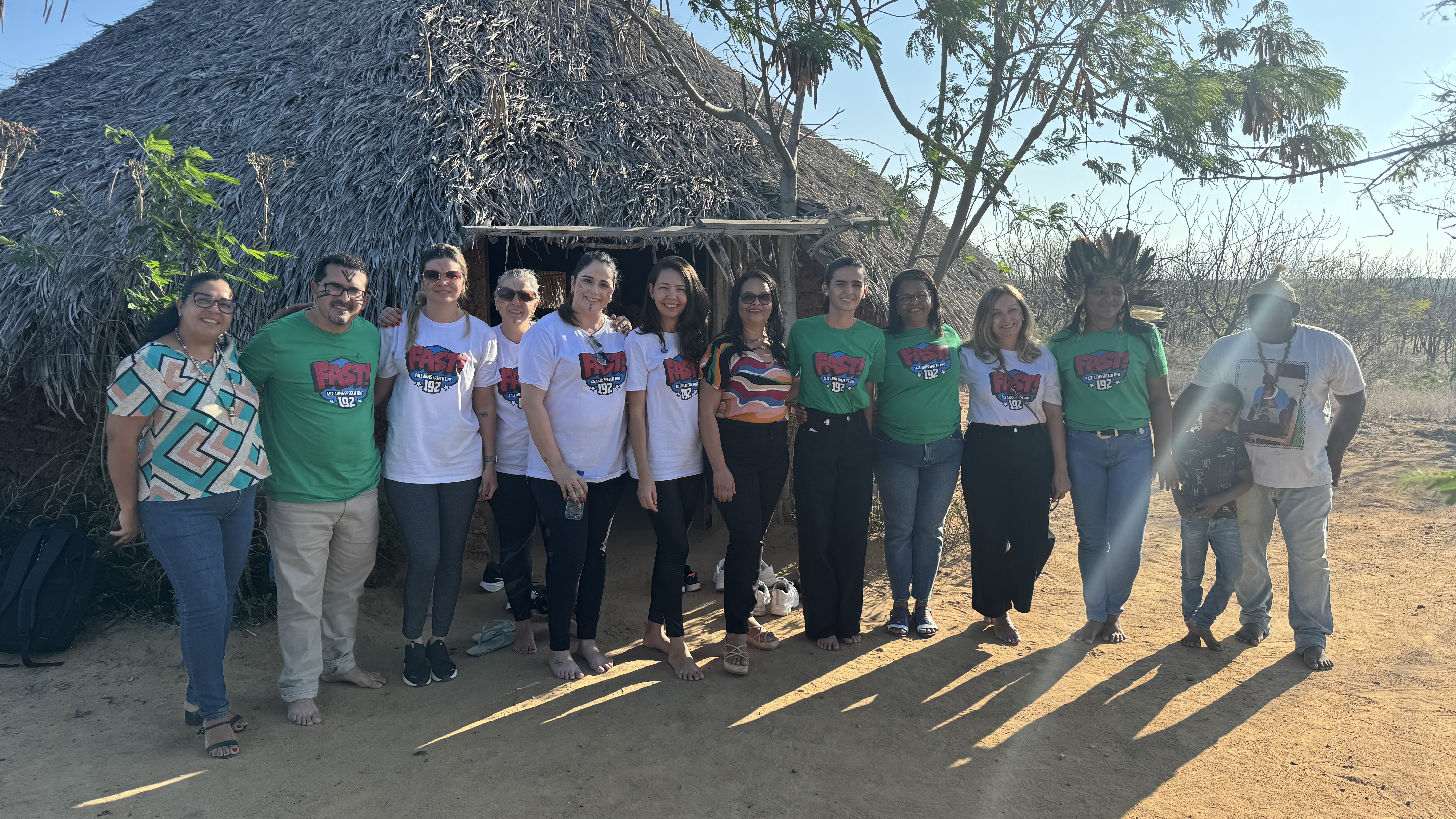
The schools they had selected all served vulnerable and marginalized communities, and that was what had brought Alessandro Rômulo, Karla Trevisan, Vivian Finotti, Mariana Rossi, and Andréa Giordano on this mission.
Luís Pereira Leal and Josefa Alice are schools attended by children from indigenous communities, while Francisca Gooy and Fasto Pereira are rural quilombola schools whose learners are descended from Afro-Brazilian slaves. Poverty and discrimination have left their mark on these communities. In some there is no basic sanitation, and hungry children go to bed and to school. With social and economic instability comes the lure of organized crime and drugs, as well as risks to health. The population is vulnerable to hypertension, diabetes, and other risk factors for stroke.
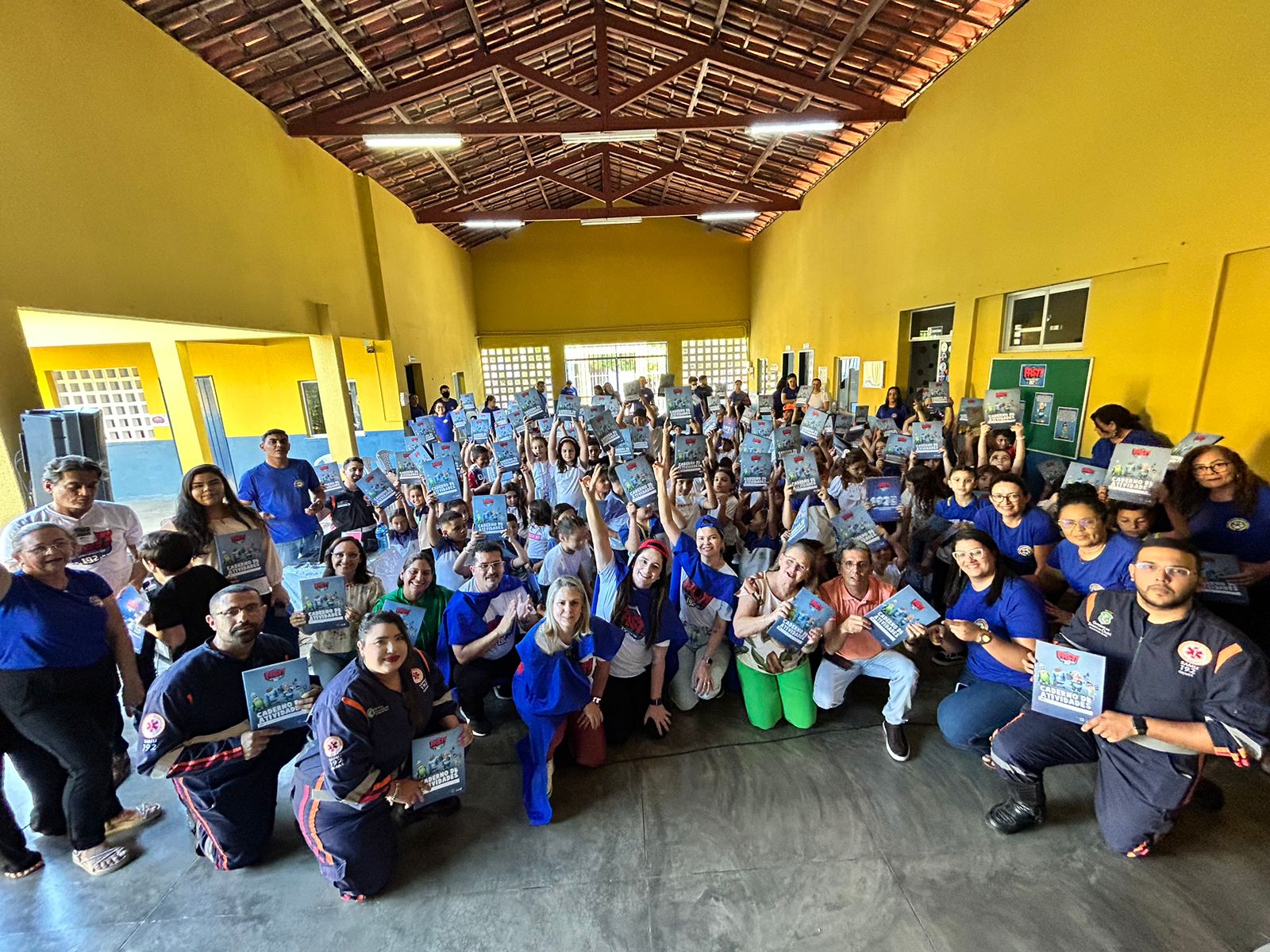
The Angels team’s goal was to introduce children to the FAST Heroes project and teach them how to recognize the signs of stroke, and the importance of seeking help fast. Their work in this region had commenced in May 2024. The September activation, which was supported by the local ambulance service, took the number of schools reached in the Serra Talhada’s municipal network to 63, with 5,564 school children earning their capes. The team took advantage of an opportunity to expand the project to the neighbouring city of Itacuruba where they taught 212 more children about stroke. In greater Serra Talhada there were now 5,776 superheroes, 400 stroke-savvy teachers, and thousands of grandparents safer from stroke.
Reaching targets for FAST Heroes implementation is one of the criteria for Angels City status and Serra Talhada is one of two vulnerable regions in northeast Brazil expected to reach this milestone before the end of 2024. The other is Quixeramobim, located around 450 km to the north. Here the project was implemented at the end of July, in over 20 municipalities and in 36 schools.
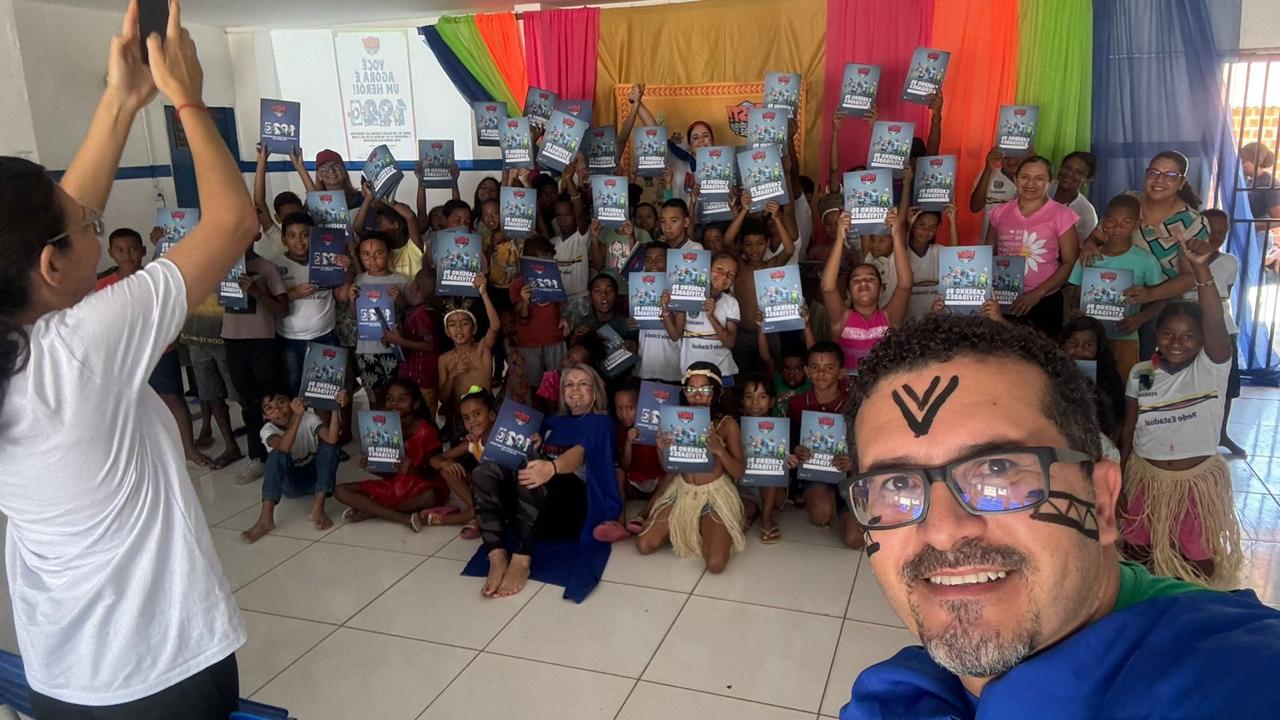
The Elementary School Dona Maria de Araújo Carneiro trained 450 students and served as the pioneer and model for others. As the project grew, it reached 44 school managers and 77 teachers, who have since trained 2,350 children.
Taking FAST Heroes to under-resourced communities in northeast Brazil has been an inspiring journey, the Angels consultants say. “In some schools, we were greeted with theater performances, dance, and poetry recitations, which reflected the teachers' engagement with the stroke awareness theme.
“We realized that learning goes beyond teaching about stroke. We had the opportunity to deeply experience the local culture of the cities we visited. Witnessing their daily lives—through habits, customs, food, and, most importantly, the joy they showed in welcoming us to their schools—left a lasting impression on us all.”


