
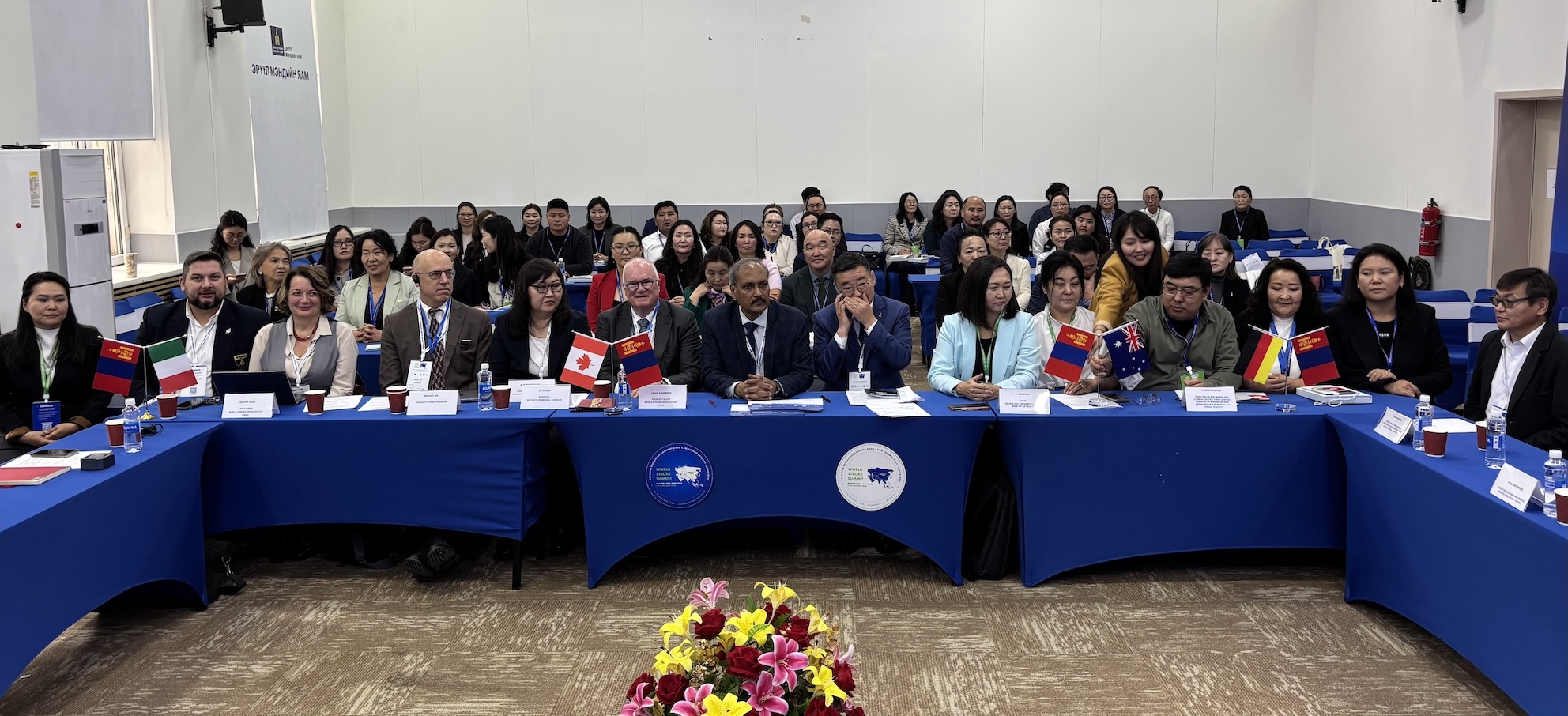
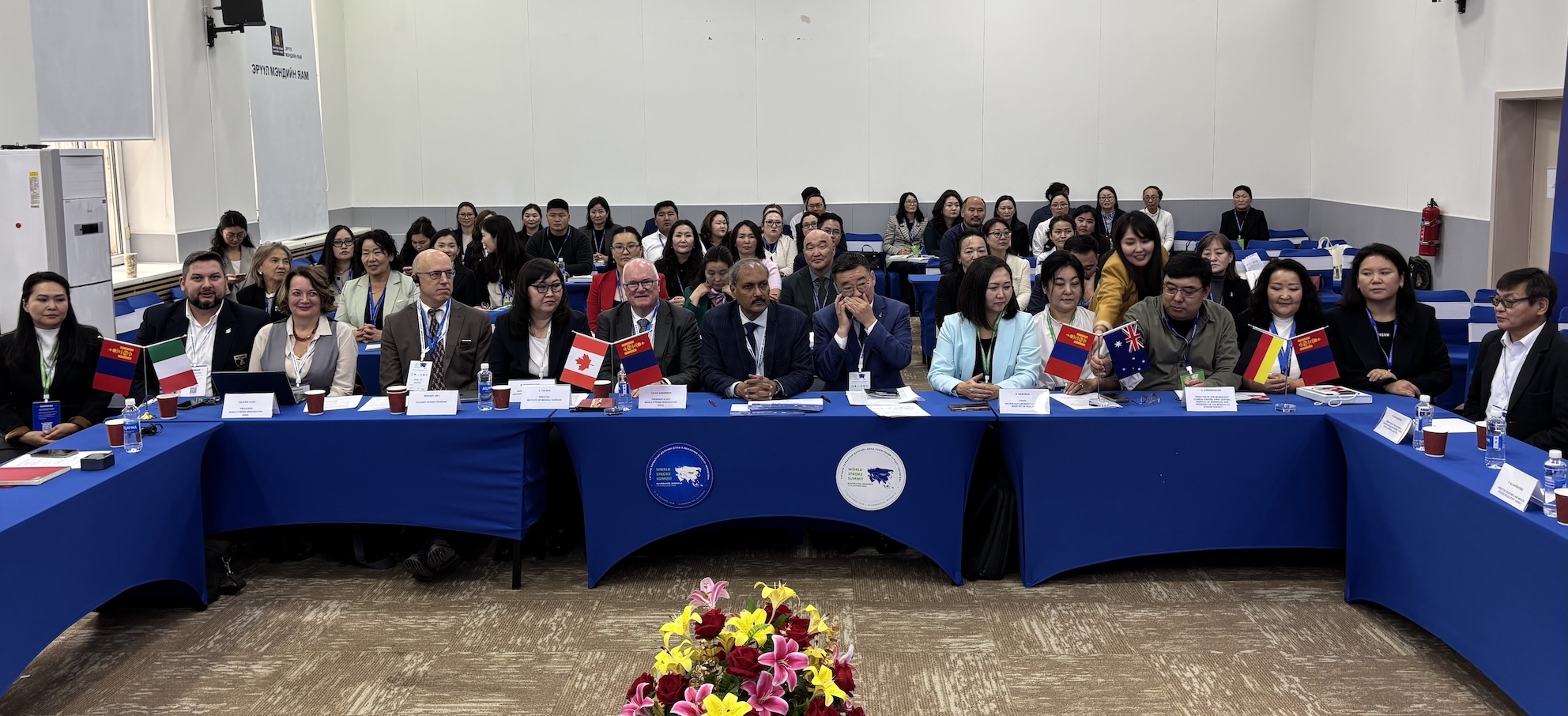
The Angels Initiative was privileged to participate in the World Stroke Organization (WSO) Stroke Summit 2026 in Ulaanbaatar, Mongolia on October 17-18. The event brought together an outstanding group of national and international stroke experts, healthcare leaders, policymakers, and advocates, dedicated to building stronger stroke systems, empowering healthcare teams, and improving outcomes for every patient affected by stroke.
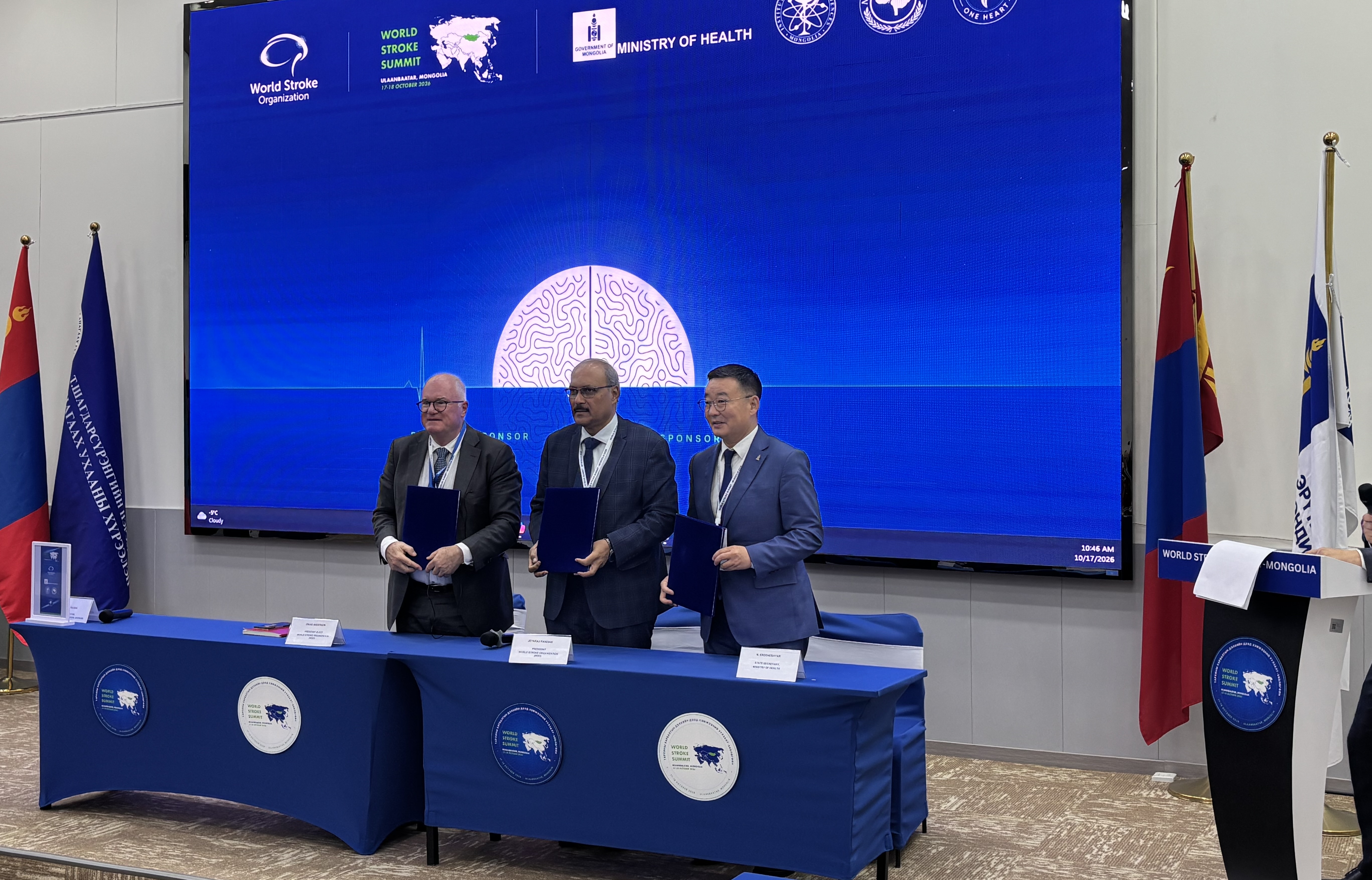
The summit marked a significant milestone for Mongolia's stroke community, as it culminated in the signing of a Memorandum of Understanding between the World Stroke Organization, the Ministry of Health of Mongolia, and the Institute of Medical Sciences. The Angels Initiative’s Lev Prystupiuk said this strategic partnership would strengthen efforts in stroke prevention, acute stroke care, prehospital systems, rehabilitation, workforce development, and public awareness.
The summit united key stakeholders from government, academia, clinical practice, and international organizations, creating a powerful platform for collaboration and the future development of stroke care systems across Mongolia. It also led to the endorsement of the Ulaanbaatar Stroke Declaration, a landmark commitment to reducing the burden of stroke through collaborative action, policy development, and the implementation of best practices across the continuum of care.
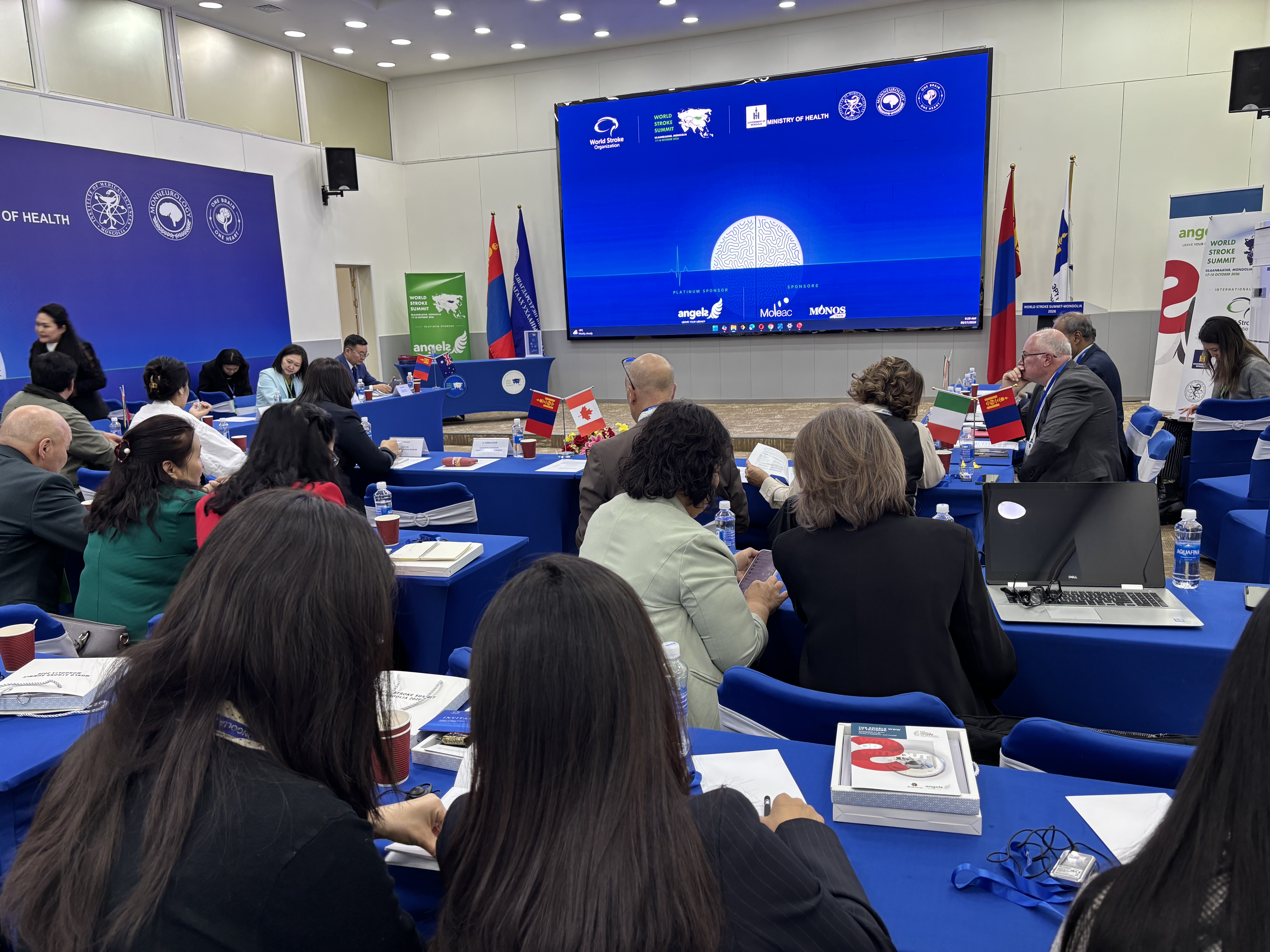
Following a welcome address by Prof. L Tulgaa, Director, Institute of Medical Sciences, a session chaired by Director of Public Health Policy in the Ministry of Health, Dr B Tsetsegsaikhan, opened with a high-level policy meeting involving State Health Secretary Dr Erdenebayar Namjil, international experts, and representatives of the Ministry and affiliated agencies. The panel discussion centered on stroke policy gaps and priorities. It was followed by the signing ceremoney of the Memorandum of Understanding between Mongolia and the World Stroke Organization, and the adoption of the Ulaanbaatar Stroke Declaration.
In session II, which was chaired by Mongolian Stroke Society vice-president Dr L Enkhsaikhan, the focus was on stroke policy. Featured speakers included Prof. Jeyaraj Pandian, outgoing WSO president, and his successor Prof. Craig Anderson. Assoc. Prof. B Chimeglkham of the Institute of Medical Sciences provided an epidemiological overview of stroke in Mongolia. Prof. Valeria Caso, who succeeds Prof. Anderson as WSO president-elect, introduced the WSO Future Leaders Programme.
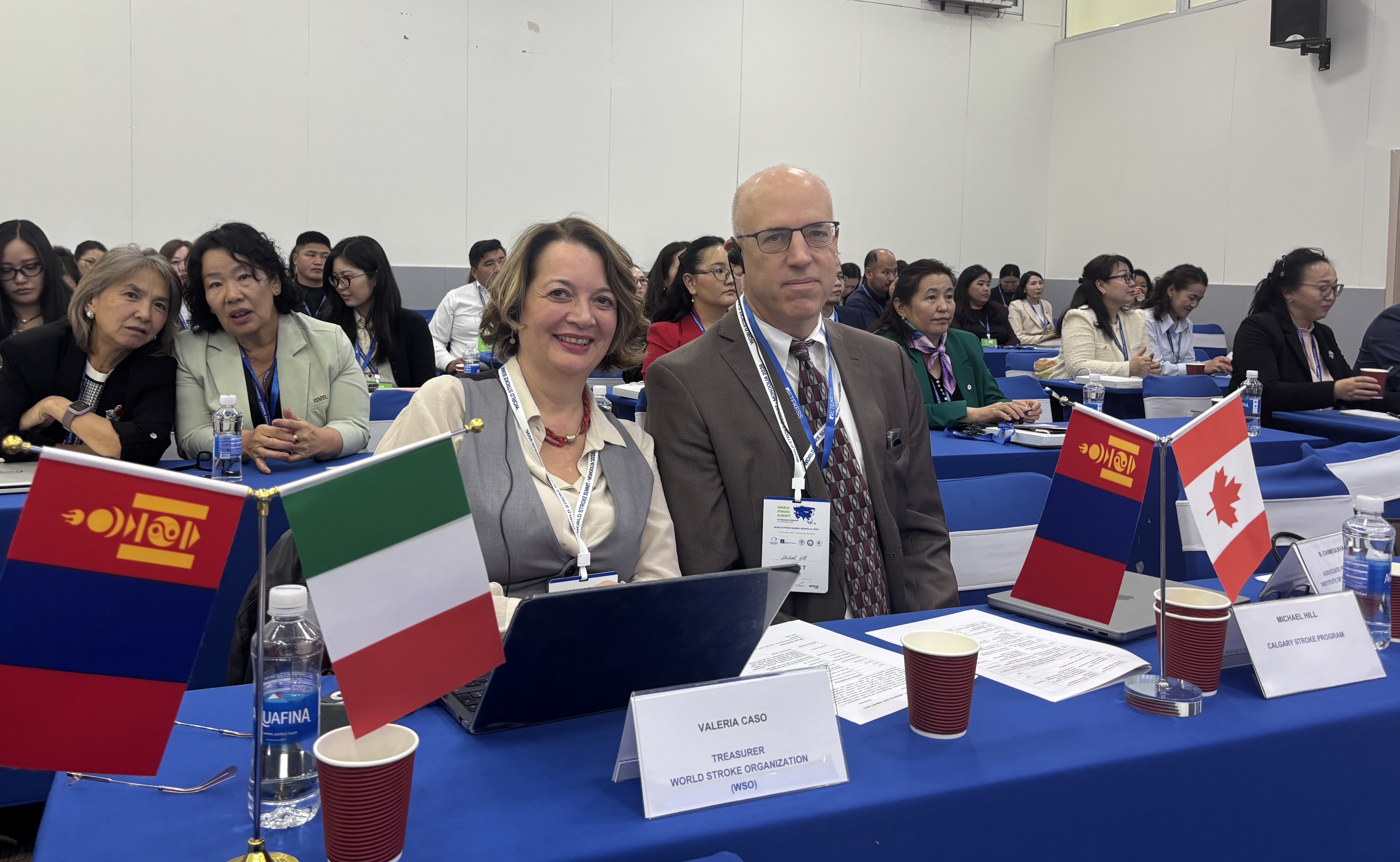
Prof Caso also gave a presentation on secondary stroke prevention during session III, which was chaired by Dr S Dariimaa, Head of Neurology at Third State Central Hospital. Dr Dariimaa, who also chairs the Neurology Advisory Council in the Ministry of Health, led a session dedicated to stroke treatment, prevention and experience. Key speakers included Dr N Lkhamtsoo of Third State Central Hospital, who delivered the presentation on acute stroke treatment, and Dr Michael Hill of the Calgary Stroke Program who contributed the international perspective on reperfusion therapy.
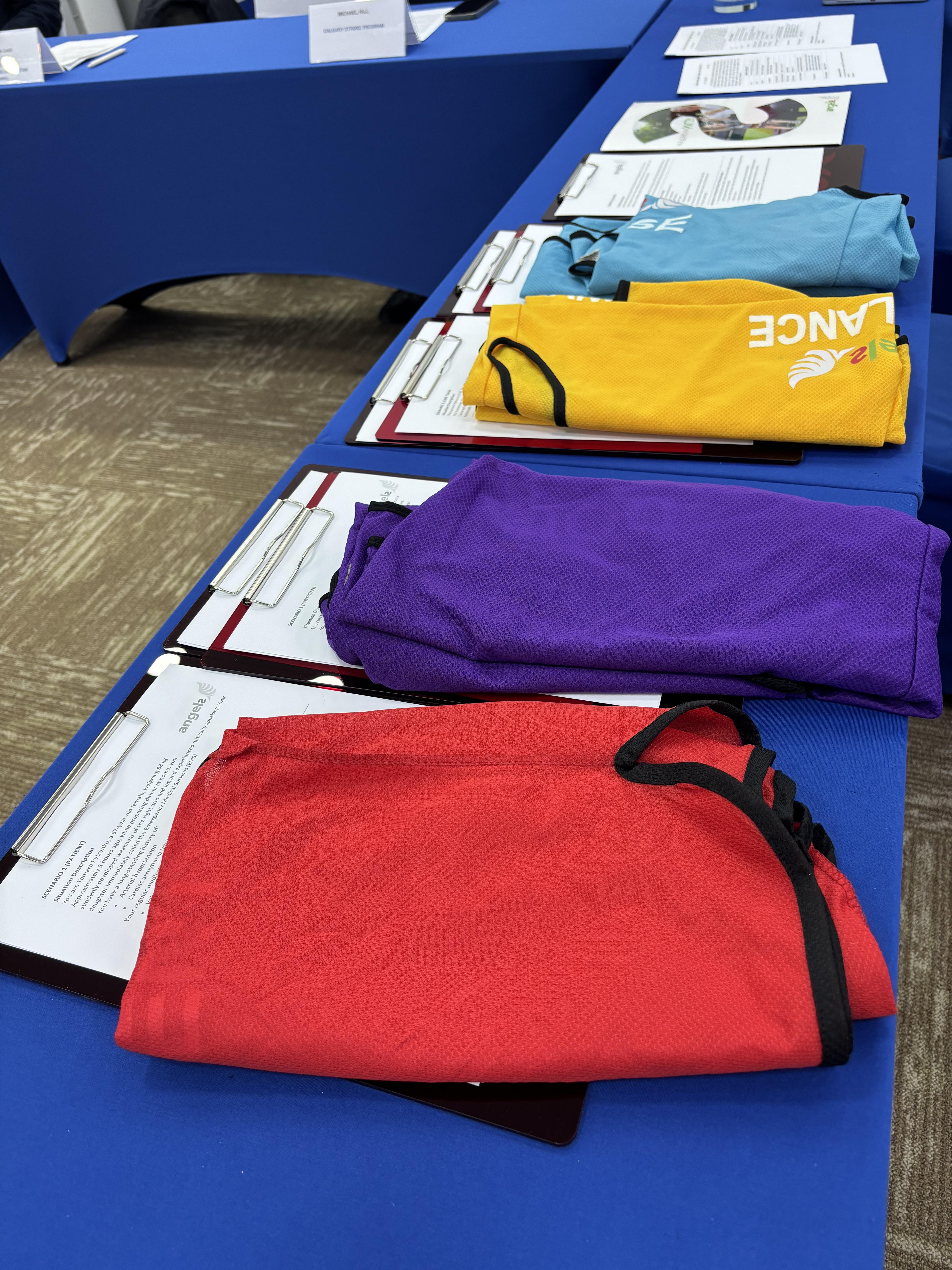
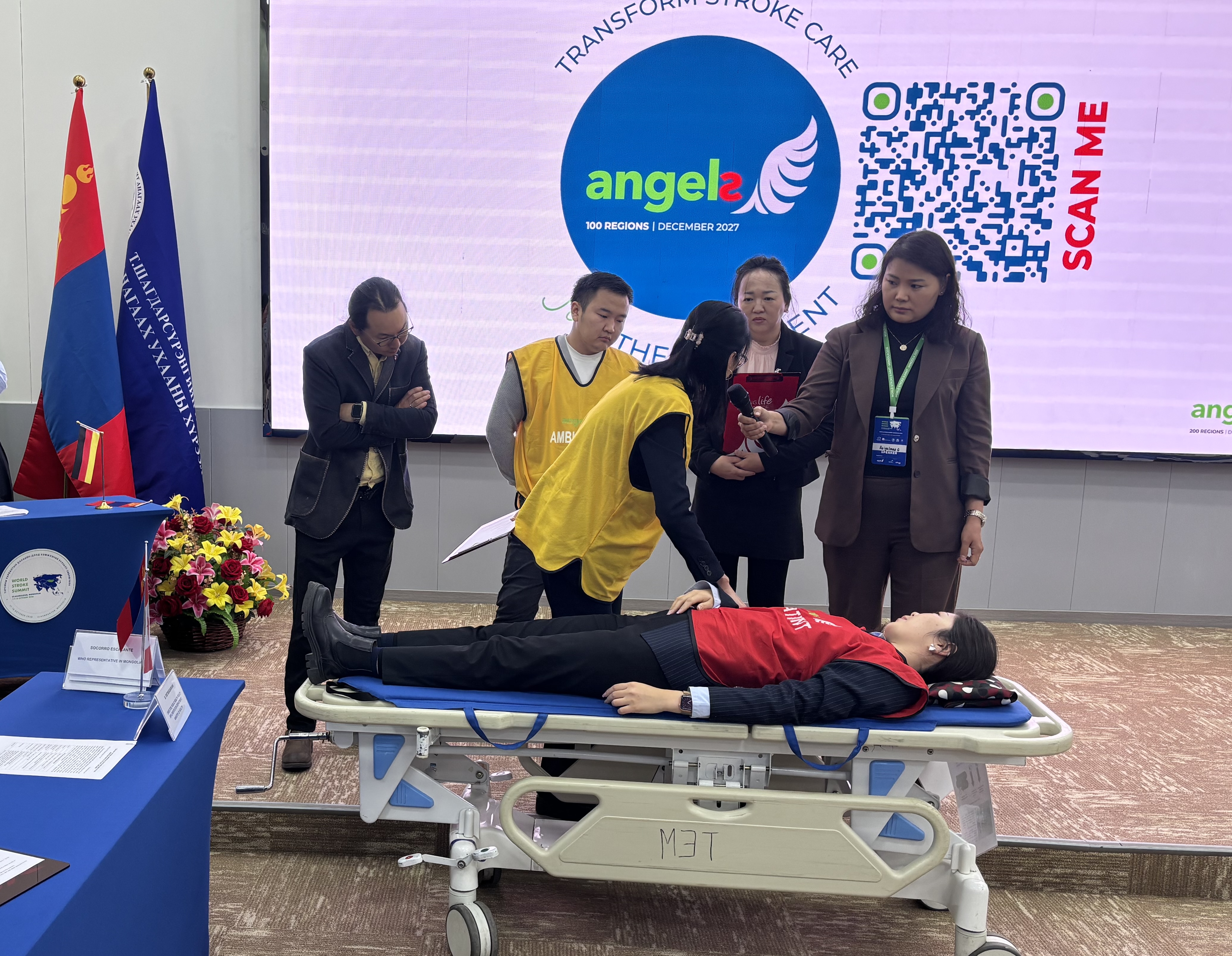
On day two the emphasis shifted to hands-on training. The Angels Initiative delivered a simulation workshop for stroke centers, focused on strengthening multidisciplinary team performance and optimizing acute stroke workflows, as well as an interactive session on decision making in acute stroke care, encouraging collaboration and evidence-based approaches to improve patient outcomes.
In the final session, breakout consultations facilitated discussions on stroke prevention in primary care, the role of emergency medical services and stroke units in acute care, and rehabilitation. Dr L Baasansuren, of the NGO, “One Brain, One Heart”, led the discussion on public awareness awareness campaigns.
Speaking on behalf of the Angels Initiative, Lev thanked the World Stroke Organization, the Ministry of Health of Mongolia, the Institute of Medical Sciences, local stroke leaders, and all healthcare professionals who are driving meaningful change for stroke patients throughout Mongolia.
He said, “Together we continue building stronger stroke systems, empowering healthcare teams, and improving outcomes for every patient affected by stroke.”


