
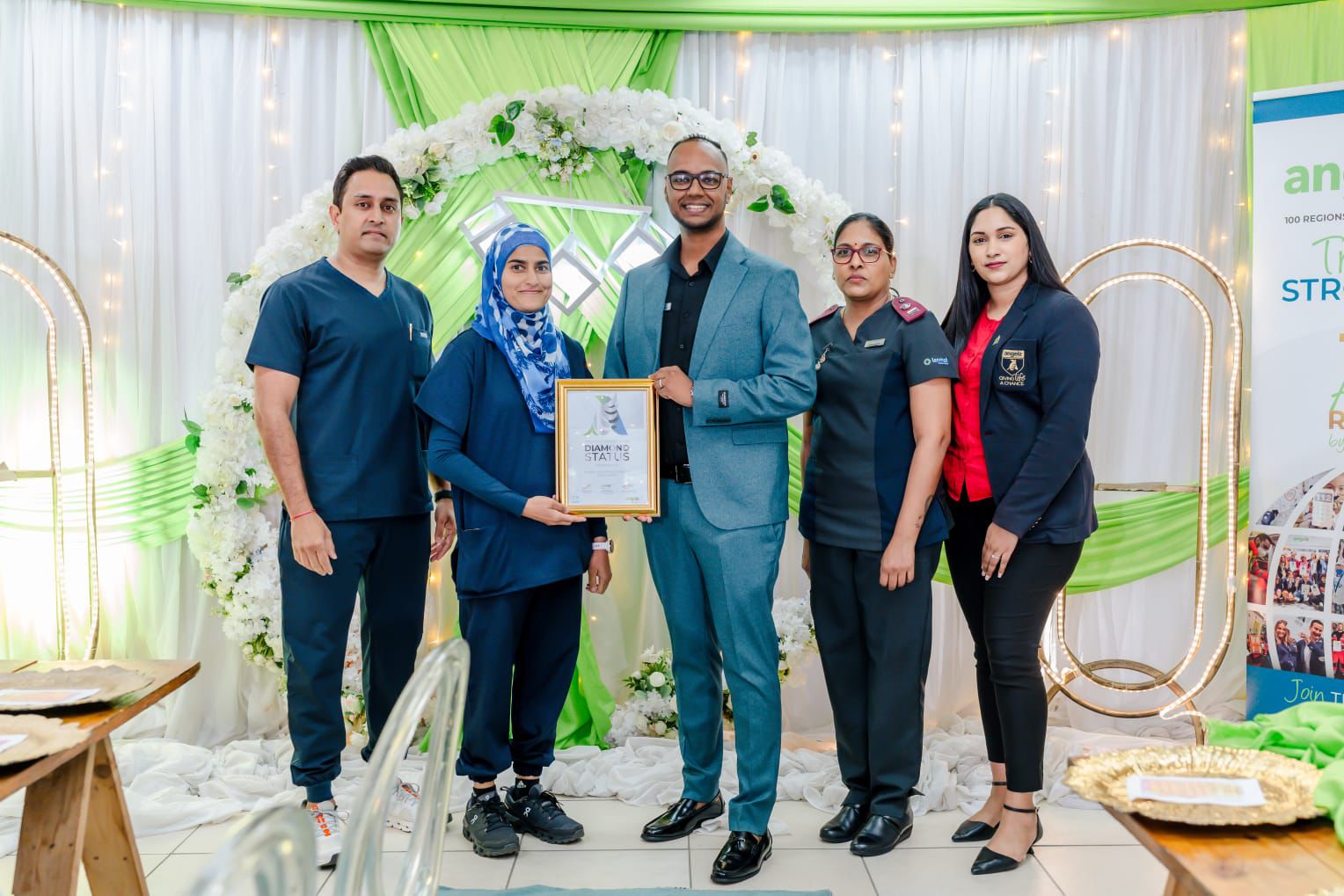
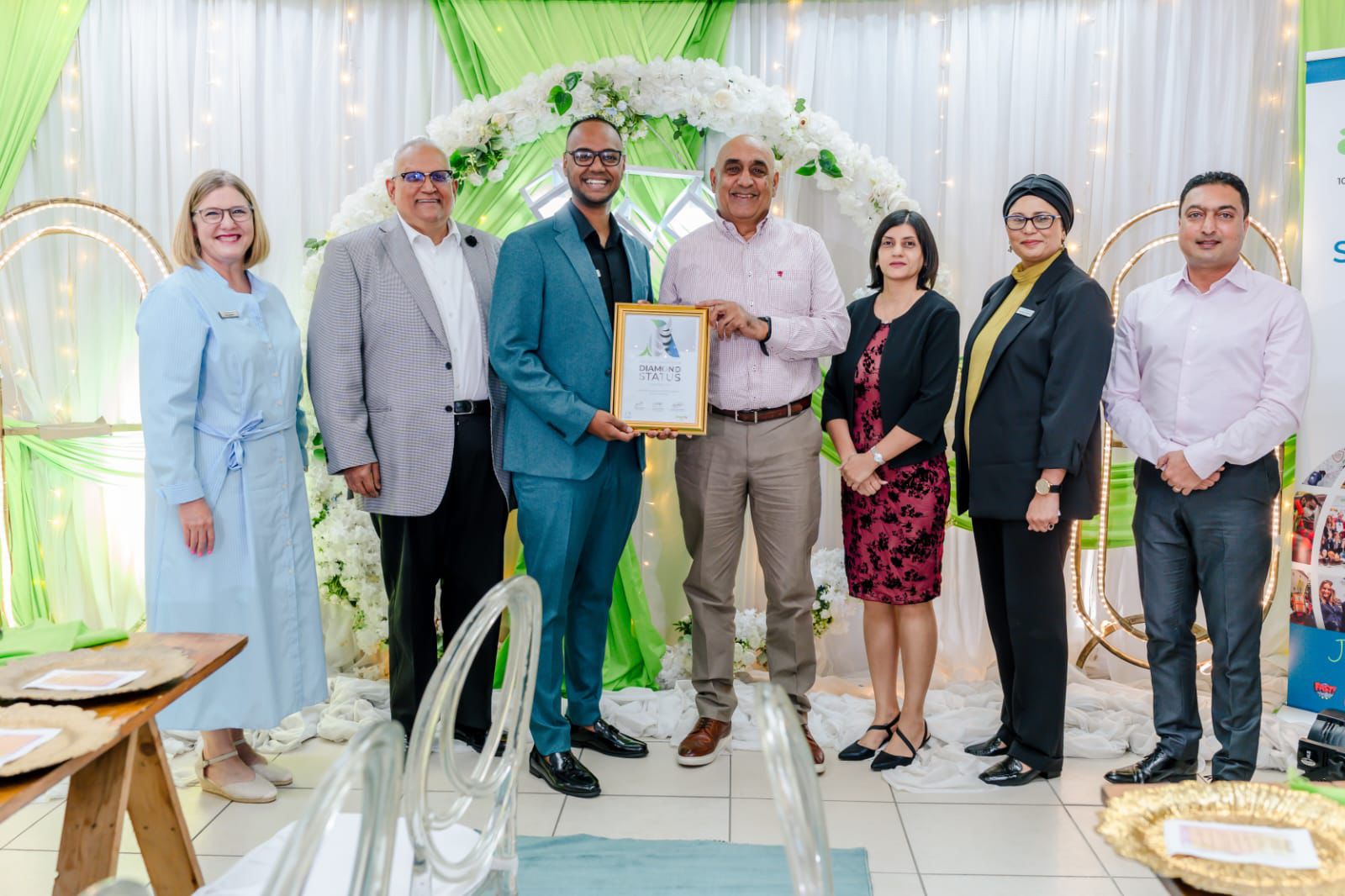
Set on an elevated coastal ridge that overlooks the residential suburbs of Overport and the Westville central business district, Lenmed Shifa Private Hospital is both a bright spot and a dark horse. Somewhat smaller than its neighbours in lush, green Berea, and only a third the size of ultra-sophisticated Lenmed Ethekwini Hospital and Heart Centre a 15-minute drive away, this hospital surpassed even its own expectations when, early in 2025, it became only the third diamond hospital in the Lenmed healthcare-group.
Then, as if to show beyond doubt that this was more than a stroke of luck, they maintained their diamond status in every subsequent quarter. Now with five diamonds in their crown, it’s time to pause and reflect on what makes Lenmed Shifa Private Hospital a beacon of hope for stroke patients.
It’s their willingness to learn and improve, says Dr Zaynah Dangor, the resident neurologist as both Lenmed Shifa Private Hospital and Lenmed Ethekwini Hospital and Heart Centre. Dr Dangor confesses that, given a relatively small number of patients compared to 12-times-diamond winner Lenmed Ethekwini Hospital and Heart Centre, she had expected a steeper learning curve when the team at Lenmed Shifa Private Hospital embarked on their stroke care journey.
“I was a little worried, to be honest,” she says. “Compared with our sister facility we did not see the same volume of patients with acute stroke presenting within the timeframe for thrombolysis.”
But fewer patients simply meant learning faster, and success arrived rapidly, literally within months of their enrolment with Angels in September 2024.
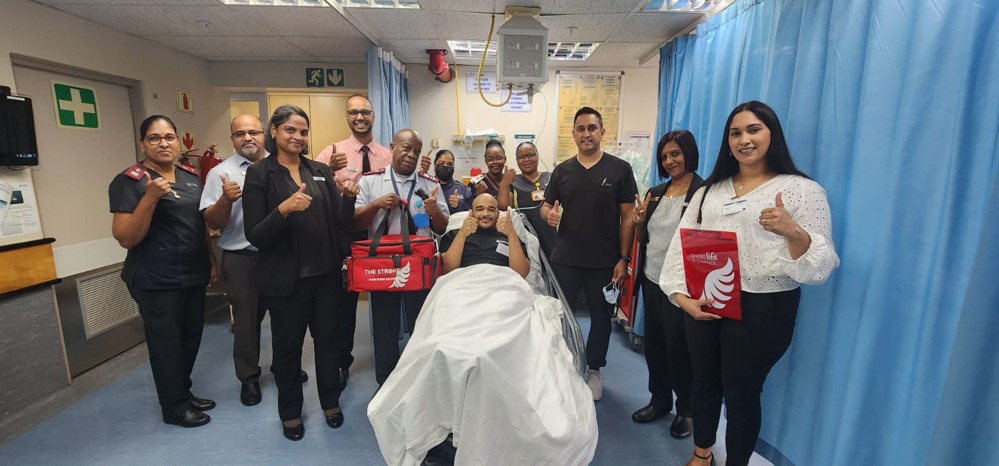
Angels consultant Maxeen Murugan lays out the timeline: Shortly after enrolment, quality manager Sarika Hiraman signed on as stroke champion and rolled out an online training program using the resources in the Angels Academy. In October, Lenmed Shifa Private Hospital’s Emergency Department practice chief Dr Omashan Naidoo attended an eye-opening regional Angels workshop and by mid-January the hospital had registered with RES-Q. Their Angels stroke bag arrived in February. March brought a pathway simulation, and a multi-disciplinary meeting also involving the Lenmed head office clinical team, and when the April deadline arrived for quarter one results, Lenmed Shifa Private Hospital was officially a diamond hospital.
We have lift-off
Kereson Moonsamy, who, having risen from the ranks of finance clerk, became a hands-on, passionate and empathetic hospital manager at the age of 30, has a list of reasons why his hospital tasted success early on. One is that, once Maxeen had demonstrated the potential benefits to doctors, patients and the community, everyone quickly got on board. They set themselves two goals – to treat patients fast and to the best of their ability, and to create a culture of continuous improvement. Head office support and the example of the multidisciplinary team at Lenmed Ethekwini Hospital and Heart Centre boosted their confidence. They built a strong and disciplined team who trust each other, and constantly scrutinize their performance for opportunities to improve.
“If the data shows even a five-minute delay,” Kereson says, “we ask why, what can we do better.”
Most of the core team have joined the conversation, including Dr Omashan Naidoo who works on the frontline as head of the Shifa Private Hospital Emergency Department. He was there the day Lenmed Shifa Private Hospital’s stroke team thrombolysed their first patient – a staff member’s husband who’d had a stroke during a routine medical appointment. Treating a member of the hospital’s extended family added to the pressure, he says.
The entire team waited anxiously for the outcome.
The patient when he arrived had lost the ability to speak, but the effect of the treatment was almost immediately evident, and he was soon able to resume his normal life.
The stroke program at Lenmed Shifa Private Hospital now had lift-off.
An ‘eager’ hospital
She was a bit taken aback when she heard Lenmed Shifa Private Hospital was intent on becoming a stroke-ready hospital, says emergency department unit manager Kubeshnee Subramany who was working in the Emergency Department at Lenmed Ethekwini Hospital and Heart Centre at the start of its own stroke journey in 2022. She knew what it took. “Would we be able to do it here?”
A keen-to-learn emergency department team motivated by positive patient outcomes supplied the answer.
Stroke patients now have an expeditious path to treatment. A stroke alert brings the entire team to the floor, radiology and pathology are notified, and the patient is examined by the emergency department doctor on duty within five minutes of arrival, Kubeshnee says. Then it’s up to the CT scan, and back down to emergency department once the therapeutic decision has been made, always with the aim of beating their personal best of 23 minutes. Future plans to bring patients directly to radiology and start treating at CT will save even more precious minutes.
Success came quickly because they didn’t have to reinvent the wheel, Sarika Hiraman says. “There were existing protocols, we only had to adapt, learn, understand and implement. Success doesn’t need years of planning. You need the right people, the right mindset, and the ability to adapt to change.”
The stroke program was Sarika’s first major project as quality manager and she jumped at the opportunity. Analyzing clinical data is part of her mandate to drive continuous improvement. She finds data capturing on RES-Q a simple process, and makes a point of sharing feedback with the team in multidisciplinary meetings that Maxeen describes as remarkably free of finger-pointing.
Lenmed Shifa Private Hospital is (in Kereson’s words) an “eager hospital”, and this is a unified team.
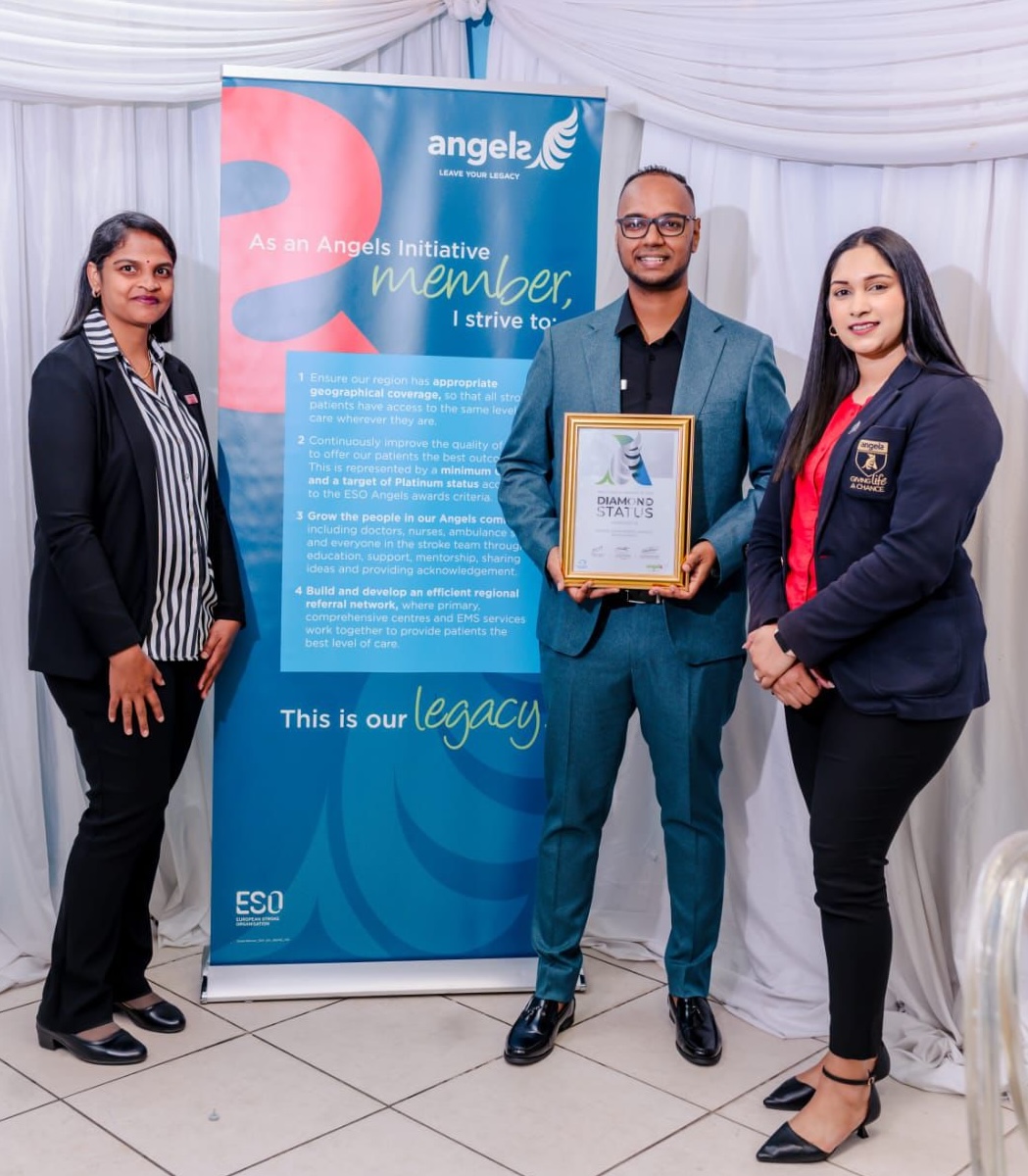
Miracles and diamonds
It’s easy to hit the top, but hard to stay there, Kereson says. One diamond award is a proud achievement; five consecutive diamonds are a whole other ball game. It’s about discipline, Kereson says. “We cannot drop our guard; we have to keep getting better.”
As word spread of the hospital’s stroke care excellence, their patient numbers have doubled. This creates more pressure, for which the remedy is even tighter discipline.
Dr Dangor says there are two reasons why Lenmed Shifa Private Hospital’s stroke team has been so remarkably consistent.
“Once anyone receives a diamond award, the pressure is on to maintain it. A loss of that accolade would feel like we have dropped the ball, equivalent to failing the patient. As health professionals that certainly goes against our natural inclination to act, to preserve and to protect.
“The second reason is that the team also starts to believe in themselves and in the process. Emergency staff are often afraid to thrombolyse patients with acute stroke for the first time because they are dealing with the unfamiliar, in a situation that carries risk, in an organ that is indispensable. When they watch resolution of focal neurological deficits within minutes, it is incredibly rewarding – and almost miraculous.”
Success comes from consistency and confidence, Dr Omashan Naidoo concurs. Driven by a desire to help people, he says the life of the patient is the real diamond. One of those diamonds was on the agenda at the handover of their first World Stroke Organisation Angels Award back in 2025, as the colleague whose husband they’d saved with their first thrombolysis had a turn at the podium.
And speaking of podiums . . . Almost two years after a regional Angels workshop convinced Dr Omashan that the team at Lenmed Shifa Private Hospital could step up to the plate, he was a key speaker at just such a workshop, with a presentation on a multidisciplinary approach to stroke care.
Putting the spotlight on their achievement was a strategic move by Maxeen who has seen in the past how the courage displayed by a smaller facility can inspire bigger centres to revaluate their own standards. As she’d expected, many doctors at the workshop were amazed to learn Lenmed Shifa Private Hospital had made such strides and reached and sustained such lofty standards.
But in the end the most surprising thing about Lenmed Shifa Private Hospital’s success is that anyone was surprised at all.


