
On a warm day in April 2025, Raksha Mistrey’s mother had a stroke. “I think it was Easter Saturday,” she says. The ambulance turned on its lights and sirens and set course for Life Entabeni Hospital in Westridge on the Berea.
“I wasn’t working here at the time, and it was my first time meeting [emergency department head] Dr Baijoo,” Raksha says. “I was amazed at the speed with which he arrived to see her and how quickly she was wheeled to the CT. From door to treatment took less than 30 minutes. So when they say they want to do the best for their patients, these aren’t just words.”
Dr Ujhir Baijoo was off duty on the day Simone Lamble’s mother-in-law had a stroke. “I got a call from my father-in-law to say my mom-in-law couldn’t speak properly, should he let her rest. So I said no, definitely not.”
Nursing manager specialist Simone summoned an ambulance, then called her colleagues at Life Entabeni Hospital. When the ambulance arrived Dr Baijoo had already briefed the team from home, and he managed the process remotely from there on.
“They took her to the CT, thrombolysed her, did a thrombectomy, and now’s she 100 percent recovered. I could see just how the process actually worked, whether day or night, it ran so smoothly.”
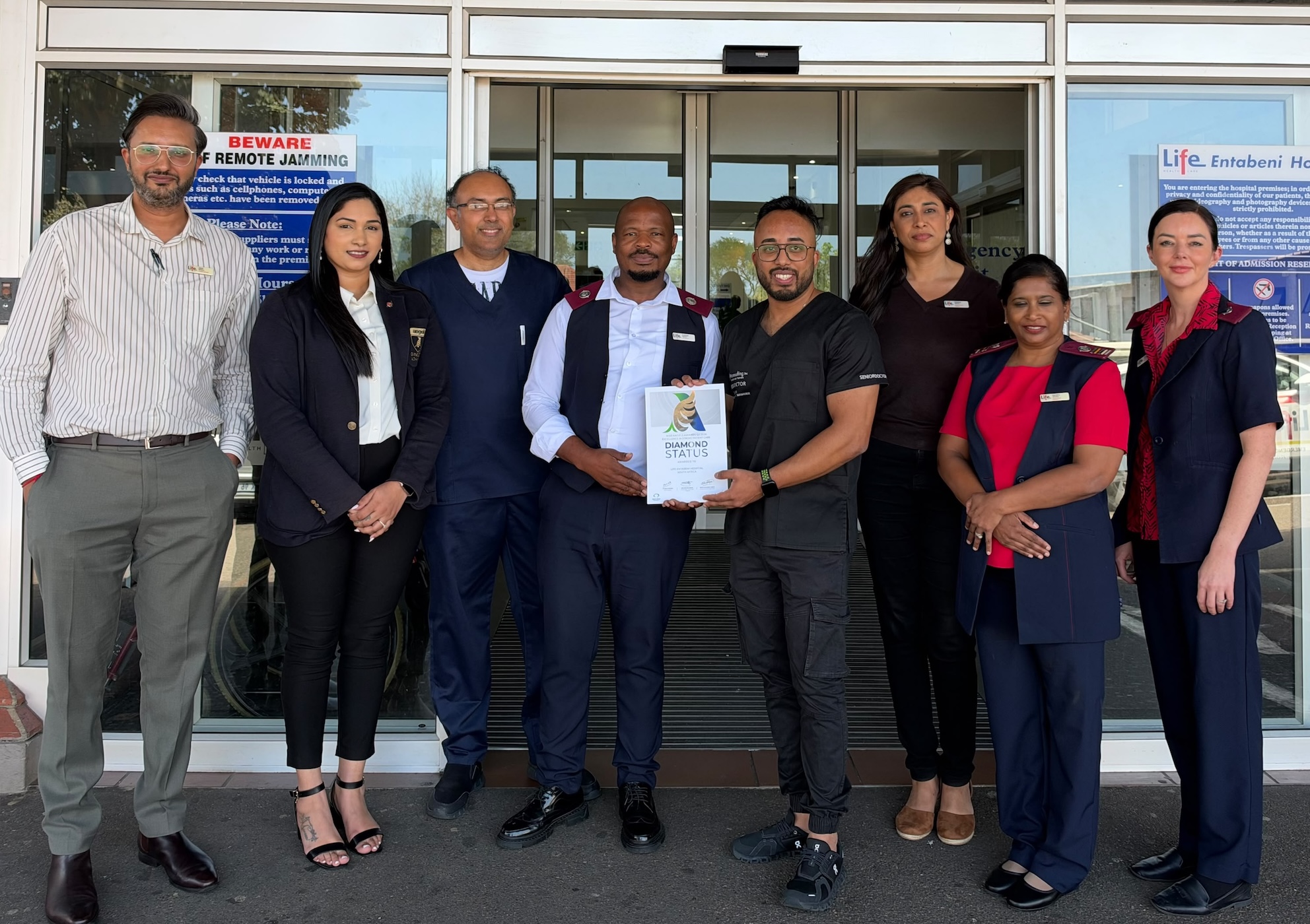
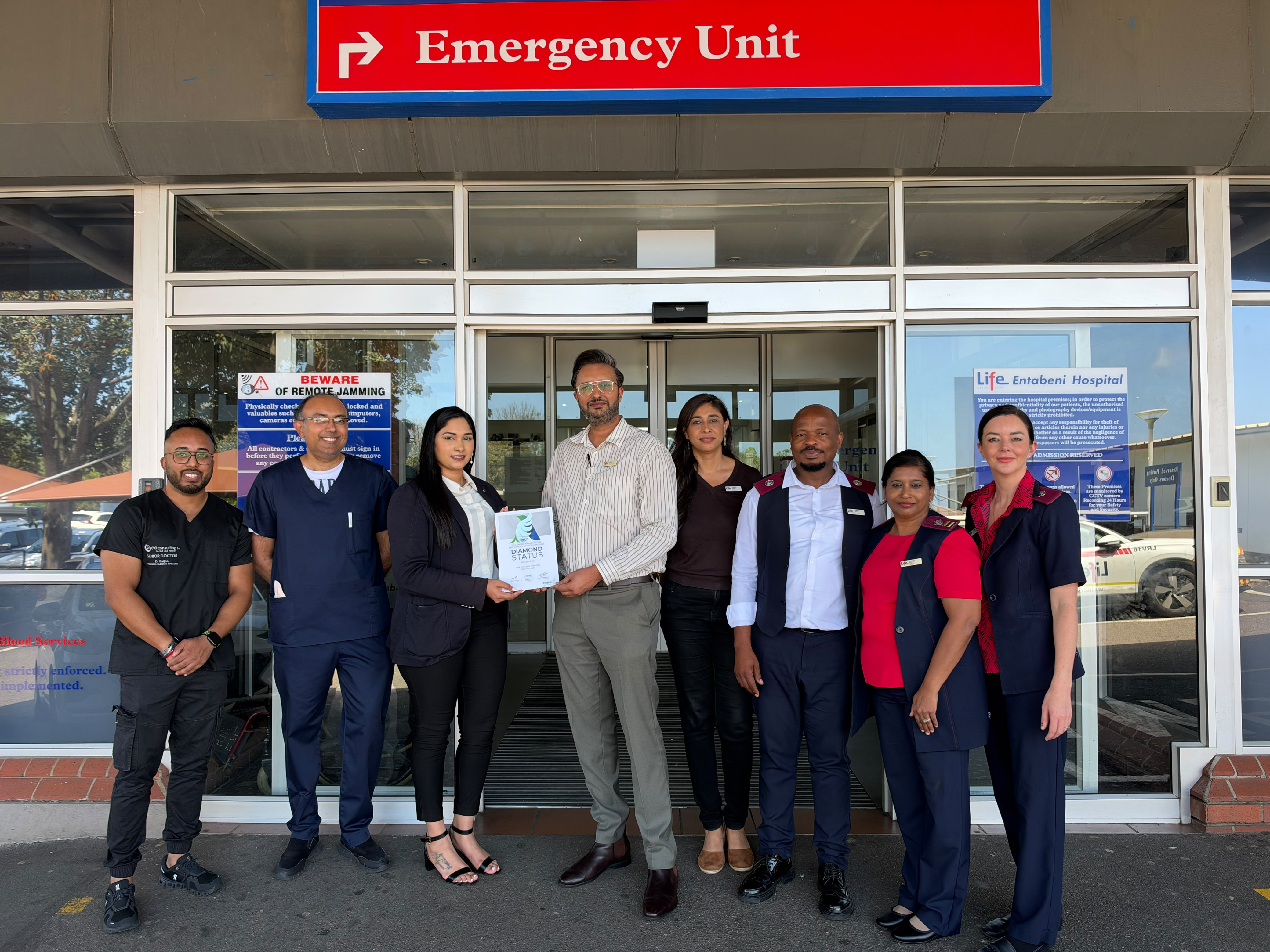
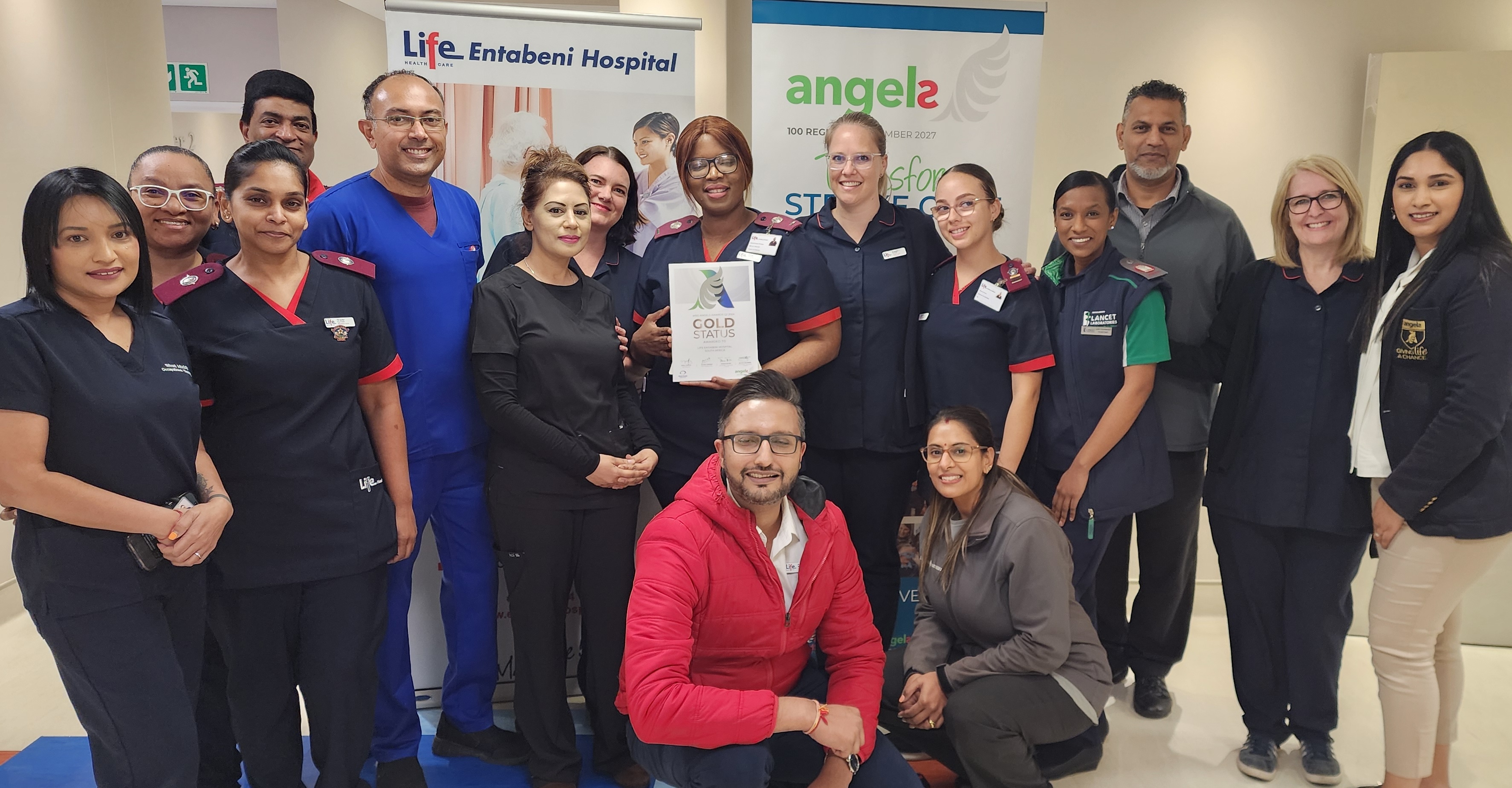
These witnesses to stroke care quality at Life Entabeni Hospital have joined a call to talk about how the hospital won its first WSO Angels diamond award. Also present are neurologist Dr Harshadh Chandrakant Jeena, senior nurse manager Sandra Moodley, clinical care coordinator and data capturer Ann Davis, and the aforementioned Dr Baijoo whose appointment in 2023 and especially his rise to emergency chief last April had significant impact on stroke care improvement at the hospital.
Hospital manager Atish Maharaj attends with his deputy Raksha, who is also in charge of the hospital’s rehabilitation unit. They are both former pharmacists who began their careers at this very hospital.
The assembly has the composition of a multidisciplinary meeting but the air of a family gathering.
Neurointerventional radiologist Dr Werner van Straaten, delayed elsewhere, is a prominent presence despite his absence. It was his focus on reducing door-to-groin times that removed the final barrier to diamond status, making Life Entabeni the first comprehensive center in KwaZulu-Natal province to pass this benchmark. But this team wants to talk about patients, not awards.
Door to needle in 15 minutes
Patients such as the 36-year-old mom who, after complaining of a headache, collapsed in her kitchen with what was reported to be seizures. She arrived at the ER completely aphasic and unresponsive, but something about her eyes caught Dr Baijoo’s attention.
“I held her hand and spoke to her. I remember asking her name and she couldn’t respond. So I said, if you can hear me, squeeze my hand. And she managed to squeeze my hand with her right hand.
“Then I grabbed her other hand and asked her to squeeze that hand, which she could not do. And then I asked her to raise her hands and she lifted her right hand, but could not lift the left. That’s when I realized we were dealing with a stroke.”
Despite reports of seizures Dr Baijoo had already alerted radiology that he might be bringing in a stroke.
“Dr Jeena and I agreed we weren’t waiting for an angio CT,” he continues. “We could see there was no bleed. I had already noted her weight and prepared the drug. We started thrombolysis before the angio was done. Door to needle time was 15 minutes.”
Dr Jeena’s patient story takes place on a Sunday afternoon.
“He was an elderly man with vascular risk factors, including diabetes, hypertension and dyslipidemia and atrial fibrillation. And he came in aphasic with right-sided weakness. And because of the team effort, even though he was a possible wake-up stroke, so beyond the four-and-a-half-hour window, and even though this was on a weekend, we did the radiological investigations and we actually saw that he had a left M2 occlusion.
“We discussed the case with the interventional radiologist, Dr Van Straaten, who at short notice organized a team to take this patient for a thrombectomy on a Sunday afternoon.”
This patient’s recovery was so remarkable that he bypassed the rehabilitation unit altogether and was discharged home.
“Any patient who comes to the hospital with a stroke and ends up walking out of this hospital is memorable,” Dr Jeena says. “Because we know, either from our medical involvement or even personally, I think we’ve all been touched by some family member or friend or someone we know who has had a stroke and for whom life would never be the same again.”
Knowing what I do matters
Dr Jeena’s words strike a chord and a quiet solemnity settles over the call as he continues:
“In my case, it was my grandmother who I pretty much grew up with and I was very close to; she had a major influence on my childhood. She was just an amazing person, so generous, so giving, so friendly with everyone.
“She had a major stroke at a time when acute stroke management wasn’t even a concept. You know, back then, stroke was basically a prison or a death sentence. Your life was going to be catastrophically affected and changed and you would never be the same person. And in the context of the family, things would never be the same again. And so, unfortunately, my grandmother also was never the same again.
“In a way, I think that’s probably always motivated me at different steps – to become a doctor, to become a neurologist, and now doing whatever I can to champion the stroke cause. Because we all know if we can change that outcome for someone else, that is something we would’ve loved to have had for our own loved ones.”
Dr Jeena’s other reason for choosing medicine is no less personal. “I may be a bit old school and romantic in my view of medicine,” he says, “but I would like to believe that even today, for anyone who gets into the health profession, no matter their role, they’re not primarily driven by material reward. The joy you are rewarded with by serving others is much more profound.”
He will find no dissent within this team.
Sr Sandra Moodley’s journey into healthcare was shaped by her own experience as a patient. “As a child, I spent three months in hospital and witnessed firsthand the compassion, dedication and impact that nurses have on patients and their families,” she says.
“I believe that we are often guided towards careers that align with our passions, and nursing has certainly been that calling for me.”
A desire to make a meaningful difference in people’s lives also drew Sr Simone Lamble to healthcare. She says, “One of the most fulfilling aspects of the profession is seeing critically ill patients arrive in our department and witnessing the positive outcomes that can be achieved through dedicated, high-quality care.”
Healthcare is more than just admission and treatment, says Ann Davis. “In my role as an acute clinical care coordinator I can contribute to making the patients’ hospital journey a little easier and less stressful. What makes my work rewarding is knowing what I do matters; my small role in a large team contributes to delivering the best possible care for a patient.”
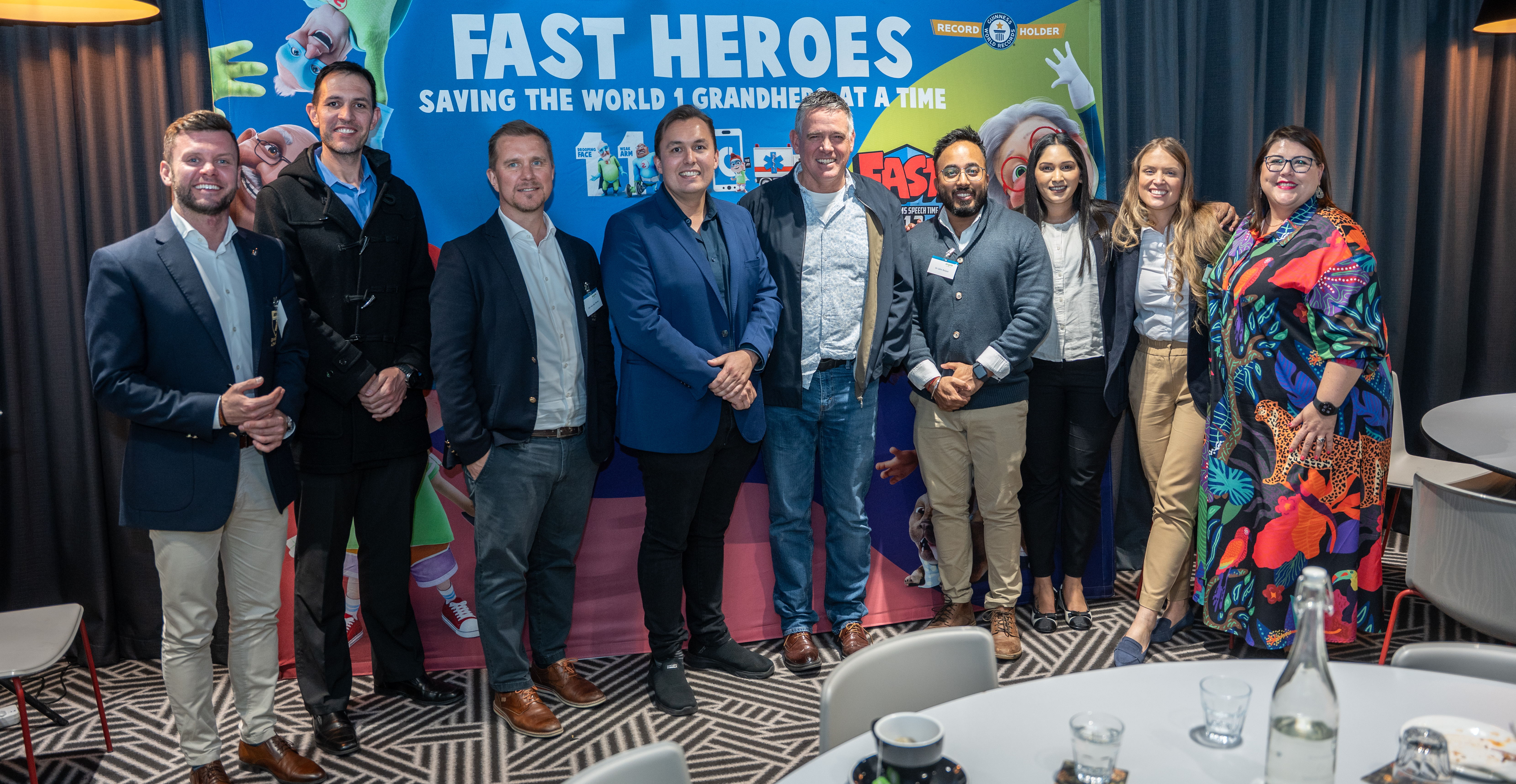
Winning becomes a habit
Life Entabeni’s journey to diamond status has a starting date. On 10 December 2022, Dr Jeena flew to Johannesburg for an event that marked the relaunch of Angels in South Africa. “That workshop set the wheels in motion,” he says. “We took to heart the message Angels was communicating and recognised that we were fortunate to have all the foundational elements needed for a comprehensive stroke care programme at our hospital.”
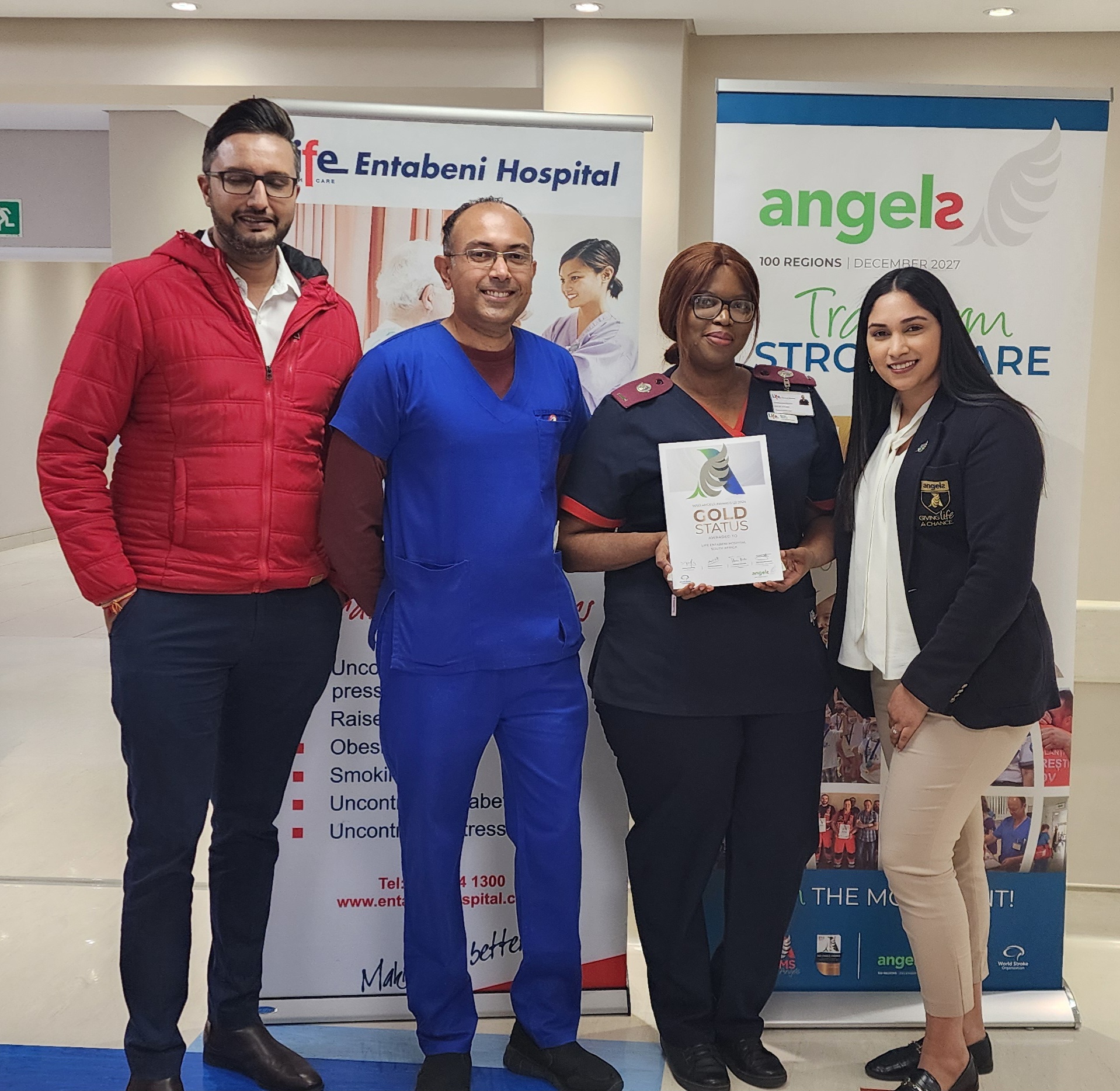
As they worked through the challenge of organizing their resources into a cohesive protocol, progress was connected to people. Dr Baijoo arrived in the emergency department in September 2023, and took over as stroke champion, and in January 2024, Atish Maharaj became hospital manager. Angels consultant Maxeen Murugan was immediately struck by his leadership style, his strategic communication style, and his vision. In February 2024, Life Entabeni joined RES-Q, gaining access to feedback that could shape practice, and in the next quarter won their first WSO Angels award.
Over the next year, winning became a habit for Life Entabeni Hospital. They reeled in several more golds and by April 2025, when Dr Baijoo became head of the emergency department, they were on track for their second platinum award.
“I think one of my first meetings was a stroke meeting,” he says. “I’d always been passionate about strokes, I just never knew the type of passion I had until that meeting. And I think Maxeen also, I don’t know, she saw something in me. She saw this fire in me.”
In June 2025, Maxeen spread the fire when she put Dr Baijoo on the agenda at an Angels Day held in partnership with ER Consulting, which provides outsourced emergency care to 25 private hospitals including Life Entabeni.
Prior to joining ER Consulting, Dr Baijoo worked at a crowded district hospital that while it lacked the capacity to treat stroke, saw as many as 200 patients needing urgent care each day. It was an education in processing multiple streams of information simultaneously and multitasking, skills that now prove invaluable when every minute counts.
Moving into the private sector did nothing to diminish his passion. Indeed, having the resources to do everything in his power for his patients has deepened that passion, but there’s something more that drives his interest in stroke.
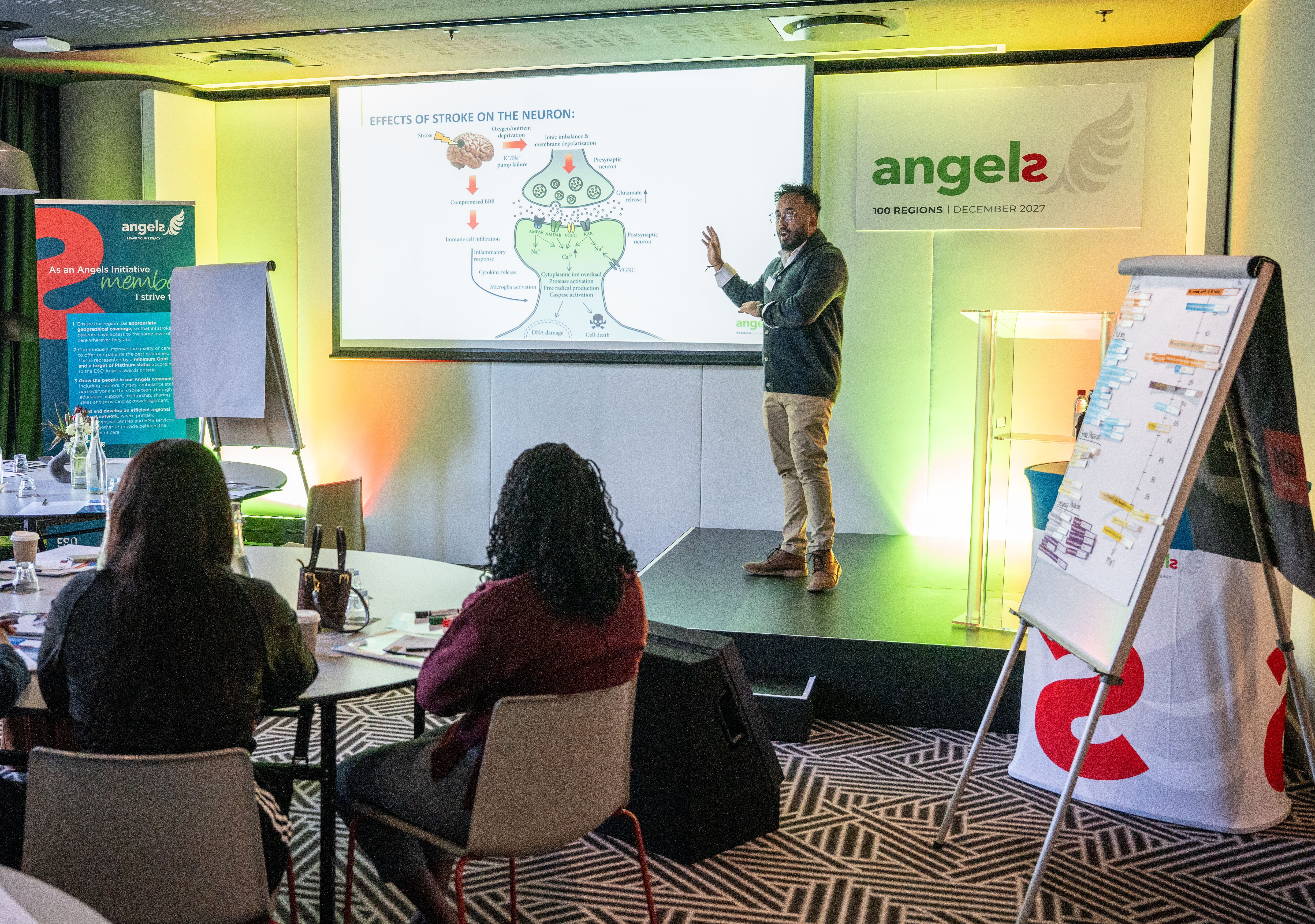
Where the passion comes from
Ujhir Baijoo was nine years old when he was taken to hospital to say goodbye to his severely ill mom. Steven Johnson syndrome (a rare, life-threatening skin and mucous membrane disorder) had taken over her entire body, causing multiple organ failure. It was months since he had seen his parents, and his mom’s condition was so severe, he didn’t recognize her at first. She had no recollection of him either; his dad had to introduce them. The visit however brought a turning point, and his mom began to recover.
A decade later, while Ujhir was studying medicine on the East African island of Mauritius, having abandoned an attempt to follow his parents into engineering, his mother suffered two strokes. He doesn’t believe she got the treatment she needed. “To this day, my mom still has some deficits in terms of memory. This is sad because my mom was a civil engineer, she had her own company. She was a very, very learned person, but now she has forgotten all her teachings, and she can’t remember much of my past or hers.”
It’s easy to see where the passion comes from for Dr Baijoo, Dr Jeena and their team.
Dr Baijoo speaks for the entire family meeting when he says, “We have to be passionate about what we do, because it’s not just the life of the patient but that of their entire family that will never be the same again. And if we can prevent that, then our job is done.”


