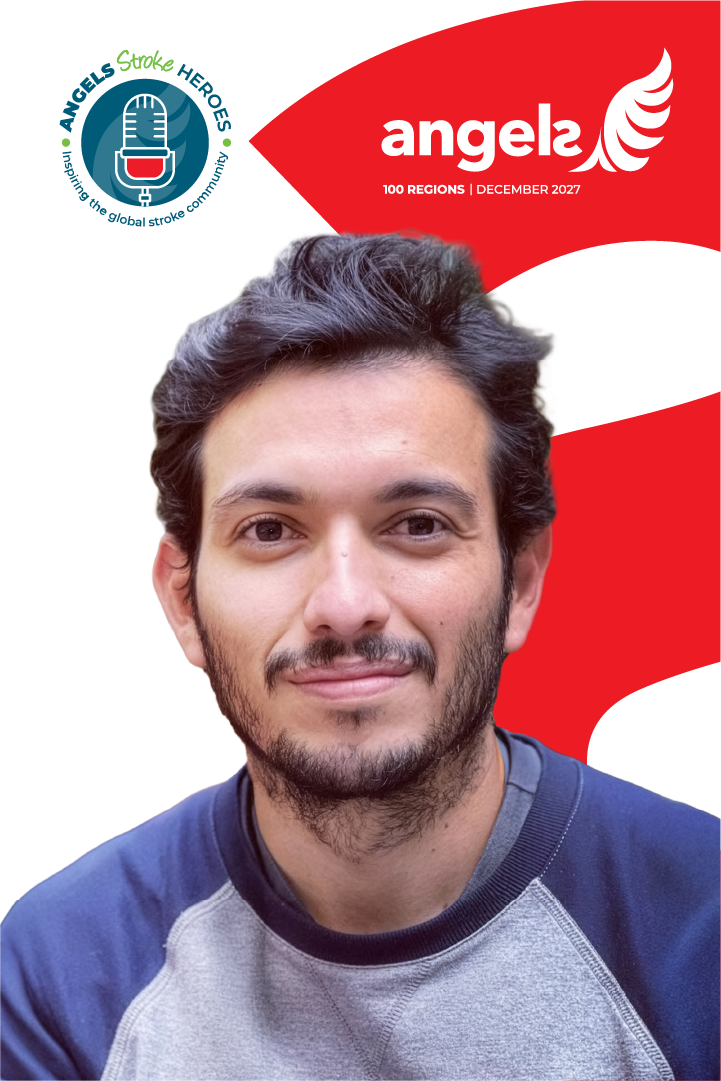
CLAUDIO: I really became a neurologist because I love the brain and because I want to understand how we create, our mind. I studied neurology and neurophysiology in Brazil. And I returned to Colombia, with nothing in mind other than to get married to my now wife.
I arrived at this hospital in Bogotá, Hospital Simón Bolívar in, and I start to do my work as a neurophysiologist, but soon I saw we had a big problem here because, every year in this hospital, we receive 700 patients with stroke.
I was a neurologist, but I’m not a neurovascular neurologist. I took the first important decision. I have to stop being a neurophysiologist, I'm going to put this aside for a while, and I'm going to start to work to build a protocol to structure how this can function well for the patients.
Simón Bolívar is a hospital in the public network in Bogotá. Just imagine at the moment I arrived in Bogota in 2019, in all the public hospitals in Bogotá, a city with 10 million inhabitants, we didn’t have even one MRI, and the CT scanners weren’t working half the year because of some technical problem.
Seven years after that moment, I'm still here working as a neurovascular neurologist and now doing my fellowship as neuro interventionist.
In the first year of the pandemic, when I was still the only neurologist in the hospital (we are now a team of nine), I stopped to reflect on what I was doing. Did I have to stay doing this kind of job, or should I return to the life I’d had in mind?
And just at that moment, I realized what I was doing was preserving the structure of society. What builds society is our brains, our language, our ideas, our capacity to create. And every time someone suffers a stroke, we lose someone who is part of this social structure.
So I continued working with my stroke program in the hospital and I realized I had to continue doing this because if we save brain tissue, we are saving social tissue, social fabric. And that's the work that I believe that I have to do.
YOU CAN LISTEN TO THIS STORY HERE
ANGELS INITIATIVE (AI): You are seen as a campaigner not only for better access to stroke care but for social justice in healthcare, not only in Colombia but everywhere the health care system fails to care for people as it should. How did you arrive at this approach to medicine?
CLAUDIO: When I started to become a physician, I never thought I wanted to save people.
I was fascinated with the human body but that part of saving someone's life came late in my life.
In Colombia, and maybe in most low-middle-income countries, you have this huge inequality and disparity. And while I was working in Bogotá, one of the data that we obtained was that when people were poor, the people in the lowest socioeconomic strata, they had the highest mortality rate.
It wasn’t shown to me as a number in a paper in some journal. It was shown to me in the reality that I was living. In my region in Bogotá, the people who lived in the richest part had better access to treatments for stroke. And the people in the same place but who lived in the poorest part, they had the worst access to treatment in a stroke.
They died more. They lived with more disability. And that was happening right in front of me.
I thought it should not be this way. Not only here in Bogotá, but all over the world.
So that changed the way I understood medicine.
in Bogota as a physician, you have a social responsibility. You can deny it. You can say, I don't wanna do it, but you have it. You can choose not to accept it, but you have a social responsibility just because you are a physician, because you’re a nurse.
It's something intrinsic to what we are doing.
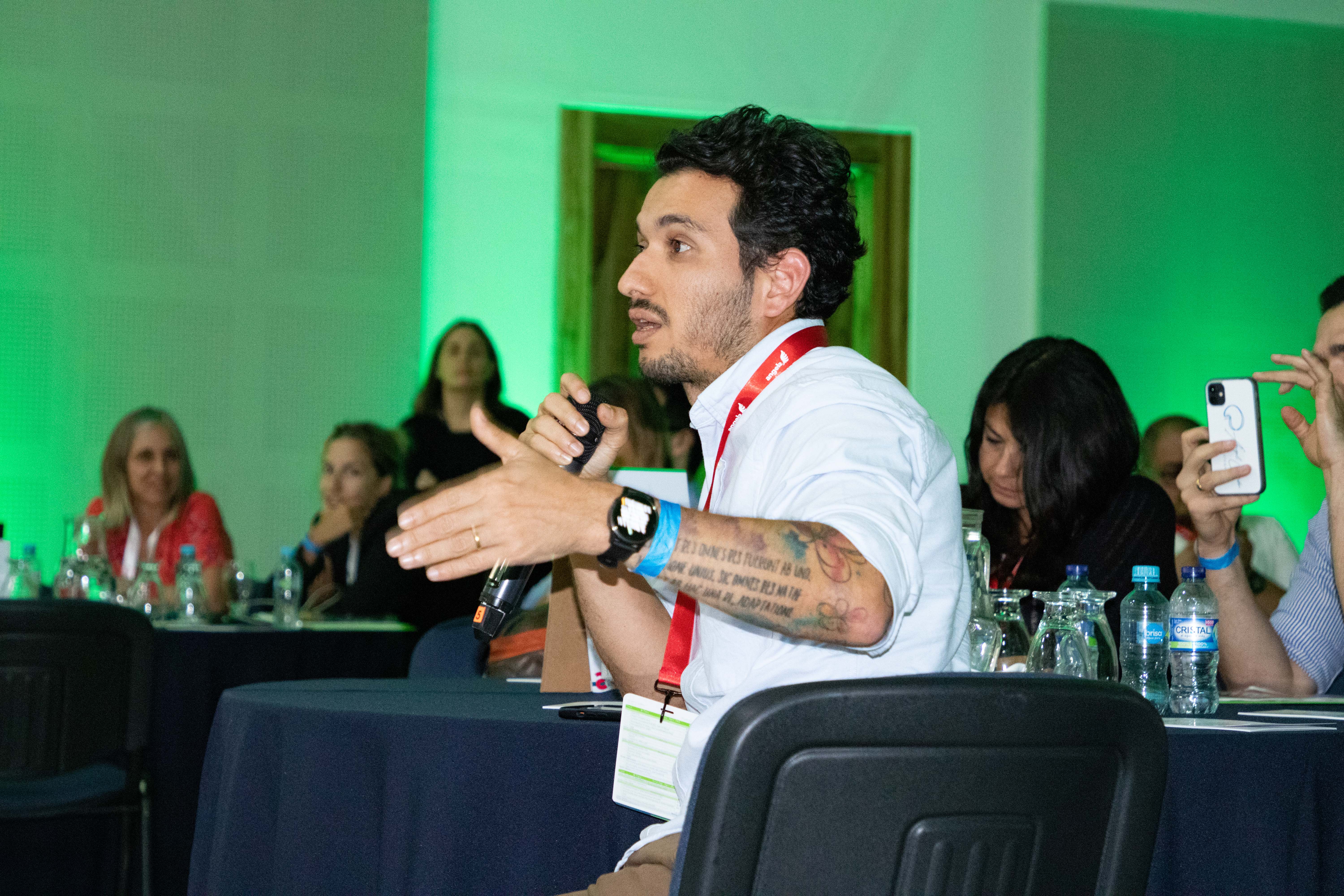
AI: Recently an interviewer described you as someone who embodies the harmony between reason and emotion, and between the ‘apparently contradictory worlds of science and spirituality’. How did this capacity develop for looking at the world and seeing both the science and the wonder?
CLAUDIO: Somebody told me when I was a child, if you want to arrive somewhere, you need to know how to change the direction. So I always change the direction, if it’s needed. I don't have problems with that. Walt Whitman wrote, "Do I contradict myself? Very well then I contradict myself, I am large, I contain multitudes.
I love that part when he says, I contradict myself, what's the problem with that?
I try to apply that in many aspects of my life. So I can read in the morning the Bhagavad Gita and at night the Torah, and it doesn't matter to me because I’m receiving the good part of both of them.
So I try to live a life accepting all the good things that are all around. I could say that I believe in God, but maybe we and I will never know the real nature of God and it doesn’t matter to me. The idea of God makes you think harder to understand the world, not easier, because there is only one science, but there are too many gods.
AI: What sort of child were you, and where and how did you grow up?
CLAUDIO: I’m from a small place in Colombia, the name is Granada. We also have a hotel called The Alhambra, but it’s not the Granada of Spain. It’s a 20,000 inhabitant village, and I grew up in one of those families that are maybe standard in Latin American countries – a Catholic family, a father who works, a mother who stays at home.
I always had some curiosity for understanding things. I used to say that I was raised by women because I have my mom and three sisters. They showed me how to see the world, and maybe that's the reason why my wife has so much power at home.
But I lived in a small community with friends, we used to play football. Which is the other thing I love. I don't play soccer anymore, but I love to watch football. I'm a fan of Liverpool. But there is something that I understand about football and it’s, if you want to score a goal, you need more people than you. It's not something that is going to happen by yourself.
AI: The same interviewer suggested that you named your daughter Athena in a tribute to the Greek goddess of wisdom and art. True?
CLAUDIO: My daughter is two and a half years old. I named her Athena Sophia, because we decided that her first name will be the first name of my wife. In Colombia, the man is the one who gives the first name to the child, but we changed that in my home. So my daughter is Athena Sophia Garcia.
Obviously I love knowledge and obviously I love the idea of the pursuit of wisdom, and I believe people who pursue wisdom live better and happier lives.
I try to give to my daughter the best part of me. I’m just trying to give her the best things that I can. Not a car, obviously, not a house or an apartment. But if I help my daughter construct a mind she can use to navigate the world and to understand the suffering and the happiness ... I don't know what is going to happen with Athena in the future, but I hope she will have pretty good memories. So I am just building lots of memories in my daughter.
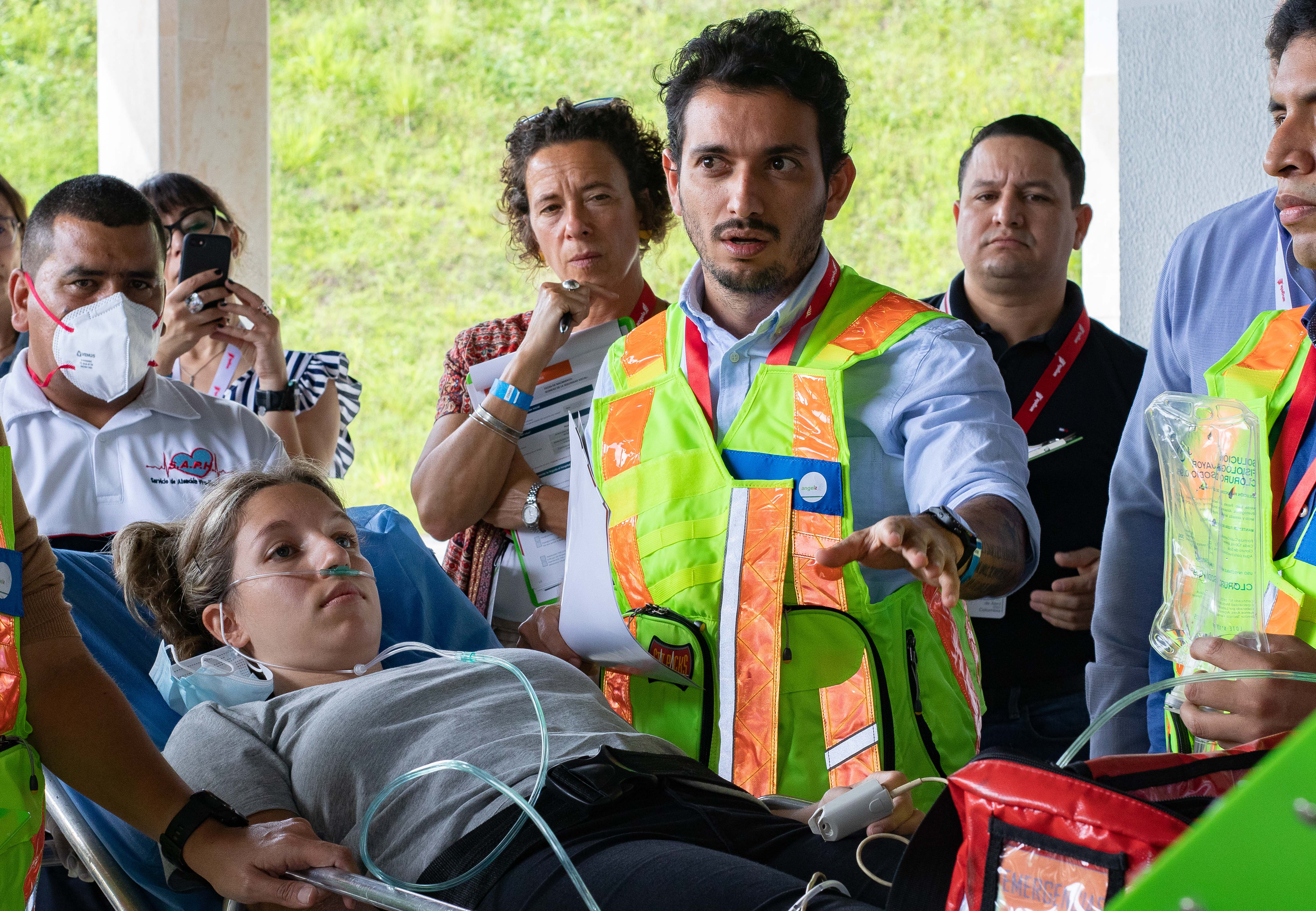
AI: When it comes to leadership you have said, the trick is to be an example and to model behaviours such as having a routine. Do you also think the young doctors you mentor should follow your example and read poetry?
CLAUDIO: Should they read poetry? Yes. I'm absolutely sure that poetry is maybe the best way to light a candle in our minds. Poetry is the path to understanding yourself and others better.
You become more sensitive to others’ feelings. So I have to say that poetry saves us. We need to read more poetry and live the poetry that we read.
AI: The loss of language and therefore of poetry – this can be one of the devastating consequences of stroke. In the past you have put it this way: when we save brain tissue, the world keeps saying I love you. What exactly is the link between language and love?
CLAUDIO: When I was in primary school, I remember being told the thing that made homo sapiens different was the ability to use our thumbs, but that’s a lie.What makes us different in nature is our language. Our language gives us the ability to construct a universe inside the universe. We just only do the things we do as a society because we have a language and we can communicate.
Think about it. Mathematics is a language. So the world we live in and build is built by our language, the poetry, the music.
Obviously I love my daughter as every father loves his daughter, and I said to my wife, one of the things that Athena makes me understand is how a father feels when his son or daughter tells him, I love you. So I need to tell my mom more often, I love you, mom, because I understand how you feel as a father.
And I think my mom feels this every time I tell her I love her. So I call my mom, ‘Mom, I love you,’ just to make her feel a fantastic emotion.
So what stroke takes from us is the genuine capacity to be humans. You don’t find any other animal on this planet saying I love you to another animal, only us.
So yes, I believe we need to treat people with strokes because we need to preserve the feelings, the capacity for saying I love you.


