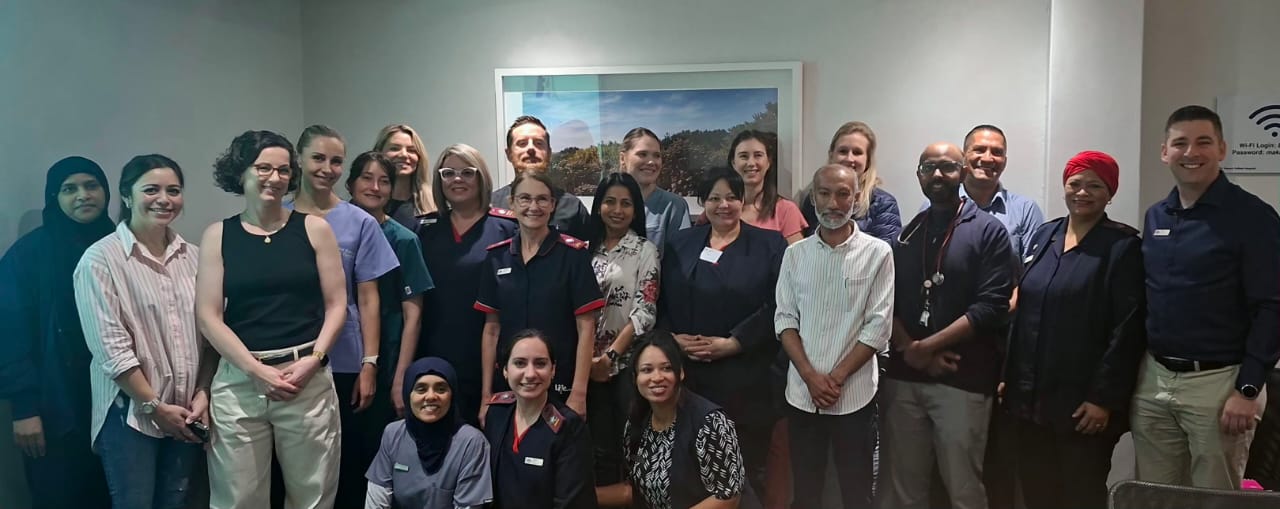
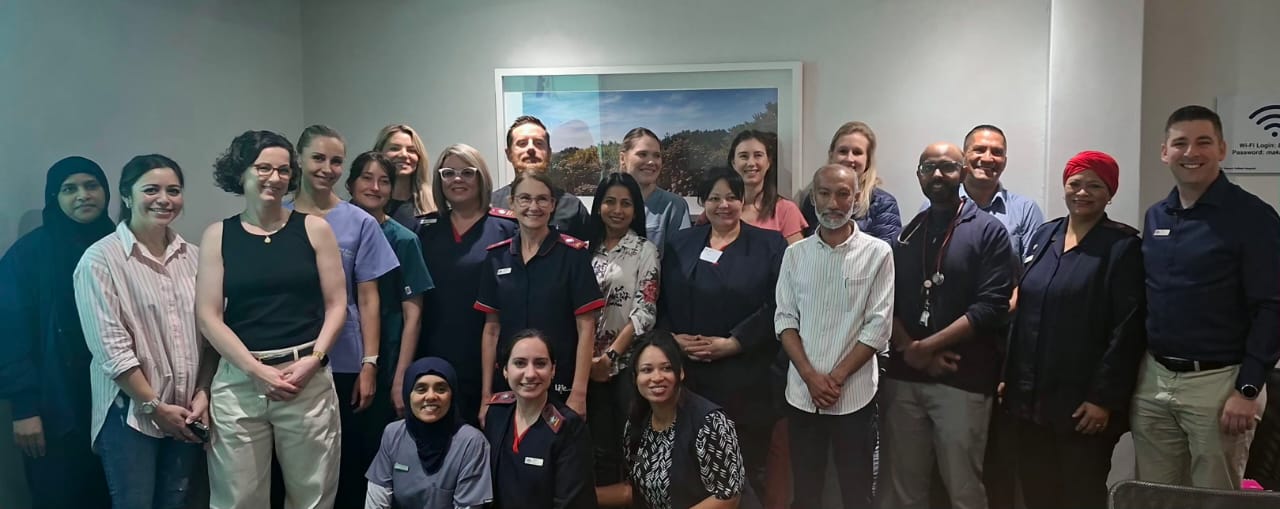
It’s 8.30 am on Wednesday 19 November, and in the ground floor conference room at Life Vincent Pallotti Hospital there’s standing room only. As routinely happens on the third Wednesday of alternate months, the Stroke Restore Meeting has brought together healthcare professionals from many different clinical disciplines – from pulmonology and neuropsychology to physical therapists, and speech-language pathologists, and nurses distinguished as leaders by their bars and epaulettes. Hospital manager Gavin Pike is also present; his office issued the invitation.
Life Rehabilitation Practise Manager Frank Hendricks is up first, with a brain teaser that fires up some friendly competition in a room filled with camaraderie.
Frank presents a case study that demonstrates how the FIM+FAM scales are used to provide a comprehensive picture of a patient’s overall functional status and progress, and measure outcomes from rehabilitation.
The atmosphere is one of connection, loyalty and the mutual trust that can only grow from shared experiences, shared purpose, and that often overlooked component of effective teamwork – transparency.
Critical Care Unit Manager Sr Martinette Botes now has the floor, and everyone’s attention is glued to the big screen where the hospital’s RES-Q report is displayed. It’s an opportunity to evaluate their performance against evidence-based guidelines, and identify opportunities for enhancing the stroke service.
Five WSO Angels Awards leave no doubt: A team that reviews its performance together, improves together.
Every link in the chain
Taking place just a week or two before the November meeting, another gathering offered further clues to organizational culture at Life Vincent Pallotti. During a simulation the previous month, a scenario involving a walk-in “patient” had delivered an important insight – non-clinical staff, such as triage receptionists, could play meaningful role in the stroke pathway. Responding to the challenge, clinical training specialist Leanie Kotze arranged a stroke talk for all non-clinical staff, from security guards and receptionists to porters, theatre staff and even IT and engineering.
Eighty-five staff members attended the session, and the engagement across departments was inspiring to see, Angels consultant Bernise Schubert says.
“It was a great step towards ensuring every link in the chain understands their vital role in improving stroke outcomes.”
The session included a simulation video that had been recorded at the hospital years earlier to demonstrate the impact of prenotification on treatment times. It delivered a special moment when a porter in the audience was heard to shout “that’s me!”
This hitherto unsung hero had played the role of patient when the video was recorded, and was finally and unexpectedly able to share that performance with his peers.
The meaning of excellence
Meetings like the one held in the ground floor conference room have been taking place at this hospital ever since the implementation of Life Healthcare’s Stroke Restore program, neurologist Dr Amanullah Rawoot says. That’s five years and counting.
At the start there were just a few people around the table, but because stroke is a complex disease and organized multidisciplinary teamwork is regarded as fundamental to delivering effective care across the stroke pathway, the circle has gotten bigger.
The meeting has evolved into a multidisciplinary assembly of professionals engaged in addressing the multiple, complex needs of stroke survivors, with teamwork and data transparency at its core.
Clear and transparent data is key, says Dr Joshua Gibson, a specialist emergency physician who advocates overcommunicating one’s expectations.
Locums rotating through Dr Gibson’s department find out ahead of time what “stroke excellence” means. He says: “I tell them what the door-to-needle time will be before the start of their shift.”
Team of champions
One of the first things an Angels consultant does when they enrol a new hospital, is identify a stroke champion who will lead change at this hospital. But at Life Vincent Pallotti, Bernise says, she’s found not one but an entire team of stroke champions – individuals whose commitment and passion inspire and guide the actions of others.
For Natalia Gates, nurse manager for specialized units, it’s the personal connection with patients while being the hands and eyes of a clinician. Taking care of someone in their darkest moments is a privilege, she says.
For Sr Marinette, ASLS trainer and an ICU sister for three decades, teaching people that time is brain is a job that is never quite done.
For some around the table, it is personal. Both Leanie and Gavin had family members who were failed by healthcare systems that were ill prepared for stroke. For them, too, education is paramount.
As for Joshua Gibson, his main source of inspiration is sitting directly across from him at the table – it’s “Dr Rawoot’s passion for doing things properly”.
Together each one adds more
Bernise is last on this morning’s agenda, with an announcement about Life Vincent Pallotti’s latest awards status.
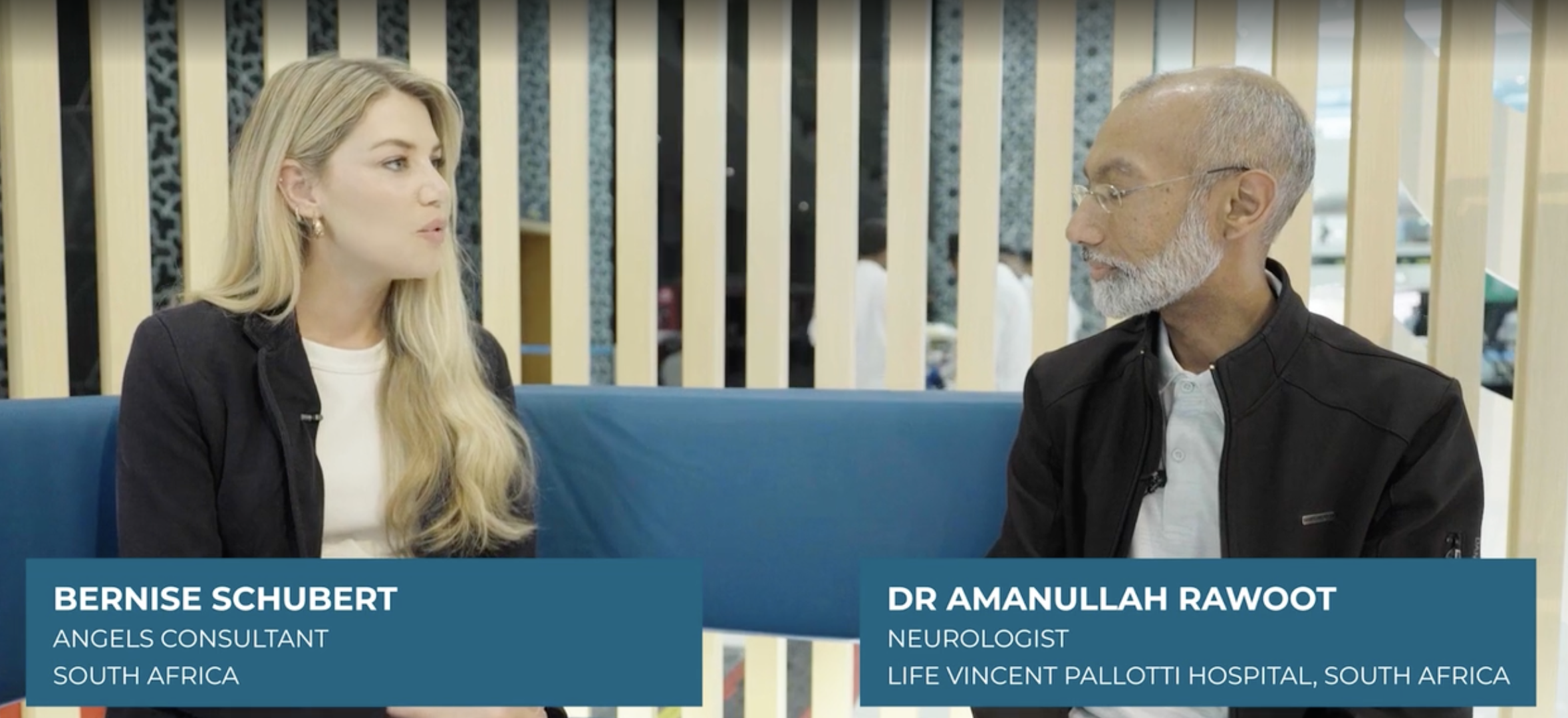
Interviewed last year during WSC 2024 in Abu Dhabi, where he accepted their first WSO Angels diamond award, Dr Rawoot used that opportunity to tell the global stroke community about his team of stroke champions.
He was “blessed and honored to be working with a great and dedicated team”, he said, describing how cases and performance data were reviewed together, and the way becoming a diamond hospital had been “a boost to everyone’s enthusiasm”.
“Ever since we achieved diamond status, they want to improve all the time!”
Today, Bernise’s announcement will galvanize them once more. Life Vincent Pallotti has won its second WSO Angels diamond award.
This gentle-mannered neurologist, who learnt about neurology “stroke by stroke”, had always been more interested in pathways than in hearts, he said.
“I got to learn about stroke and neurology at the same time.”
His choice of career has delivered many inspiring moments. “Seeing a patient come in totally aphasic with dense hemiparesis, and walk out completely or almost completely recovered, to return to their family and to society, words cannot explain the satisfaction,” Dr Rawoot says.
It has also placed him at the heart of this special team.
“They define the word ‘team’,” Dr Rawoot says. “Together Each one Adds More.”
WATCH THE VIDEO