
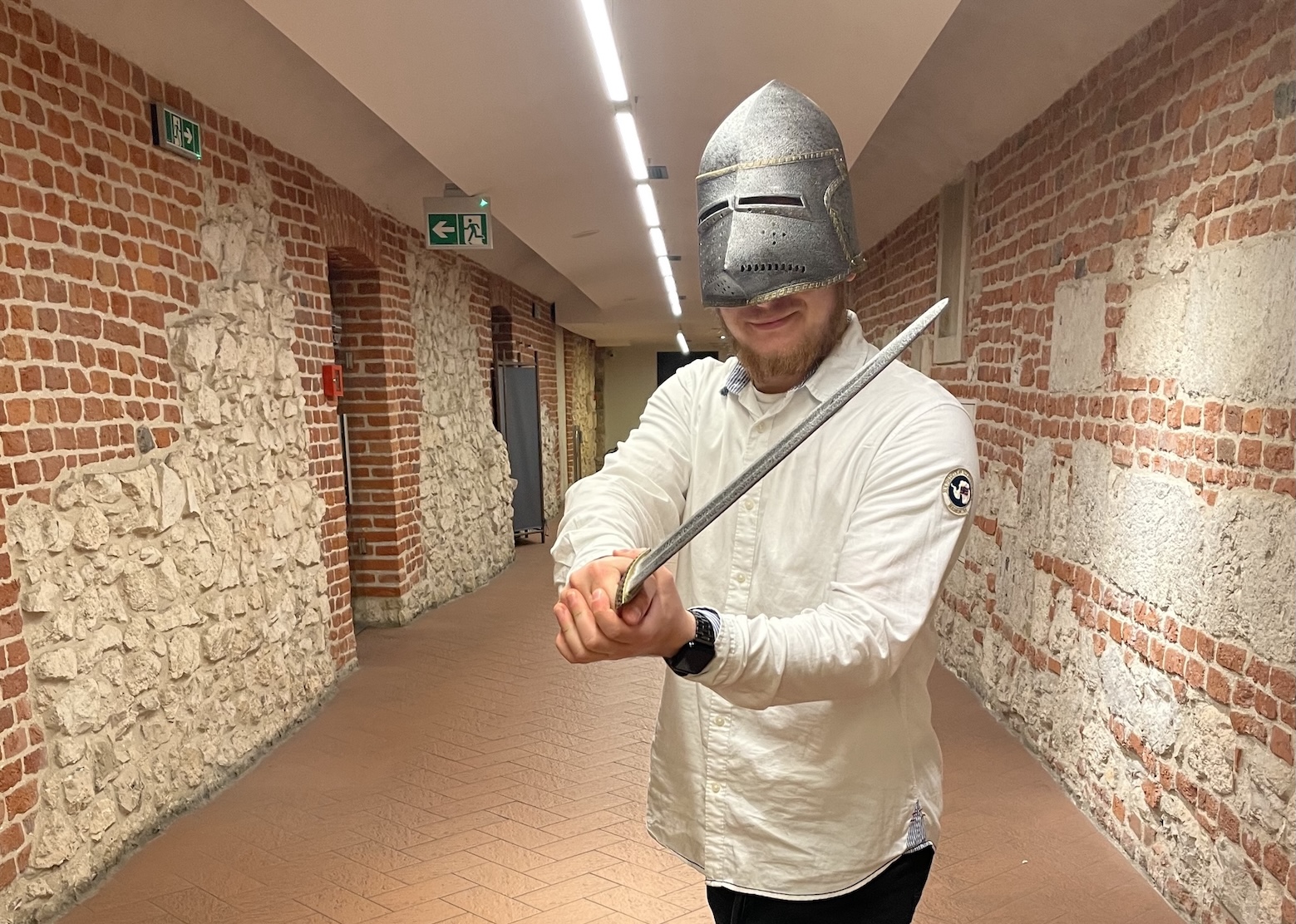
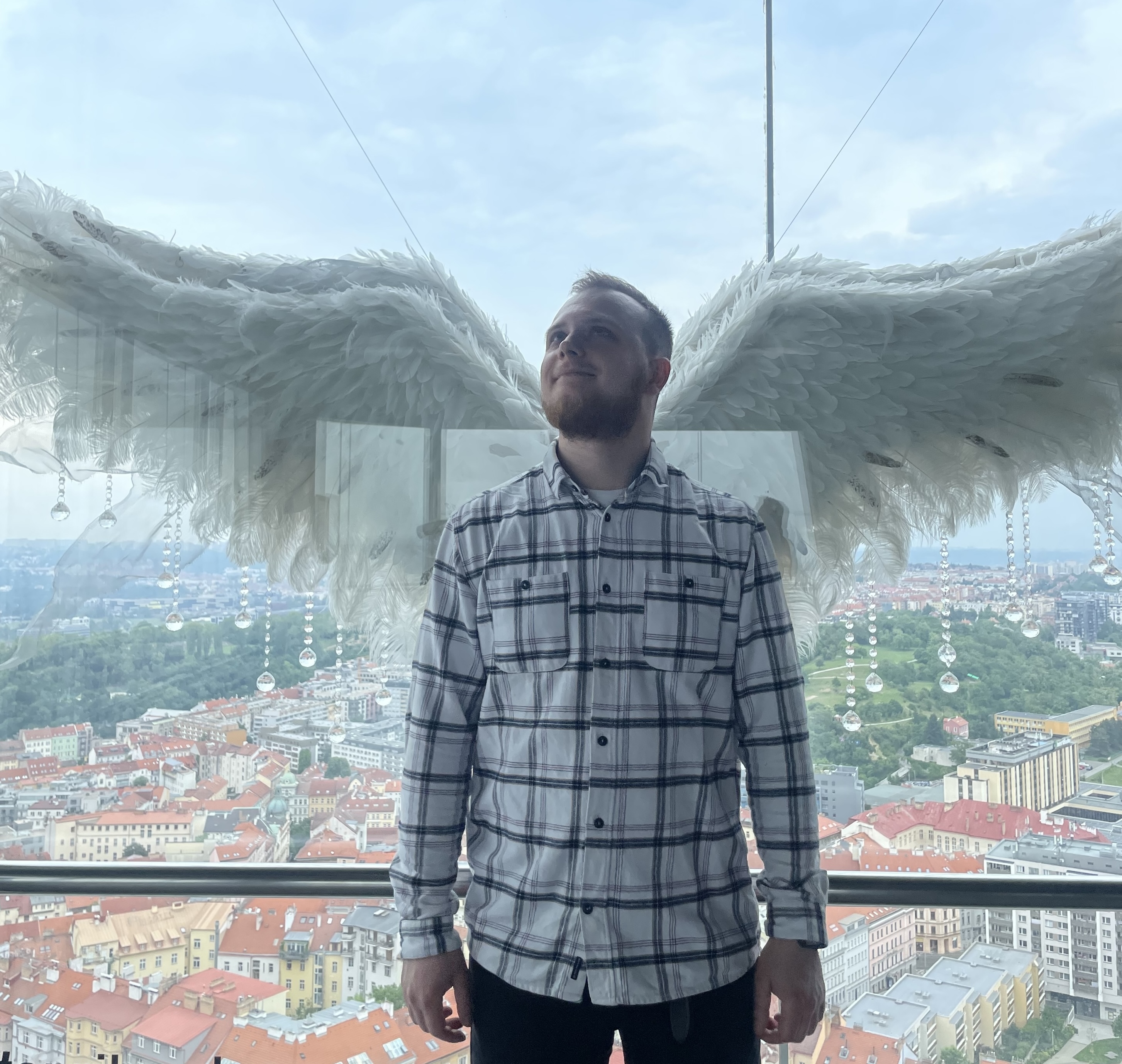
There are many decisive moments in this story.
First, there is the 16-year-old sitting his university entrance exam, weighing his options, and deciding on a career that will allow him to help progress and people.
Next, he is placed in a hospital that needs neurologists.
In 2022, he is assigned to Shepetivka through his university placement program and moves to the city on the Huska River in Khmelnytskyi Oblast. Shepetivka is the administrative center of Shepetivka Raion, and Shepetivka Multidisciplinary Hospital, where Ihor Krylov is the youngest neurologist, is its main hospital.
In 2024, Ihor attends the 3rd Annual Conference of the Ukrainian Stroke Medicine Society, UTIM, and finds himself in a conversation with Angels consultants Tamara Zabashta and Lev Prystipiuk, and Prof Sergii Moskovko, stroke care reformer and Chief of Neurology at Vinnytsia National Medical University, which is also Ihor’s alma mater.
The topic of the conversation is how to improve stroke care, and, also of particular interest to Ihor, the correct way to collect data about stroke.
Ihor is already uploading data to RES-Q, and Shepetivka Multidisciplinary Hospital has already received a gold ESO Angels Award. After he returns from Kyiv, the hospital receives two platinum awards, and that December, Shepetivka is one of three districts in Khmelnytskyi that become Ukraine’s first Angels Regions.
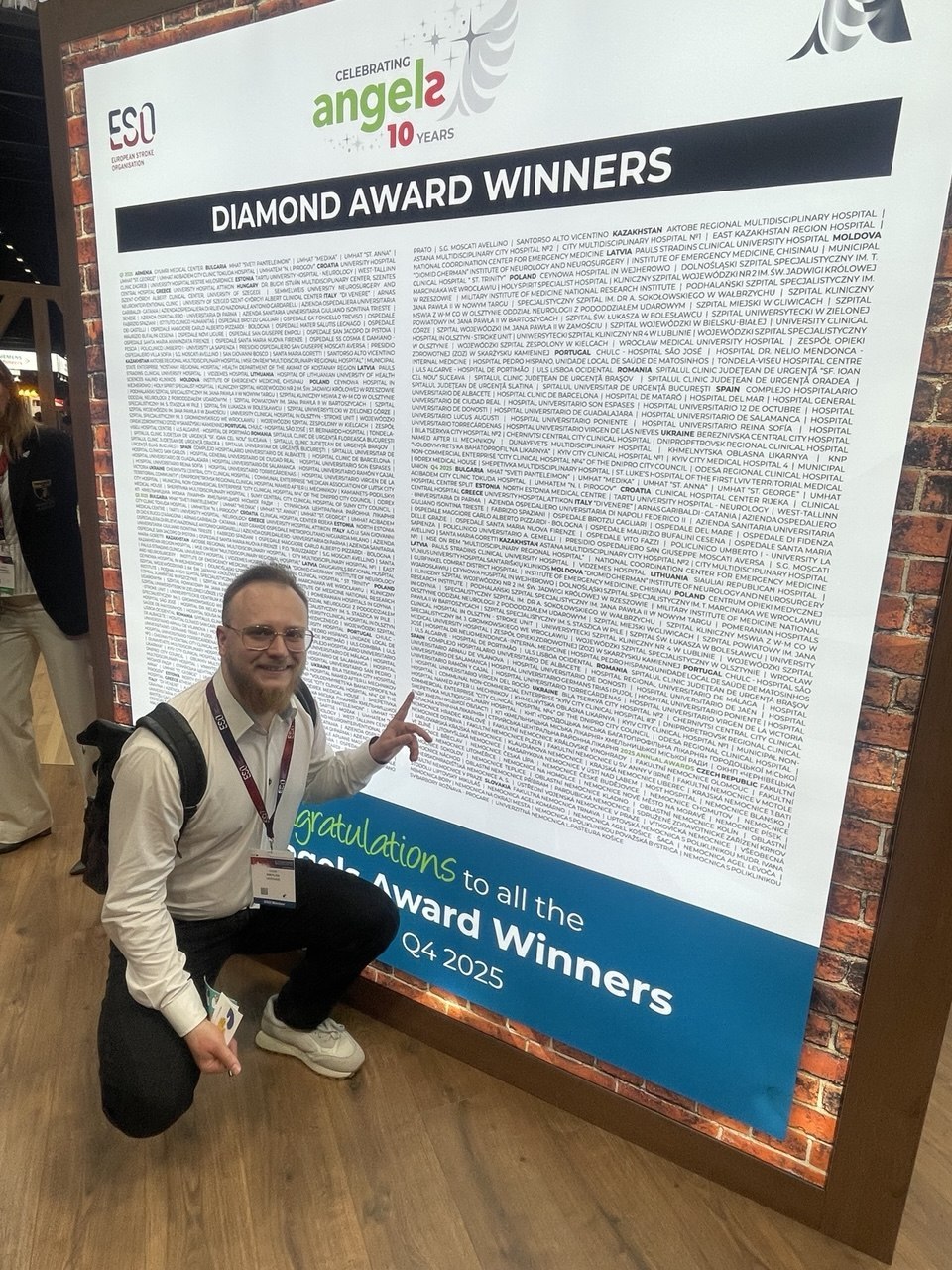
In the first quarter of 2025, Shepetivka Multidisciplinary Hospital becomes a diamond hospital and in May 2026, Ihor travels to Maastricht to collect his hospital’s fifth consecutive diamond award at ESOC.
The egg doesn’t teach the hen
Don’t let that seemingly unhindered upward trajectory deceive you into thinking it’s easy or that Ihor is unusually lucky. Young doctors seeking to change practice in their hospitals are up against generational power dynamics pretty much everywhere, but especially in post-Soviet societies.
In the rigid hierarchy that characterized Soviet healthcare, older professors and senior physicians dictated clinical decision-making, leaving little or no room for younger doctors’s fresh perspectives or the implementation of new evidence-based practices that improved outcomes.
The situation is captured in the Russian proverb, an egg doesn’t teach a hen, Tamara says, recalling the outdated protocols and attitudes that were prevalent when she herself graduated from medical school in 2014.
Despite profound changes initiated by the Ukrainian Ministry of Health in 2017, it can still be difficult to bring something new, Ihor says. “Our generation is trying to cure our people of this post-Soviet trauma,” he says, referring to scars left by decades of totalitarian rule – all while negotiating the fresh trauma of a grueling war.
In healthcare, the cure for the Soviet hangover has to be the determination of young doctors like Ihor who says, “I just want to make the place where I live and work better”.
Aside from having been a helpful son to older parents, he cannot account for the innate desire to make a better world.
“I just live like that,” he says.
Breaking the paradigm
Ihor and his generation of stroke doctors are the second line of attack. They follow in the wake of reformers like Dmytro and Pavlo Lebedynets, Mykhailo Tonchev and others.
The Lebedynets brothers were among those who broke the mould, Ihor says. “They showed that young doctors could bring something new in medicine. They’re a good example for young neurologists. They broke the paradigm that only old professors and older doctors could know anything.”
Something Ihor knows without a shadow of a doubt is that quality monitoring is the key to improvement. Describing Res-Q as “an instrument for self control”, he admits his insistence on the proper collection of data can annoy his colleagues.
As the primary stroke centre in Shepetivka Raion, Shepetivka Multidisciplinary Hospital provides stroke services to around 300,000 people. They’re increasingly seeing young people with stroke, a consequence of the extreme stress caused by war even at this distance from the combat zone. Its critical energy infrastructure and nearby military assets have made Shepetivka Raion a frequent target of Russian airstrikes and kamikaze drone attacks.
It’s been a hard winter, Ihor says, particularly as damage to the power infrastructure can generate a degree of suspense around the CT scan. They’re never completely certain it will work.
Most of the time it does.
What he likes about stroke is results, Ihor says. “I like to see results in patients, I don’t want to see patients coming back.”
His motivation is fueled by bright moments such as the 19-year-old patient who’d been brought in with hemiplegia and aphasia. “At first I didn’t think it was a stroke, I said, why do you bring me such a young patient. But when I examined him I realized oh my god I need to do something really fast.”
Days later, the patient walked out of the hospital on his own two feet.
“That’s my main reason,” Ihor says. “It reminded me why I’m here.”


